Abiah
Meaning of Abiah
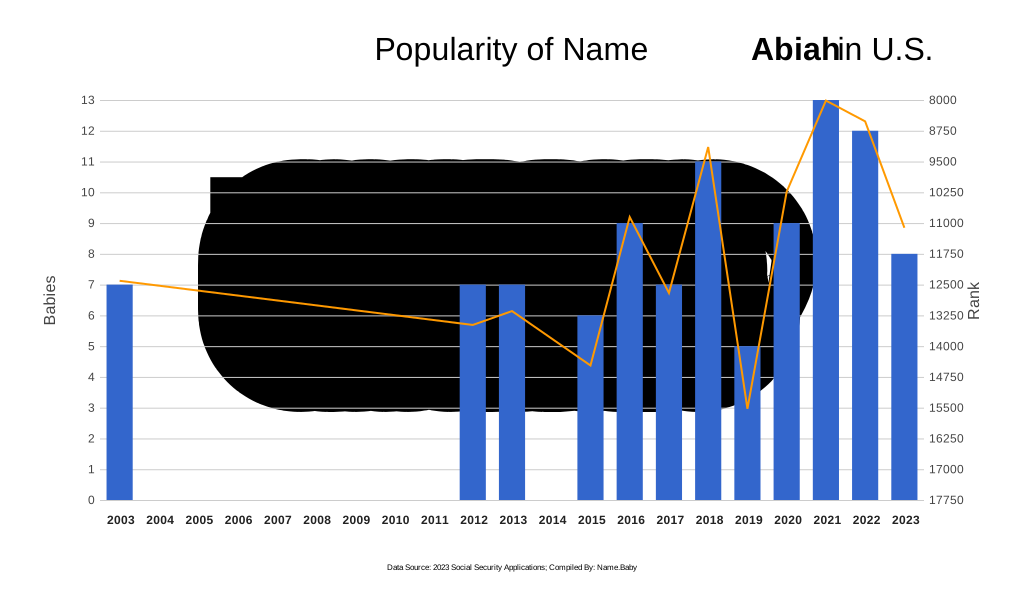
The name Abiah, of Hebrew origin and signifying “Yahweh est pater meus,” traces its lineage to biblical genealogies, wherein in the Latin Vulgate it appears as Abia, bestowing upon it a historic gravitas that appeals to modern parents in search of distinguished yet understated appellations. Although its usage in the United States remains modest—oscillating between five and thirteen newborns annually and ranked between 905 and 959 by the Social Security Administration since the early 2000s—this steady, if restrained, presence reflects an analytical trend among name‐givers drawn to theologically rooted choices that elude mainstream ubiquity. Phonetically rendered as uh-BY-uh, Abiah unfolds with a melodic cadence that harmonizes its Hebrew etymon with the fluidity characteristic of Latin‐derived tongues, thereby infusing the name with a bicultural allure that resonates in contemporary Latin American contexts. From an onomastic perspective, Abiah exemplifies the secular migration of sacred names—its biblical provenance and enduring subtlety converging like interlaced frescoes in an ancient basilica, inviting reflection on lineage, faith, and the evolving tapestry of cultural identity.
Pronunciation
- Pronunced as uh-BY-uh (/əˈbaɪə/)
U.S. Popularity Chart
Notable People Named Abiah
| Abiah Folger - |
