Ahava
Meaning of Ahava
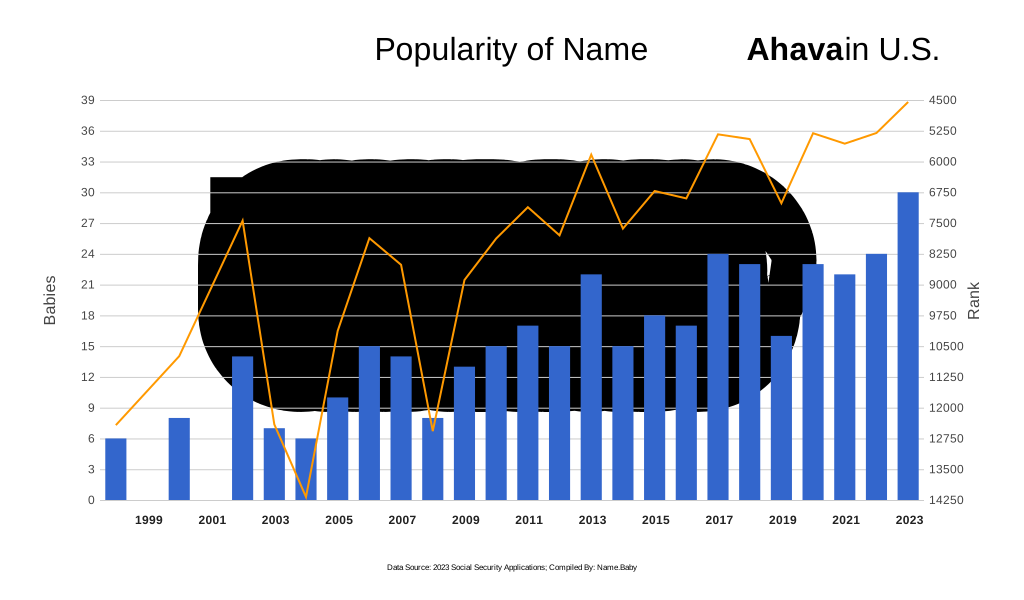
Ahava, a distinctly Hebrew feminine name pronounced ah-HAH-vah (/aˈχava/), carries the literal meaning “love,” evoking the warmth of a cherished bond in both biblical and poetic contexts. It occupies a niche yet steadily consistent position in American naming charts—ranked 926th in 2024 with 24 recorded births, a modest but resilient presence that has hovered between 920 and 935 over the past five years. As an appellation, it bridges the ancient and the contemporary: a single word that feels at once timeless and avant-garde, like a classic poem penned with modern ink. While it seldom cracks the top 500, its measured ascent suggests a growing appreciation among parents seeking names that confer depth without ostentation. Even in its relative rarity, Ahava resonates with an almost gravitational pull—a subtle reminder that naming is as much about resonance as about numbers. Its dry charm lies in the quiet confidence that a name meaning “love” needs no grand flourishes to speak volumes.
Pronunciation
Hebrew
- Pronunced as ah-HAH-vah (/aˈχava/)
U.S. Popularity Chart