Ahni
Meaning of Ahni
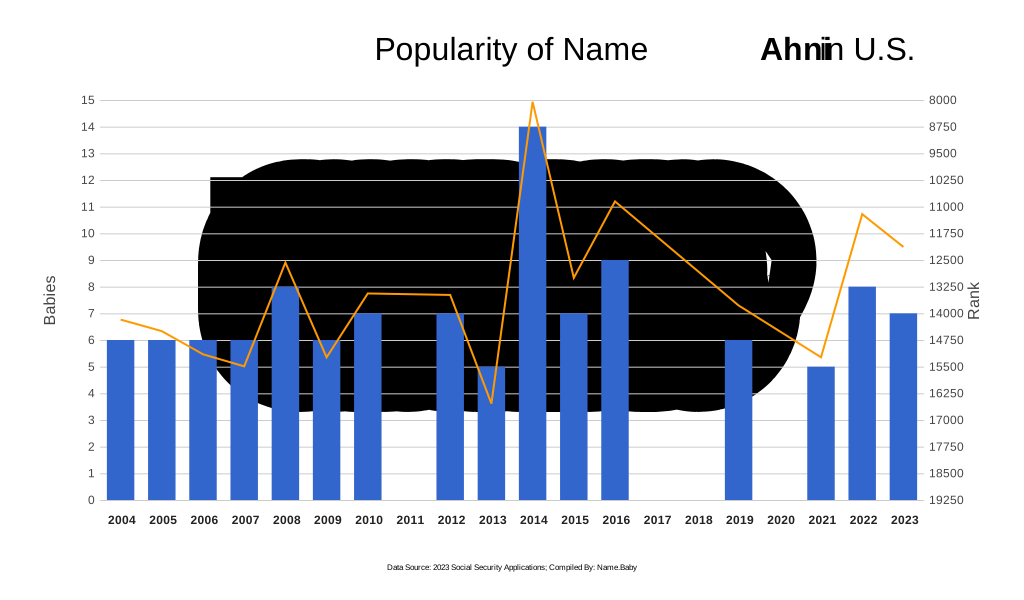
Ahni, often interpreted as a modern variant of Annie—itself descending from the Hebrew Hannah, meaning “grace”—unfolds like a tapestry woven from diverse linguistic threads, each strand shimmering with cultural resonance. Its phonetic signature, AH-nee (/ˈɑːni/), articulates with the precision of an academic theorem while flowing with the warmth of a well-wrought sonnet, bridging scholarly rigour and poetic nuance. In Latin, the near-homonym anni connotes “years,” imbuing the name with an undercurrent of temporal depth that suggests both endurance and elegance; in certain Native American contexts, akin phonemes evoke laughter and communal spirit. Over the past two decades in the United States, Ahni has maintained a discreet, almost anthropological presence—occupying slots in the nine- to ten-hundreds of the popularity charts, with ten newborns in 2024 choosing the name—like an oft-cited marginalia that, while seldom commanding the main narrative, remains indispensable to the study of naming patterns and, unlike some perennial favorites, requires no endnote to affirm its charm. With its balanced blend of historical gravitas and contemporary inventiveness, Ahni offers families a name that encapsulates grace, resilience, and the passage of time in a single, resonant utterance.
Pronunciation
English
- Pronunced as AH-nee (/ˈɑːni/)
U.S. Popularity Chart