Akai
Meaning of Akai
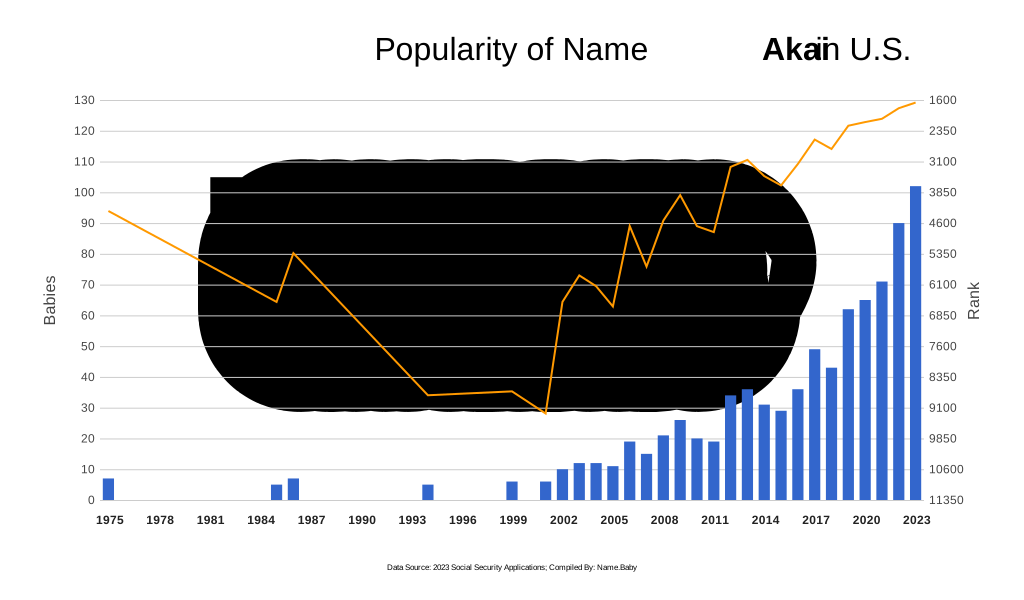
Akai—articulated with the fluid cadence ah-KAH-ee—emerges from the Japanese adjective for “red” (赤い, akai), and thus carries in its syllables the chromatic pulse of life: rubor sanguinis, the blush of first light, the ember that endures when larger flames expire. Within the tapestry of Japanese aesthetics, red is both talisman and trumpet, warding misfortune in Shintō shrines while celebrating vitality in bridal brocade; in Roman thought likewise, ruber signified ardor and victory, so the name stands astride two hemispheres of symbolism, a bridge of scarlet silk and crimson toga. Academically speaking, Akai’s semantic field aligns with chromonymic anthroponyms—names derived from colors—whose psychological resonance studies connect to perceptions of courage and warmth. Though still a rara avis on American birth registers, its steady appearance since the mid-1970s and recent plateau around rank 850 shows a soft, persistent glow rather than a meteoric flare, suggesting that parents are drawn to its succinct phonology, cross-cultural clarity, and the timeless metaphor of dawn it evokes. Thus, Akai offers a son not merely a designation but a small, living flame—ignis in pectore—inviting him to illuminate the world with the quiet confidence of enduring light.
Pronunciation
Japanese
- Pronunced as ah-KAH-ee (/aːkaɪ/)
U.S. Popularity Chart
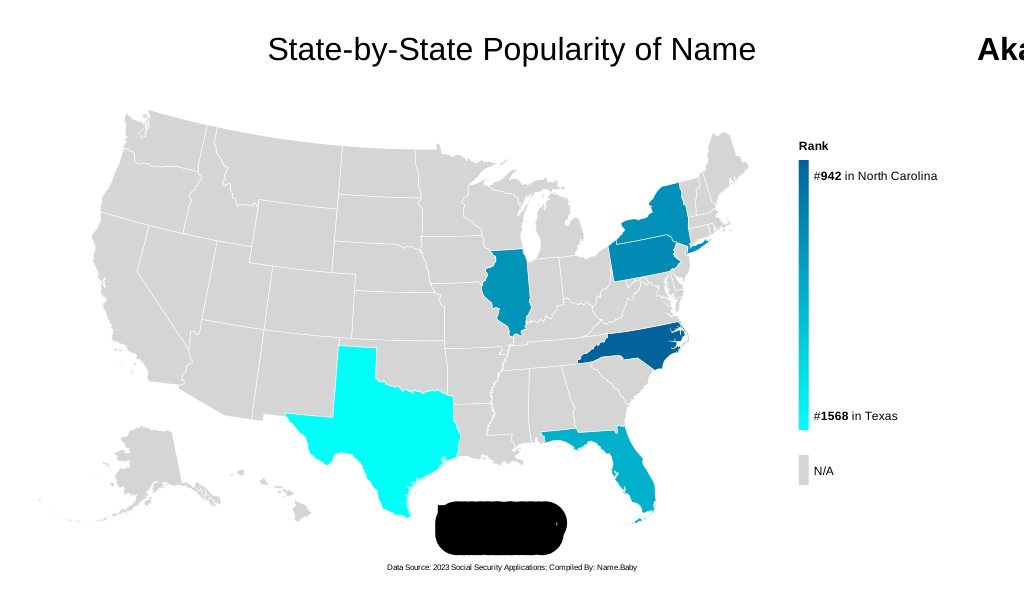
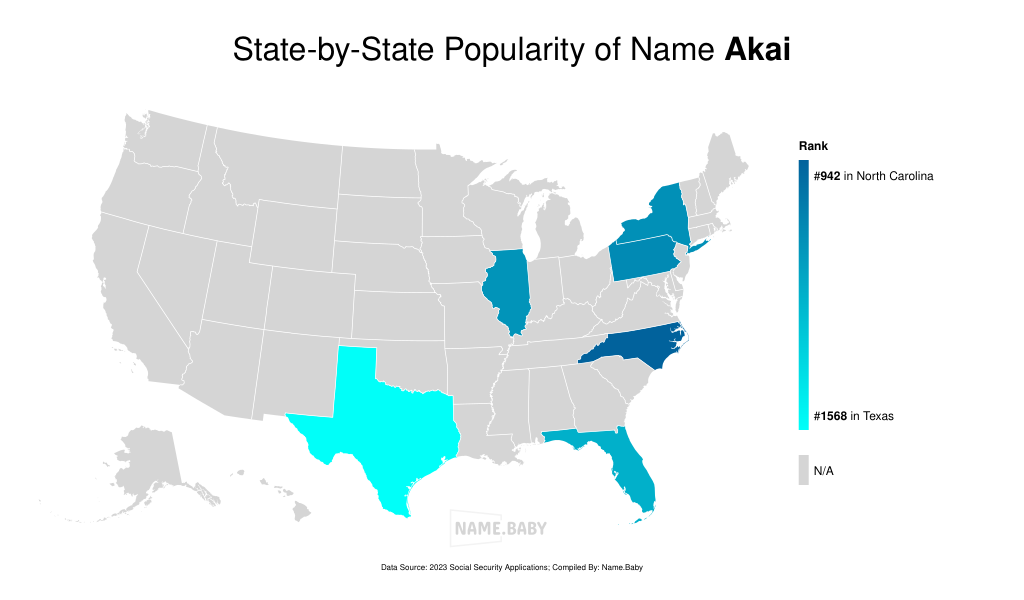
States Popularity Chart
Notable People Named Akai
| Akai Teruko - |
| Akai Haato - |
| Akai Osei - |
