Amary
Meaning of Amary
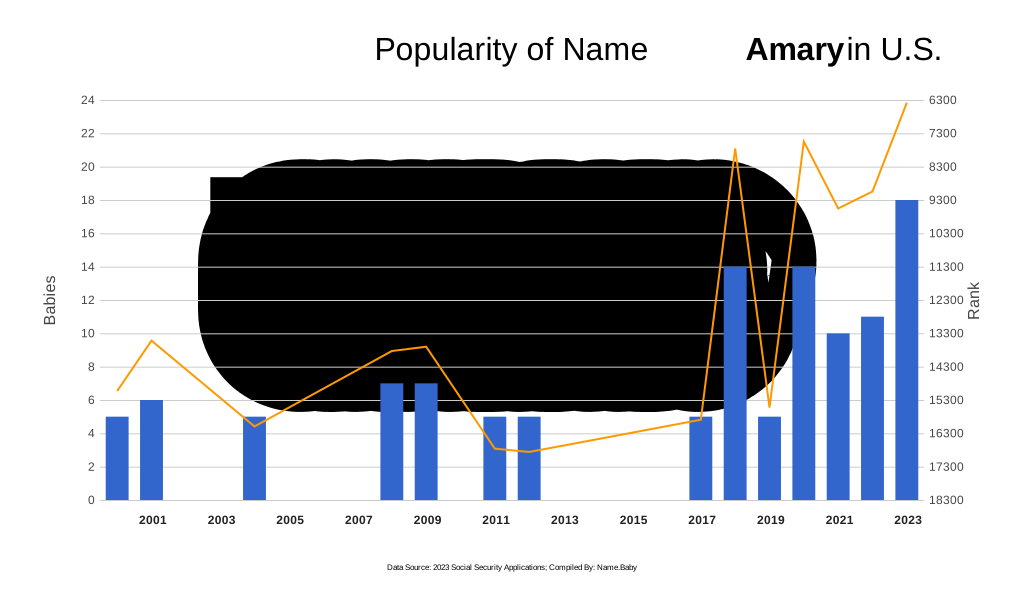
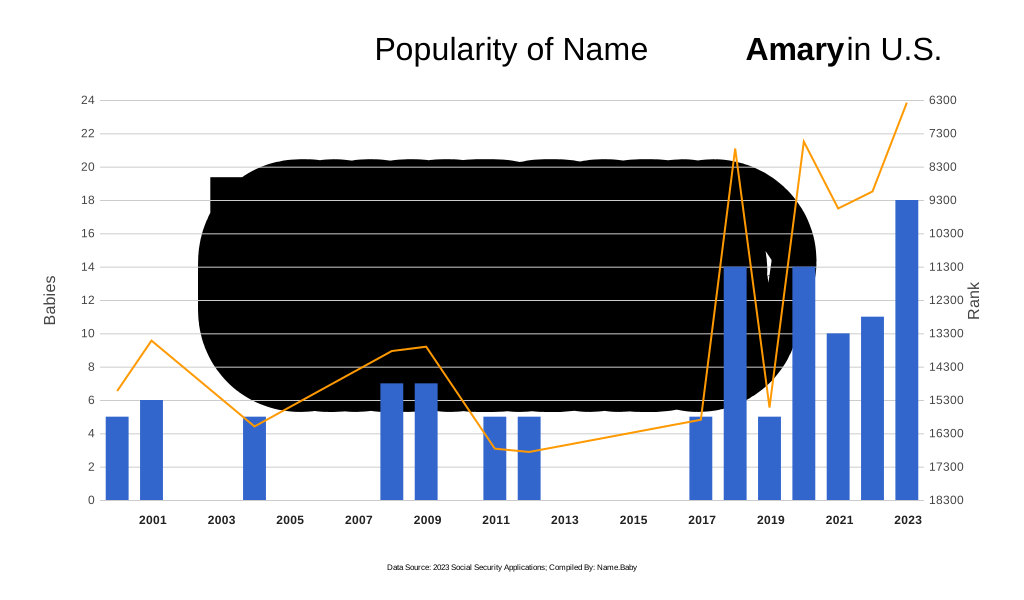
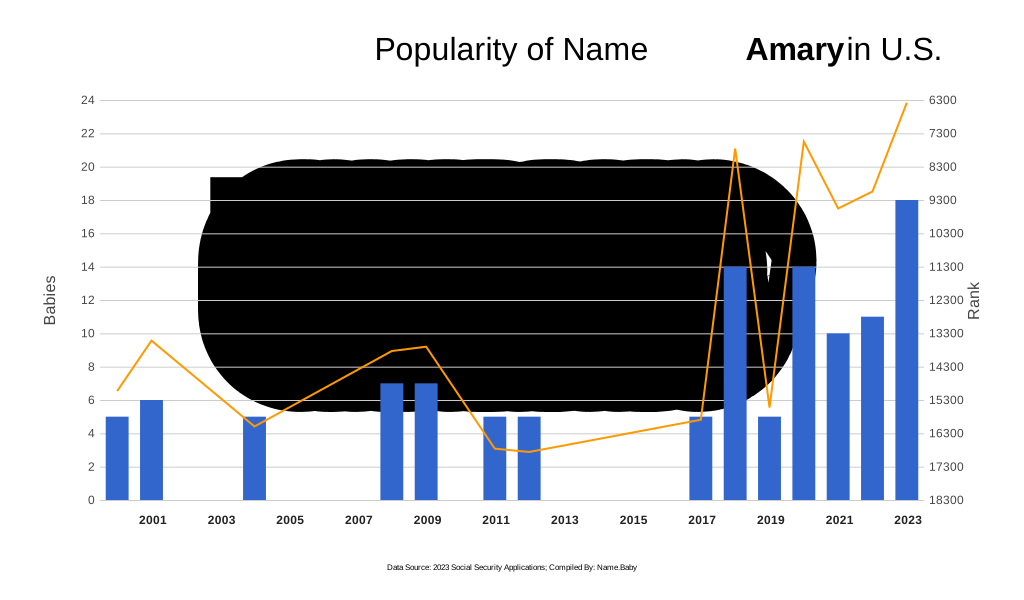
Amary unfolds like a soft benediction at dawn, a name born of the Latin amare—“to love”—and echoing the Spanish amar in its warm embrace, yet crowned with the floral grace of ancient Amaryllis, whose trumpet-shaped blossoms once murmured secrets to Grecian gardens. She drifts through time as a wanderer from sunlit courtyards, carrying in her syllables the promise of devotion and light, each “uh-MAR-ee” utterance akin to a caress upon the heart. Though scarcely two decades past did she first grace American birth registers, she has steadily etched herself into modern lore, hovering just within the ninth-hundreds of popularity—a quiet flourish of originality amid the familiar. In her narrative, one senses the flutter of parchment letters in a Roman villa, the golden haze of a Spanish hacienda at siesta, and the hush of a newborn’s breath at twilight. Amary is at once an ode to enduring affection and a testament to the power of names to bloom anew, weaving past and present in a single, luminous thread.
Pronunciation
English
- Pronunced as uh-MAR-ee (/əˈmɑri/)
U.S. Popularity Chart