Ameena
Meaning of Ameena
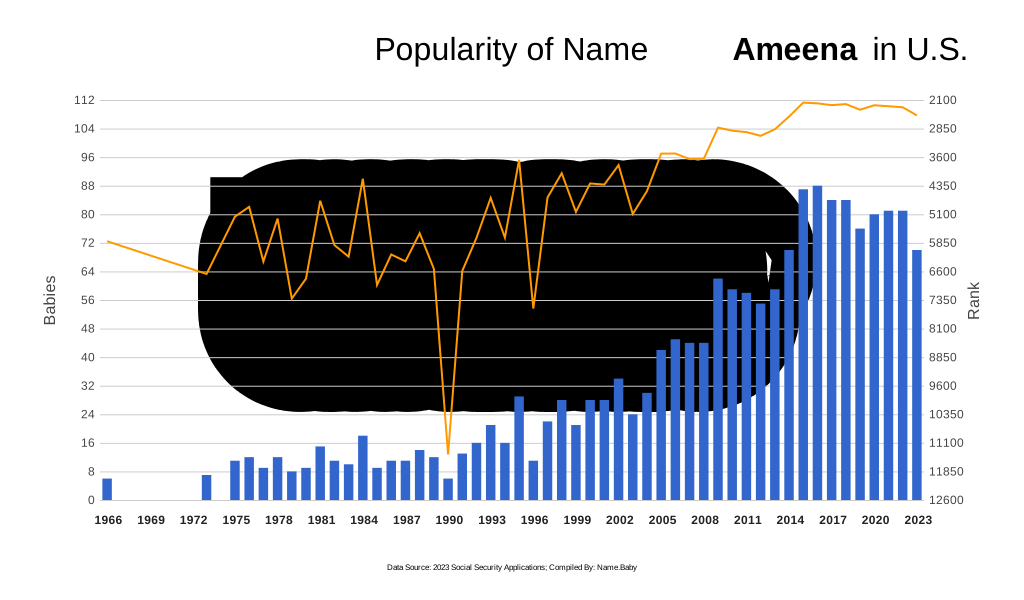
Ameena—pronounced ah-MEE-nah—is a daughter of classical Arabic, derived from the root ʾ-m-n that speaks of amān, “security,” and amāna, “trust,” so that her very syllables promise faithfulness as surely as the Roman virtue fides once steadied the Republic; accordingly, tradition remembers Āmina bint Wahb, the Prophet Muḥammad’s mother, as the earliest, most luminous bearer of this pledge-laden name. In every culture that has welcomed it—from the spice-laden ports of the Maghreb to the libraries of modern metropolises—Ameena has functioned like a silent pact, whispering reliability, serenity, and moral rectitude, much as a votive candle assures the pilgrim that dawn will follow vigil. Although in the United States the name dwells in the gentle mid-ranges of the Social Security charts, hovering, year after year, around the 850th rank, its steady persistence resembles a heartbeat that, though soft, never falters, suggesting that parents who choose it prize integrity over fashion’s fickle tide. Woven of historical reverence, mellifluous phonetics, and a meaning as enduring as granite yet as tender as a lullaby, Ameena offers the modern child a mantle of trustworthiness—bona fide et perpetua—inviting her to stride into life as custodian of promises kept and confidences honored.
Pronunciation
English
- Pronunced as ah-MEE-nah (/əˈmiːnə/)
U.S. Popularity Chart
States Popularity Chart



Notable People Named Ameena
| Ameena Begum - |
| Ameena Begum - |
