Ameera
Meaning of Ameera
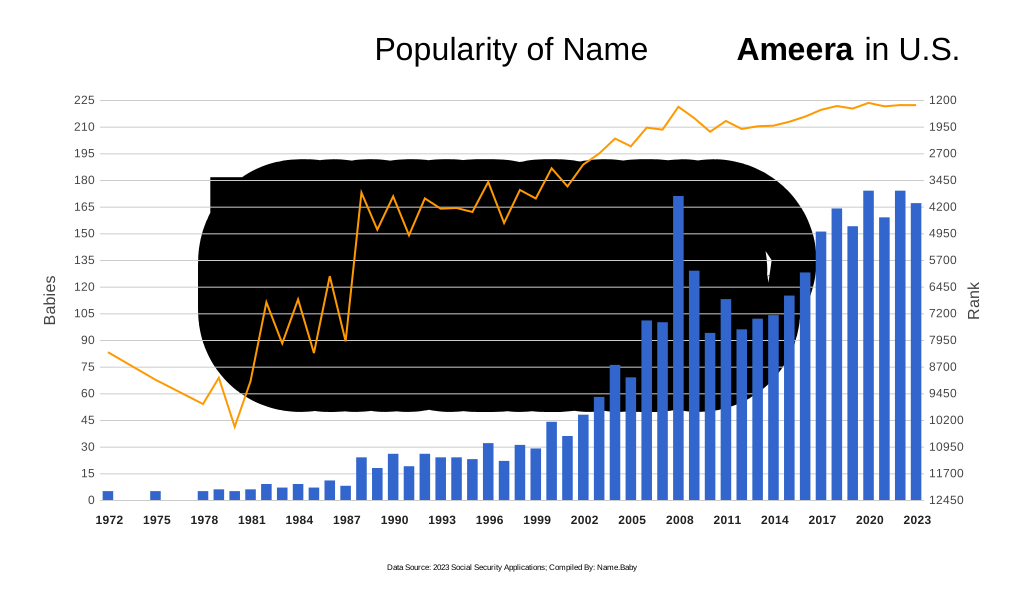
Ameera (ah-MEER-uh, /ə.ˈmɪər.ə/), a luminous derivative of the Arabic title amīrah, carries the dual meanings of “princess” and “leader,” a semantic pairing that mirrors the Latin ideals of regina and imperium and situates the bearer at the intersection of grace and authority. Rooted in the same linguistic soil as emir—“commander”—the name evokes a courtly scene where diplomacy and strength walk hand in hand, suggesting a life lived sub specie principatus, under the sign of principled stewardship. In the United States, Ameera has traced a steady, almost pendular arc through the Social Security records since its debut in 1972; it has hovered between the 700s and 900s in rank, its modest yet unwavering presence recalling a discreet but enduring filigree on the broader tapestry of American nomenclature. Because of its regal etymology, parents often associate Ameera with poised self-possession, cosmopolitan fluency, and a quietly commanding intellect—qualities that, like the soft shimmer of starlight on an Andalusian patio, lend the name an understated, timeless allure.
Pronunciation
Arabic
- Pronunced as ah-MEE-rah (/a.miː.ˈra/)
English
- Pronunced as ah-MEER-uh (/ə.ˈmɪər.ə/)
U.S. Popularity Chart
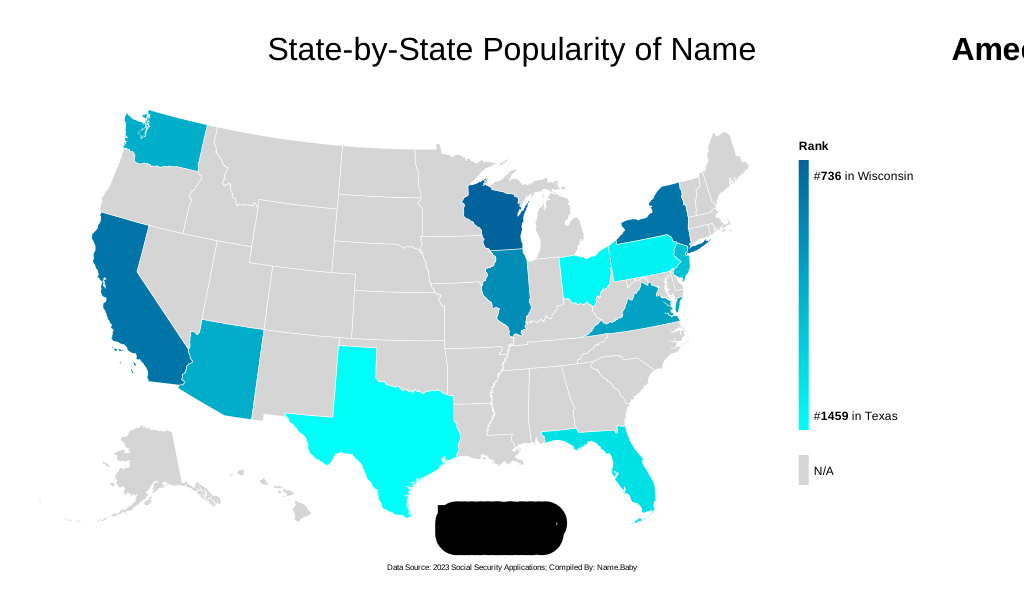
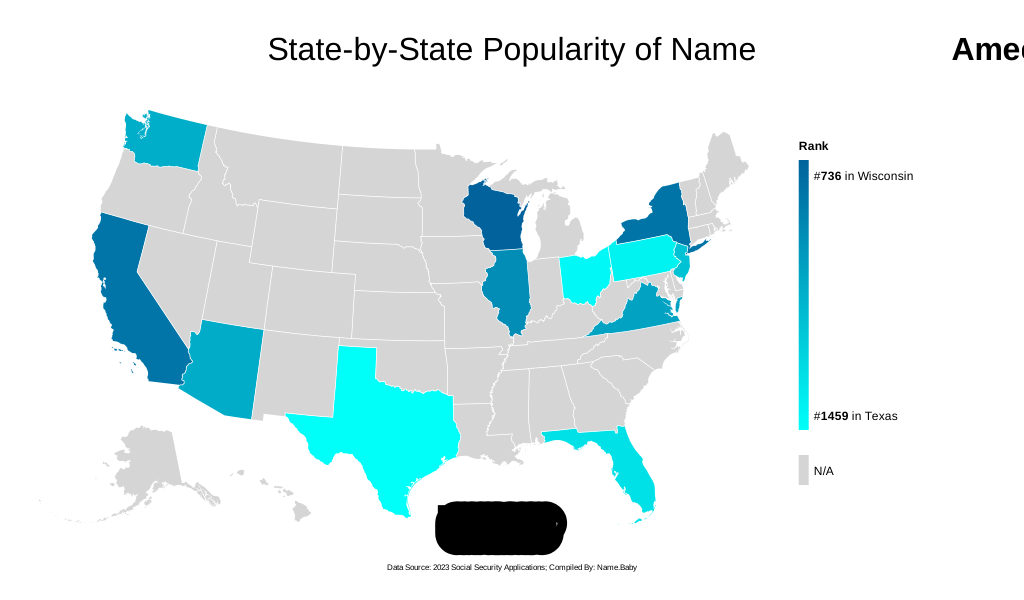
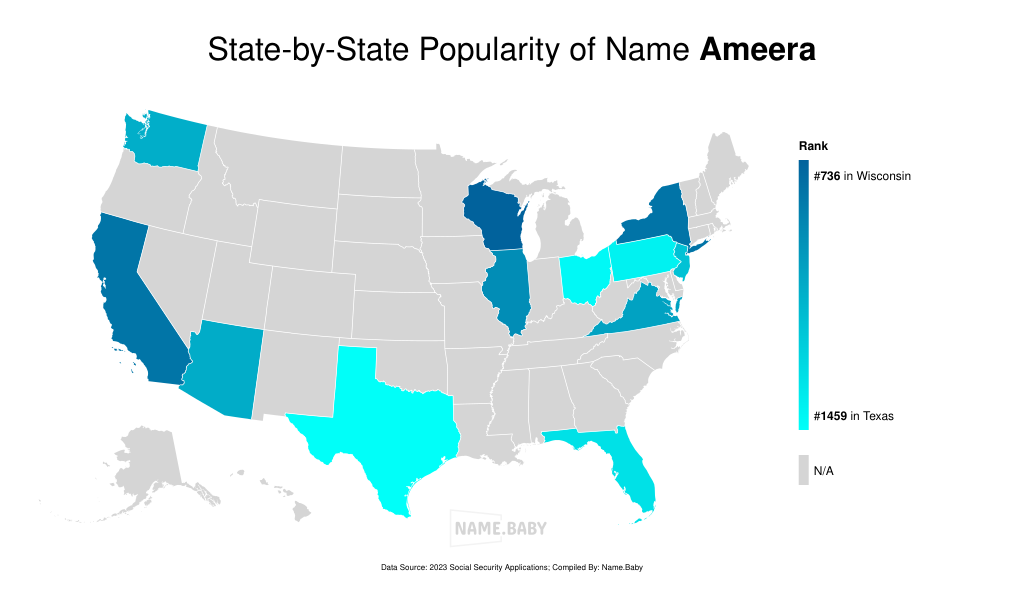
States Popularity Chart
Notable People Named Ameera
| Ameera al-Taweel - |
| Ameera Shah - |
