Amila
Meaning of Amila
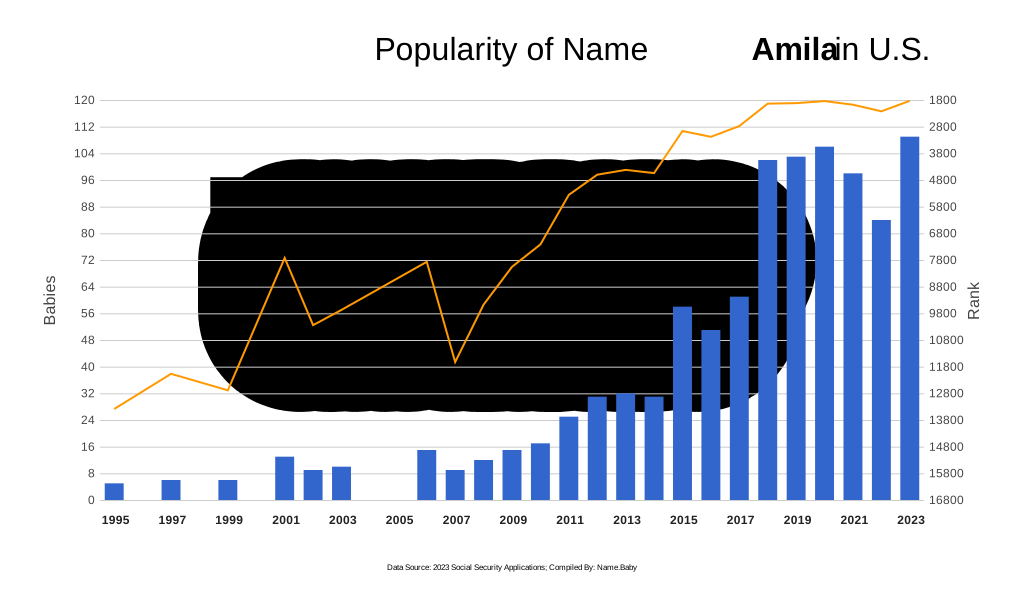
Amila, pronounced uh-MEE-luh (/əˈmiːlə/), constitutes a multilingual convergence in which Sanskrit, Arabic, and South-Slavic streams independently contribute meaning and nuance: in Sanskrit the term adumbrates “pure” or “spotless,” in Arabic it serves as the feminine form of ʿĀmil and evokes “one who works” or “one who hopes,” and in Bosnian and neighboring Slavic arenas it is commonly traced to the Latin amabilis, “lovable.” Despite its etymological breadth, the name’s trajectory in the United States has remained deliberately understated, entering the Social Security registers sporadically in the late 1990s and, over the past decade, occupying ranks in the high 800s—an indicator of consistent yet unobtrusive usage. Phonetically, its trisyllabic cadence situates it adjacent to more ubiquitous choices such as Amelia and Mila, while still preserving semantic independence; sociolinguistically, it offers parents a globally intelligible option that signals cross-cultural literacy without resorting to overt exoticism. Collectively, these attributes render Amila an academically intriguing case of nominal hybridity, embodying purity, industry, and affection in a concise lexical frame.
Pronunciation
British English
- Pronunced as uh-MEE-luh (/əˈmiːlə/)
American English
- Pronunced as uh-MEE-luh (/əˈmilə/)
U.S. Popularity Chart
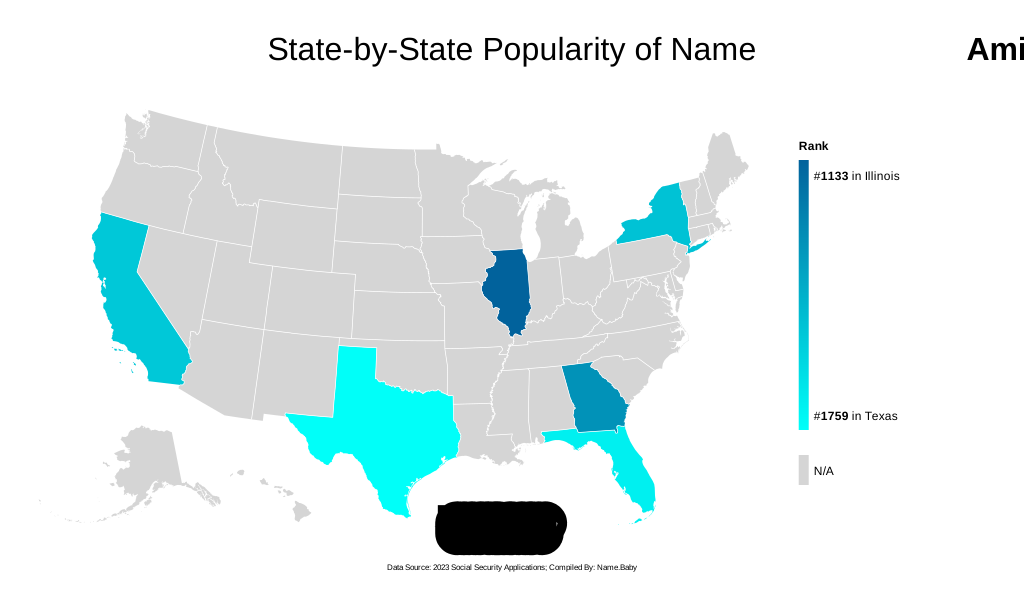
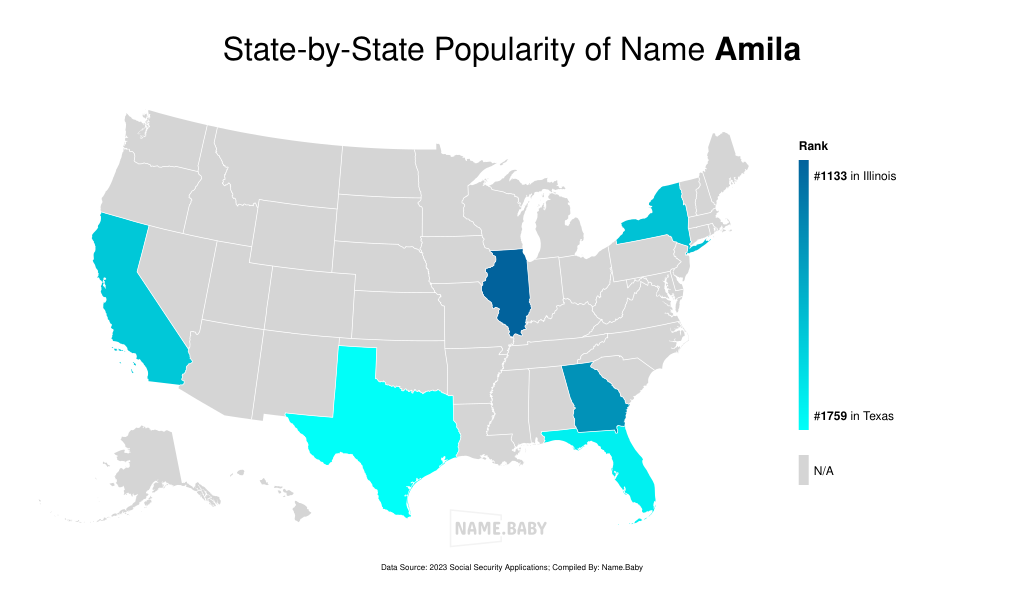
States Popularity Chart
Notable People Named Amila
| Amila Abeysekara is a Sri Lankan actor best known for his award-winning role in Paba and hosting Derana Dream Star. |
| Amila Mendis is a former Sri Lankan cricketer who played for Sri Lanka Police Sports Club. |
| Gamage Amila Shiral Perera is a Sri Lankan cricketer known for his aggressive left handed batting and left arm spin bowling. |
