Amorie
Meaning of Amorie
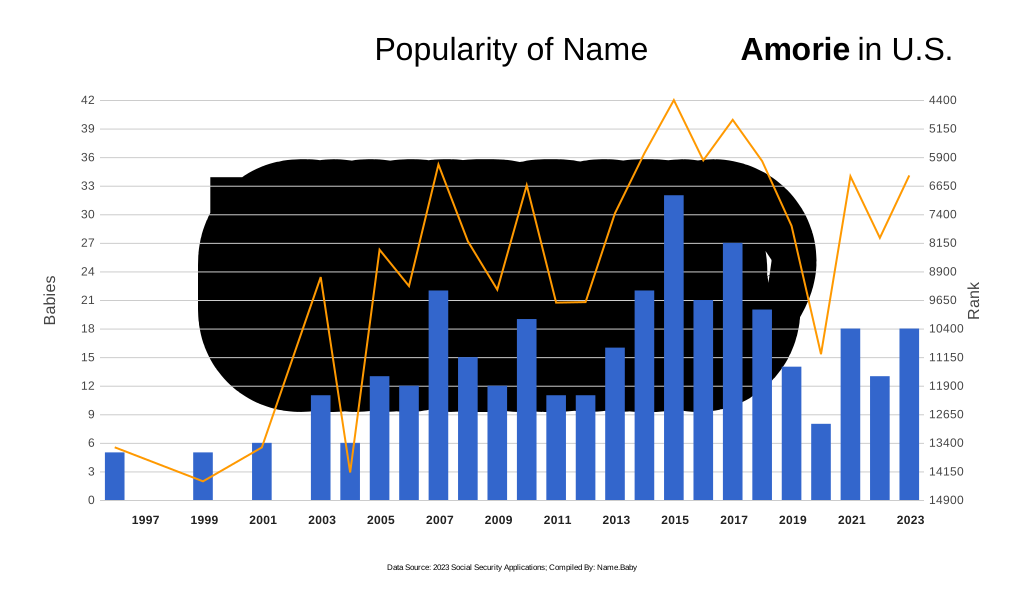
Amorie, a lyrical derivative of the Old Germanic Amory—itself forged from amal “work” and ric “power”—offers a distinctive fusion of ancestral gravitas and romantic nuance, its soft –ie ending subtly echoing the French amour “love” without relinquishing its hardy roots. Though it has never threatened the upper ranks, Amorie’s steady, modest presence—nestled in the lower 900s of the SSA charts with fewer than twenty annual occurrences in recent years—reflects an Anglo-American penchant for names that feel both time-honored and freshly poetic. Pronounced uh-MOR-ee, the name glides off the tongue like a tender refrain, balancing scholarly resonance with an undercurrent of affection, an interplay best savored by those who prize nuanced meaning over fleeting popularity. It neither courts spotlight nor minds its underdog status—much like a cherished manuscript tucked away on a private shelf, Amorie rewards the thoughtful explorer with layers of linguistic and emotional depth.
Pronunciation
British English
- Pronunced as uh-MOR-ee (/əˈmɒri/)
American English
- Pronunced as uh-MOR-ee (/əˈmɔri/)
U.S. Popularity Chart
Notable People Named Amorie
| Amorie Archibald - |
