Amoura
Meaning of Amoura
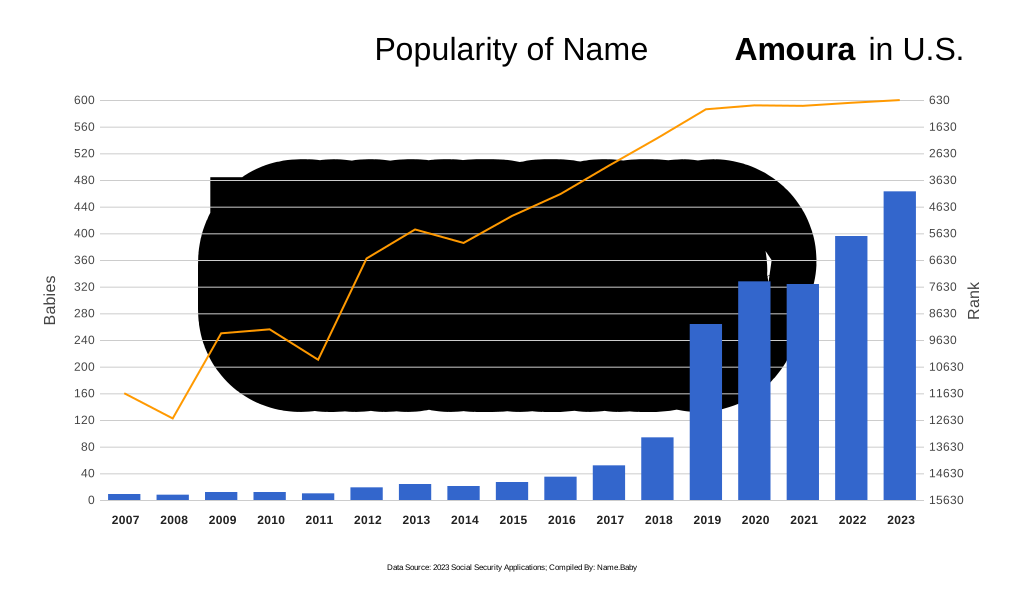
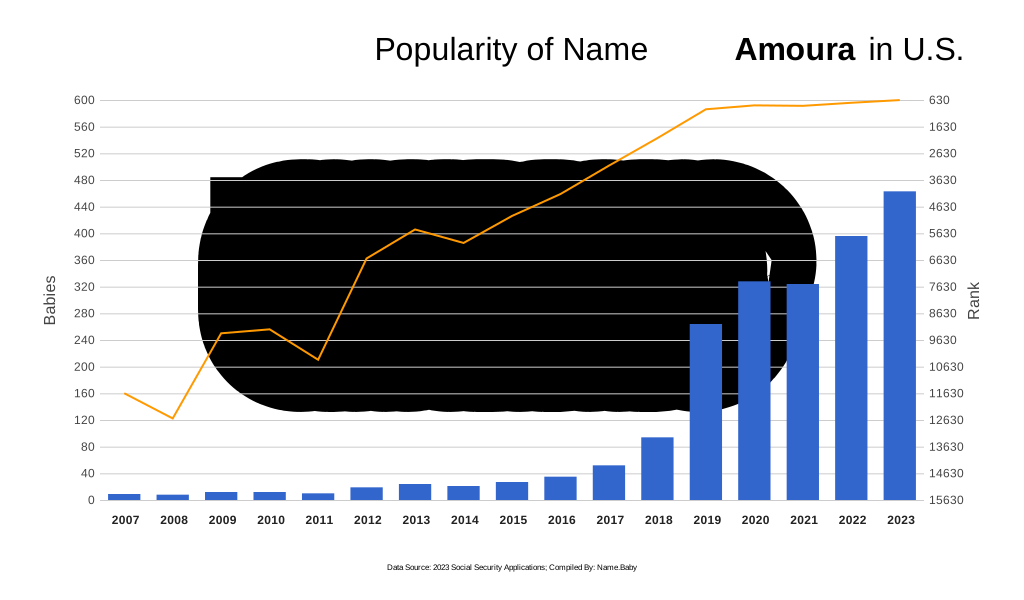
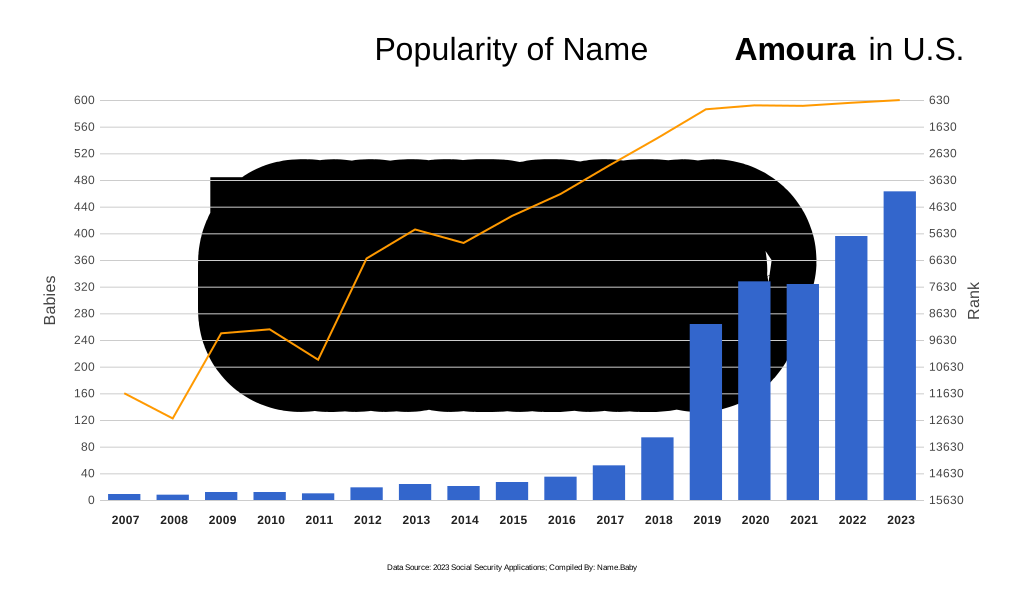
Amoura, a contemporary elaboration of the Latin-derived Romance noun “amour” (love), situates itself at the intersection of linguistic elegance and semantic transparency; its etymological lineage traces back through Old French “amour” to Latin “amor,” thereby conferring an explicit connotation of affection and devotion that requires little interpretive effort. Phonetically rendered in English as ah-MOOR-uh (/əˈmʊr.ə/), the name balances vowel openness with the resonant medial /m/ and /r/, a sequence that many anglophone parents perceive as both mellifluous and substantial. Statistically, Amoura has demonstrated a consistent upward trajectory in the United States: from a modest nine recorded births in 2007, the designation advanced to 552 newborns in 2024, elevating its national rank from 979 to 465 and signaling a diffusion beyond niche usage into mainstream visibility. Cultural associations remain firmly anchored in the universal theme of love, yet the spelling variant with the terminal “-a” imparts a distinctly feminine cadence, differentiating it from its cognate “Amor” while preserving the term’s emotive core.
Pronunciation
American English
- Pronunced as ah-MOOR-uh (/əˈmʊr.ə/)
U.S. Popularity Chart
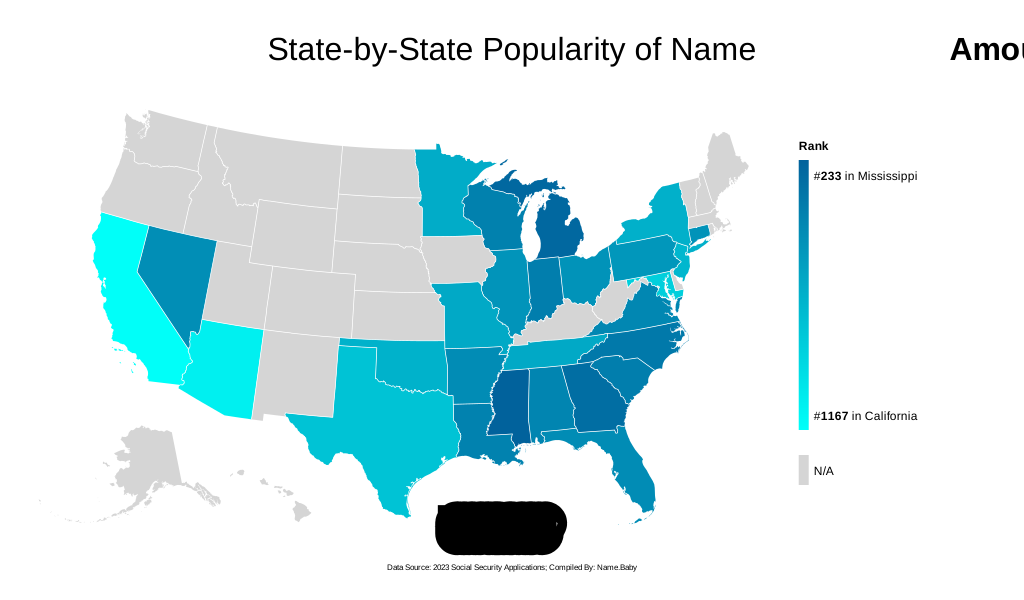
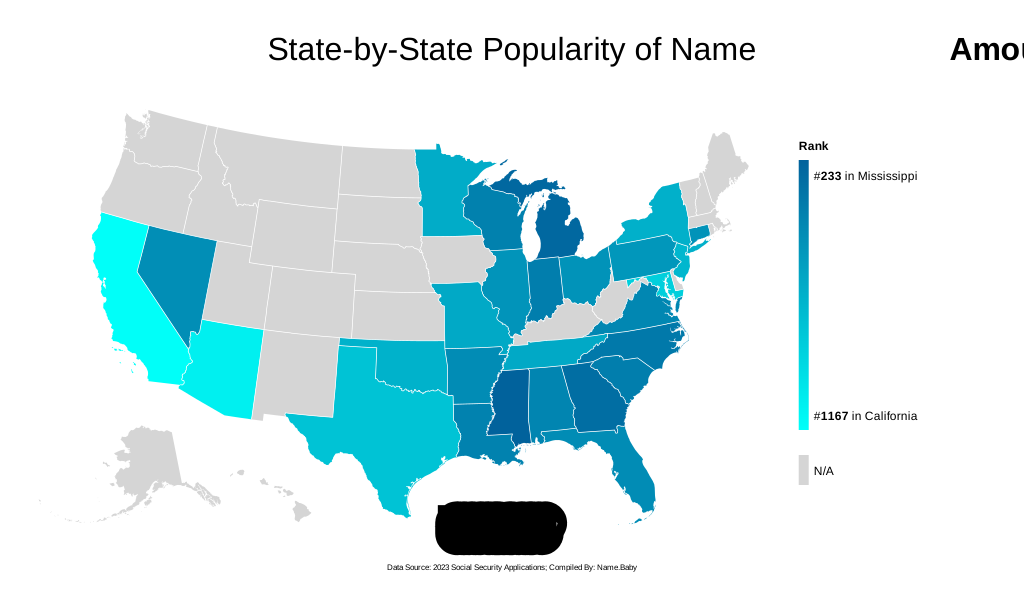
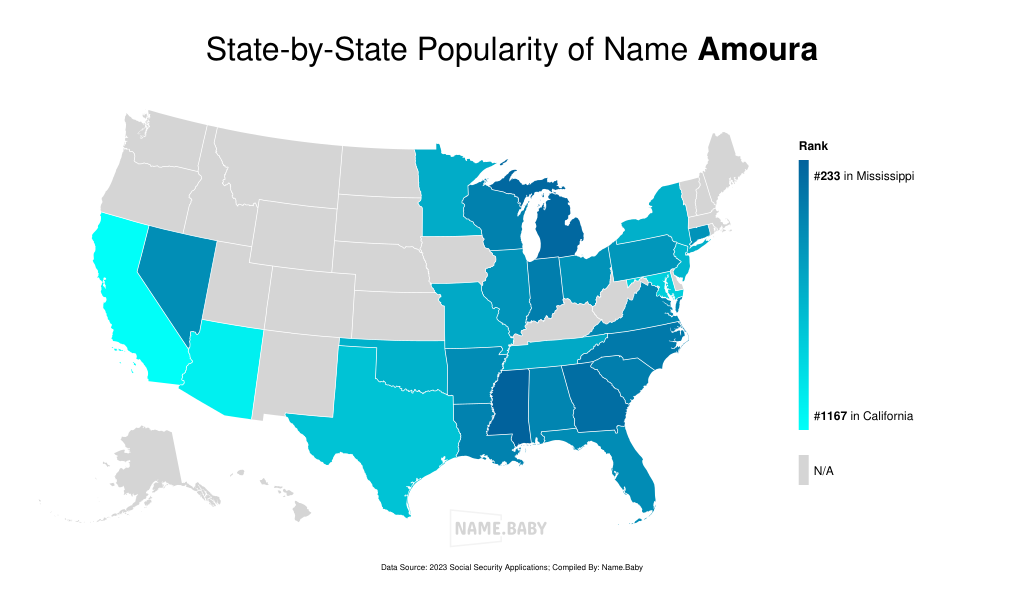
States Popularity Chart