Analena
Meaning of Analena
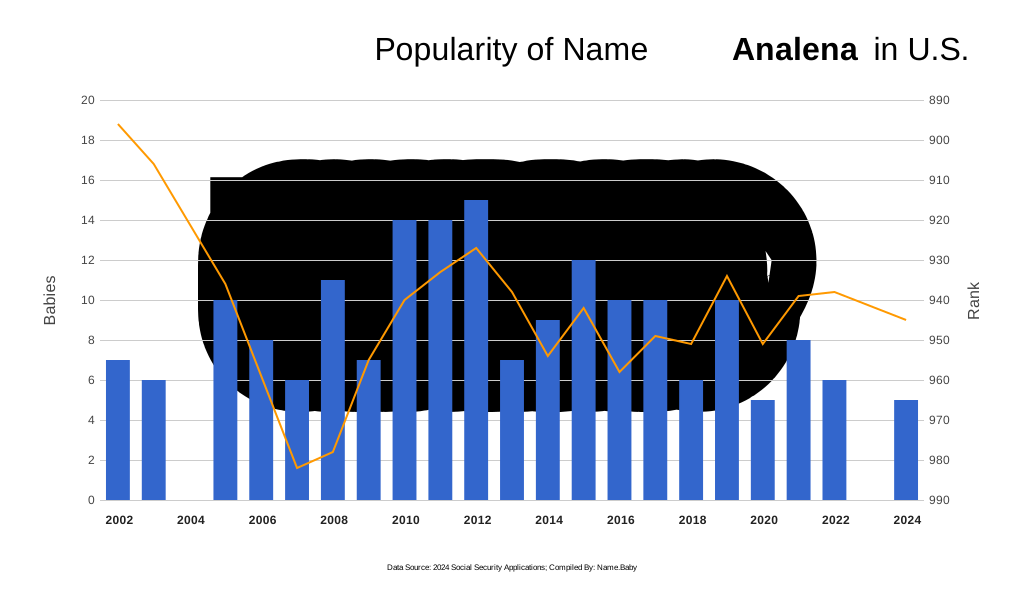
Analena emerges as a compound anthroponym synthesizing the Hebrew-derived Anna (from the root ḥannāʾ, denoting ‘favor’ or ‘grace’) with the Greek-derived Lena (a diminutive of Helena, itself from hēlēnē, ‘torch’ or ‘light’), thereby encapsulating a sophisticated semantic interplay of grace and illumination. Although its lexical provenance can be traced to Central and Northern European naming conventions, the name has garnered modest cross-cultural resonance within Spanish-speaking populations—where its phonological realization (/aˈna.le.na/) conforms to standard stress patterns—and has sustained a marginal yet stable presence in the United States, consistently ranking between 900 and 1,000 in Social Security Administration records over the past two decades. From a phonotactic perspective, its alternating sequence of open-front vowels and alveolar nasals produces a sonorous yet precise articulatory profile, aligning with contemporary Anglo-American preferences for etymologically rich, bisyllabic compounds that combine historical depth with modern distinctiveness.
Pronunciation
Spanish
- Pronunced as ah-nah-LEH-nah (/aˈna.le.na/)
U.S. Popularity Chart
Notable People Named Analena
| Analena Jentsch - |
