Anav
Meaning of Anav
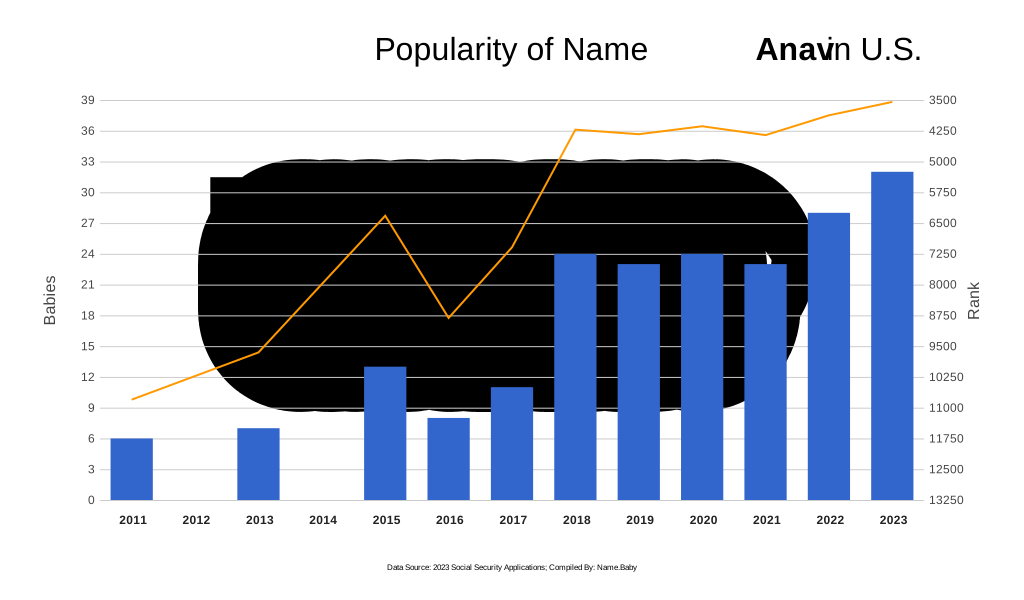
In the hush between dawn’s first breath and the plum-blossom scatter, Anav emerges as a slender syllable—uh-NAV—that bridges sunlit vineyards of ancient Hebrew with the paper-lantern glow of Edo nights. Born from a word once spoken to describe clusters of grapes in moonlit temple groves, it carries not sweetness alone but a quiet humility, as though each utterance were a silent bow. Though only half a dozen newborns wore it in 2011, and at its peak reached just thirty-two in recent years, Anav’s gradual arc from rank 876 to 901 by 2024 reflects a resolute spirit, akin to a lone kite soaring above a cherry orchard. It arrives less like a festival parade and more like a shadowed fox threading a bamboo grove—no drums, no fanfare, just cool precision. There is in its consonants the firmness of lacquered wood, in its vowel the soft curve of rice-paper windows, lending the name both earthy grace and poised strength. It stands at once archaic and freshly minted, a delicate paradox ready to root itself in any family’s unfolding story.
Pronunciation
English
- Pronunced as uh-NAV (/əˈnæv/)
U.S. Popularity Chart
Similar Names to Anav
