Asmara
Meaning of Asmara
Asmara, a feminine given name of Arabic origin, carries the sonorous grace of a moonlit haiku on a Zen courtyard, where each syllable—“as-MAH-ruh” in its native cadence and “as-MAHR-uh” in Western hush—drifts like cherry blossoms across silent temple grounds of memory. Rooted in the Arabic root S-M-R, to share tales beneath star-shaded skies, the name conjures the warm hush of desert nights and the terracotta rooftops of Eritrea’s storied capital, whose Art Deco facades gleam like polished lacquer under a pale sun. Bestowed upon a daughter, it evokes a serene compass rose pointing toward distant horizons, whispering of wanderlust as gentle as a tea ceremony’s first steam, while promising quiet strength: an inner lantern illuminating paths through bustling souks and bamboo groves alike. Rare and unfettered by overuse—spoken by only a handful of newborns each year in the United States—Asmara resonates as an elegy to poetic longing, a vessel of curiosity and calm, an invitation to listen, to dream, and to roam.
Pronunciation
Arabic
- Pronunced as as-MAH-ruh (/ˈasmara/)
English
- Pronunced as as-MAHR-uh (/æsˌmɑrə/)
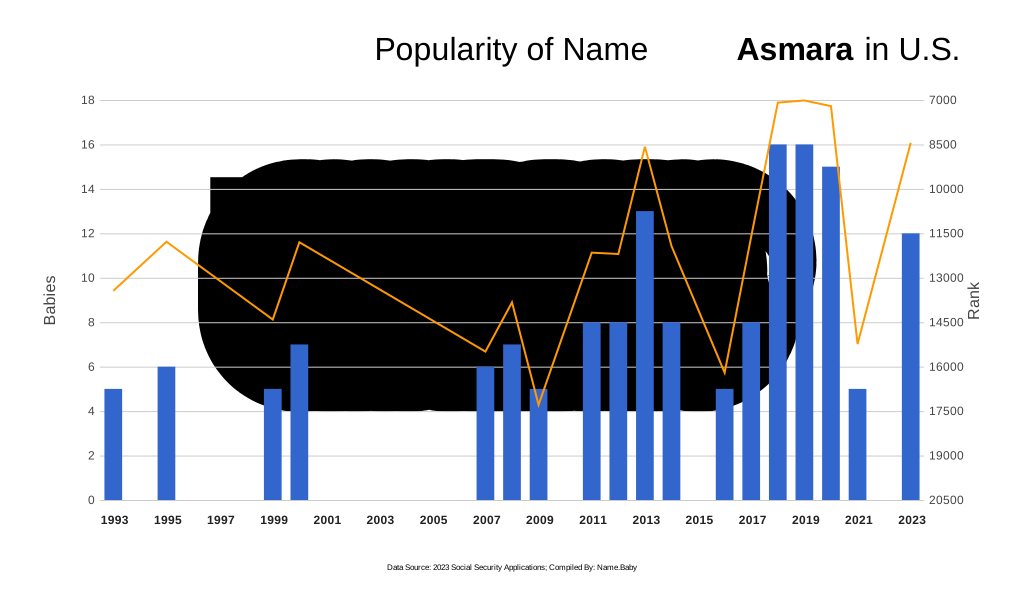
U.S. Popularity Chart
Notable People Named Asmara
| Asmara Kiani - |
