Atharva
Meaning of Atharva
Rooted in classical Sanskrit, Atharva—pronounced uh-THAHR-vuh—springs from atharvan, the ancient seer-priests whose hymns complete the Atharva Veda, and it still circulates through modern India like a gentle monsoon that perfumes both temple courtyards and living-room cradles. Scholars gloss the root as “learned sage,” “lamp of knowledge,” and even “sacred fire,” so the name arrives carrying a toolkit of wisdom, illumination, and quiet ardor. When replanted in the United States it behaves, with dry Ciceronian irony, rather like a rare banyan in a suburban yard: never the tallest tree, yet reliably shading the census around the 850th rung for a quarter-century, immune to the gusty whims of fashion. Thus, Atharva offers a son an inheritance both venerable and understated—a lyrical fusion of intellect and warmth, of ember and ink—that invites him to ponder deeply, act kindly, and, should the moment allow, surprise the roll-caller with a syllable that glows brighter than its modest statistics suggest.
Pronunciation
Hindi
- Pronunced as uh-THAHR-vuh (/ʌˈθɑrvə/)
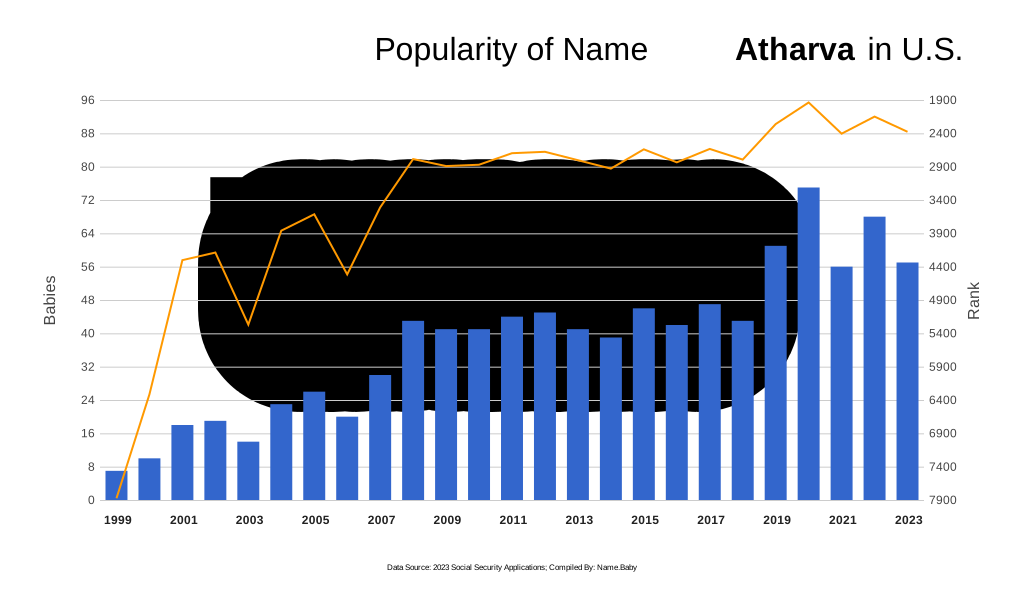
U.S. Popularity Chart
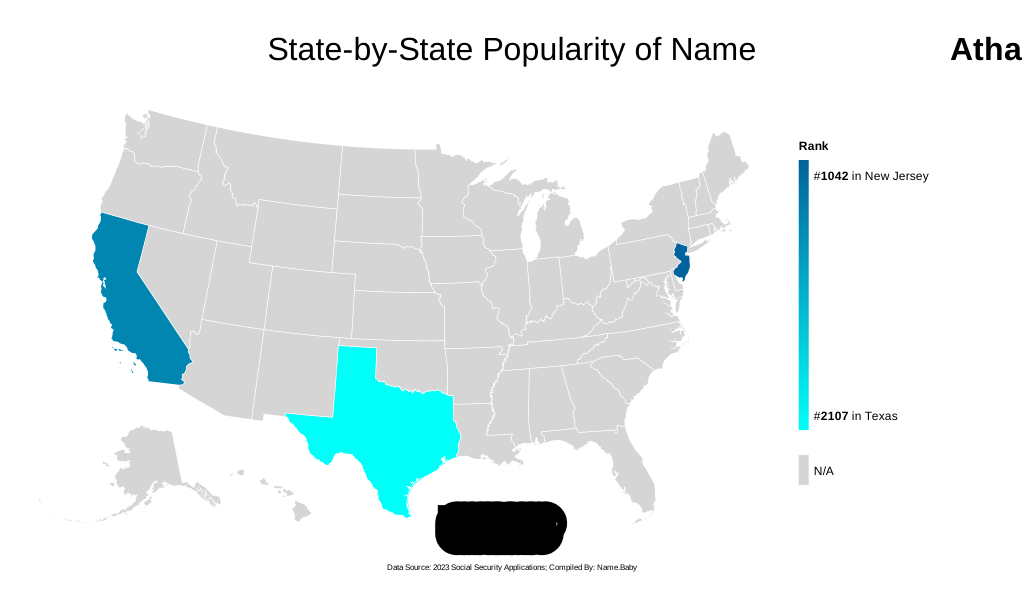
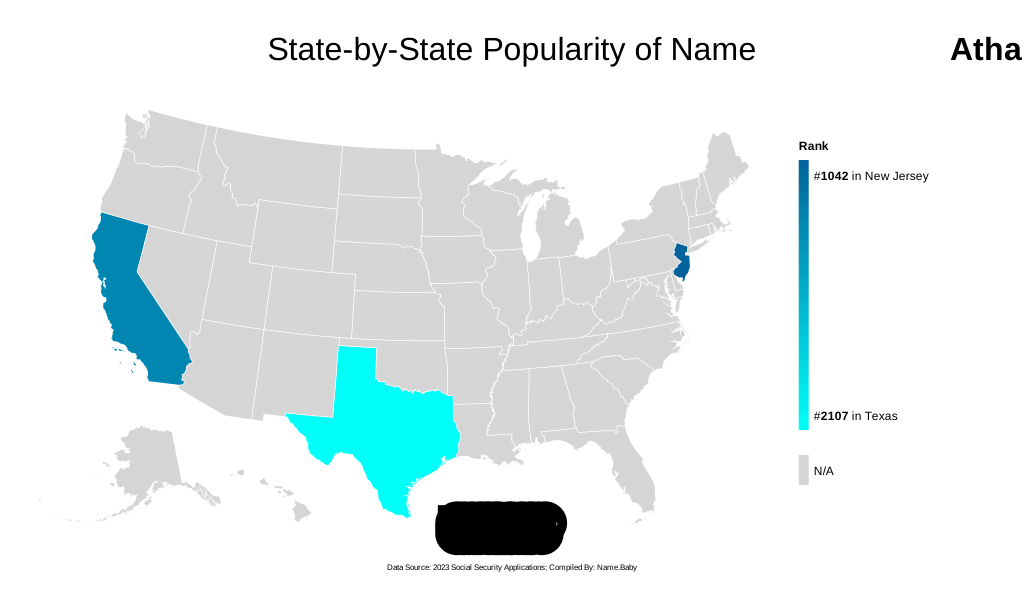
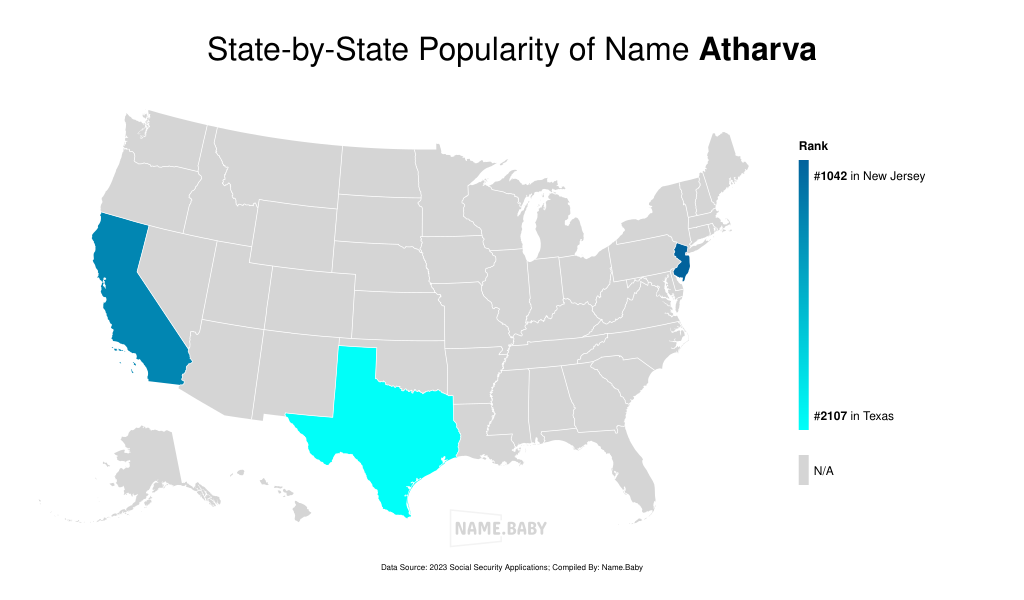
States Popularity Chart
Notable People Named Atharva
| Atharva Ankolekar - |
| Atharva Taide - |
