Audie
Meaning of Audie
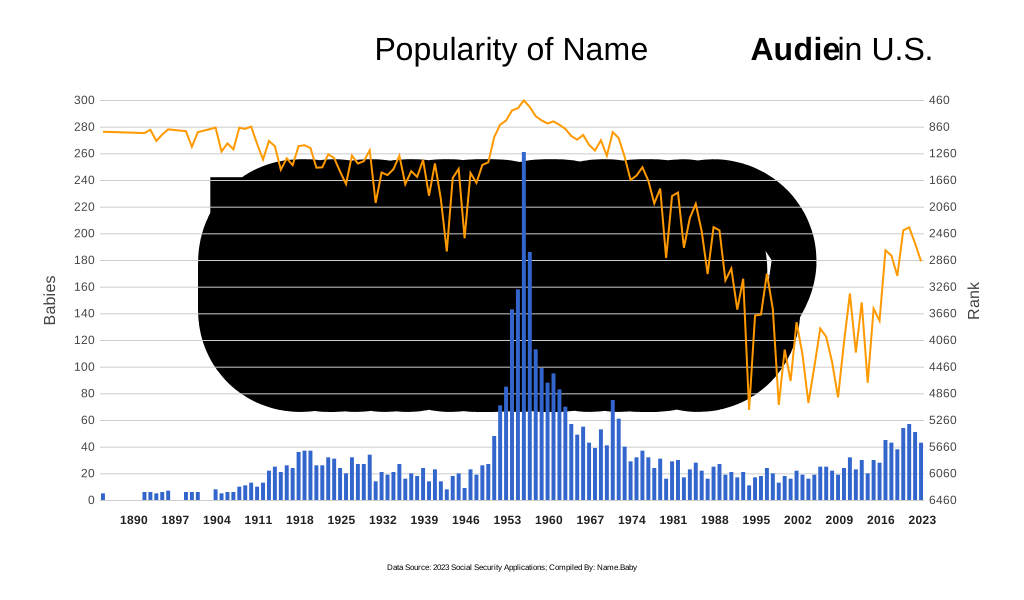
Audie began life as what linguists call a “hypocoristic”—a pet form clipped from longer, wealth-laden Old English and Norse names that opened with the element aud / ēad (“prosperity, riches”), yet, like a well-polished silver dollar, it has long since circulated on its own merit. Across the Atlantic it is impossible to hear the name without recalling Audie Murphy, the Texas farm boy who became America’s most decorated World War II soldier and later a laconic Hollywood lead; his sudden celebrity in the late 1940s sent the name shooting up the charts in a manner any modern influencer might envy, before the graph settled into the gentle ripple you see today. In recent decades its unisex credentials have been burnished by journalist Audie Cornish and a scattering of athletic and musical bearers, proving the sound’s easy adaptability—bright, succinct, and impossible to mispronounce. Culturally, Audie straddles a pleasant line: homespun yet heroic, vintage yet not moth-eaten, carrying faint echoes of “Audio” that lend it a quiet tech-savvy wink. Parents who choose it are, in effect, giving their child a compact flask of optimism—prosperity in the root, courage in the namesake, and just enough rarity to feel quietly distinguished on a playground increasingly crowded with longer syllables.
Pronunciation
English
- Pronunced as AW-dee (/ˈɔːdi/)
U.S. Popularity Chart
Notable People Named Audie
| Audie Murphy - |
