Avigail
Meaning of Avigail
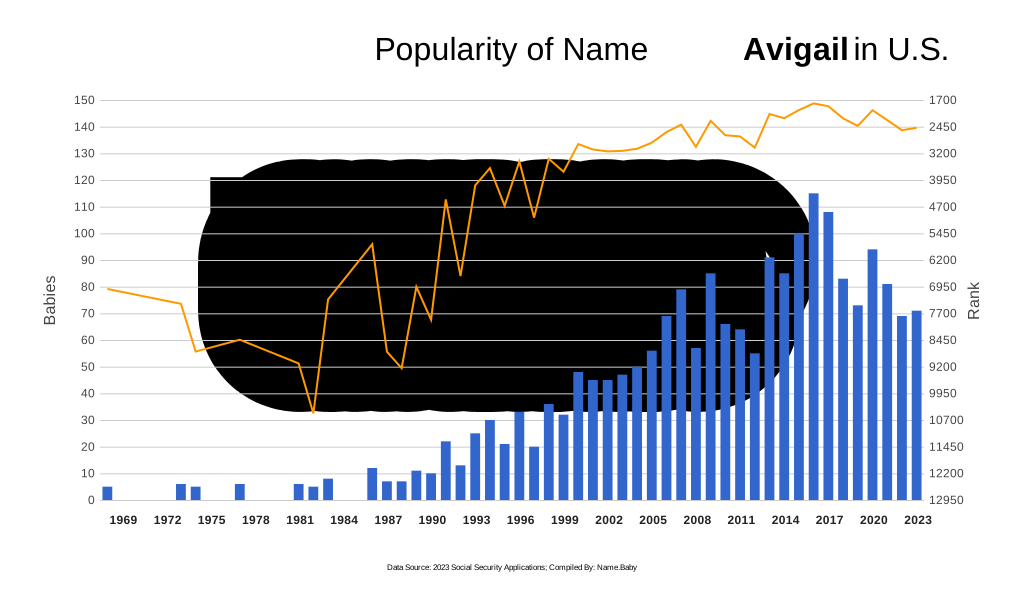
Rooted in the Hebrew av, “father,” and gil, “joy,” Avigail radiates the quiet luminosity of its biblical namesake—King David’s discerning wife—while maintaining the crisp phonetic cadence prized in contemporary Israeli speech. Although this orthography merely transliterates the more familiar Abigail, the subtle shift from the soft b to the voiced v lends the name an Old-World luster that resonates across Sephardic communities from Mexico City to Buenos Aires, weaving it into the broader tapestry of the Latin diaspora. Statistical evidence drawn from American birth records reveals a pattern of steady, if modest, adoption: since the 1970s Avigail has hovered in the mid-700s to low-900s, a position that safeguards its distinctiveness without relegating it to obscurity. Sociolinguists often note that such peripheral yet persistent usage signals a deliberate choice by parents who wish to honor Hebrew heritage without surrendering lyrical elegance, and indeed the name’s meaning—“my father is joy”—offers an intimate blessing that can traverse languages as effortlessly as a gentle dawn traveling across the Andes.
Pronunciation
Hebrew
- Pronunced as ah-vi-GAHYL (/ʔɑvɪˈɡaɪl/)
U.S. Popularity Chart
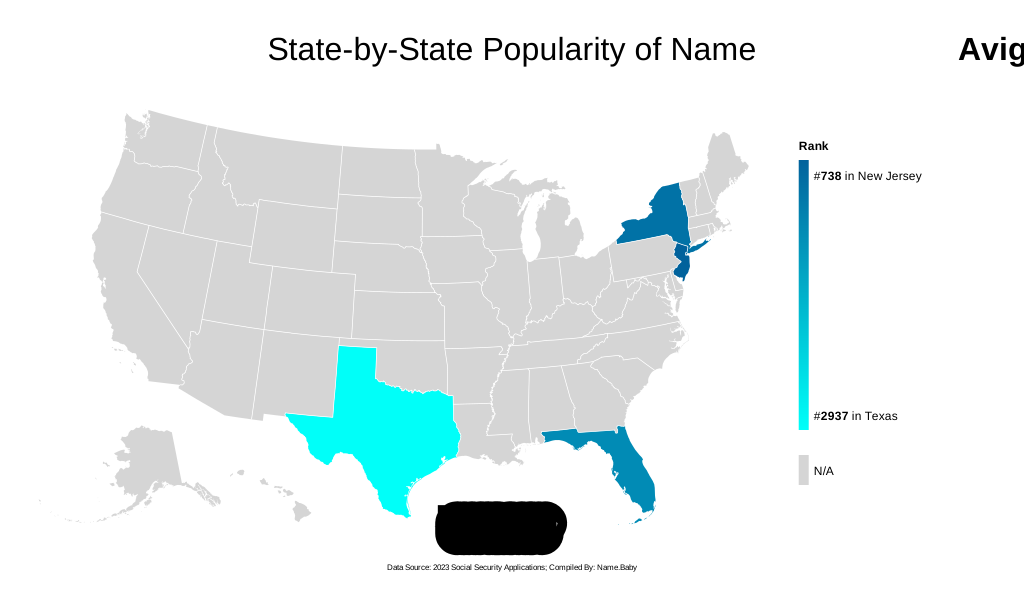
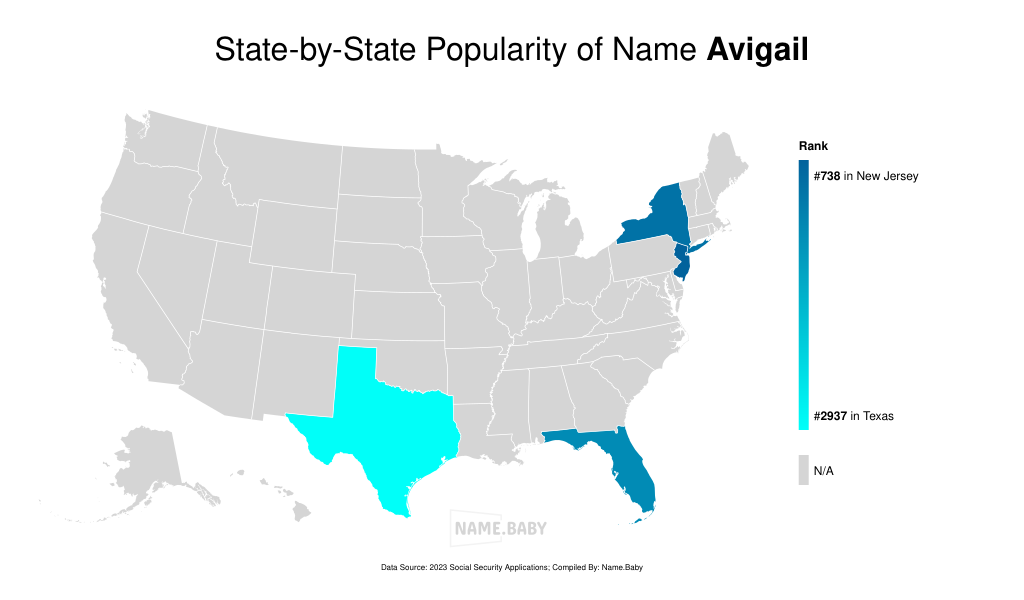
States Popularity Chart
Notable People Named Avigail
| Avigail Kovari - |
