Basilia
Meaning of Basilia
Basilia, the feminine bloom of the ancient Greek Basileios, steps into the world wearing an invisible crown, for her lineage reaches back to basileus—“king”—and radiates the quietly commanding meaning of “royal” or “queenly.” First whispered in early Christian catacombs—legend speaks of a youthful Saint Basilia who outshone an emperor’s decree—then sung through medieval cloisters from Sevilla to Santiago, the name sailed westward on galleons heavy with silver and hope, finally finding harbor in the Americas. In Spanish it dances as bah-SEE-lee-ah, while in English it lilts to buh-SIL-ee-uh, yet in any tongue it keeps its stately poise. Modern U.S. records show Basilia flaring like a comet every few years—enough to sparkle, never enough to crowd—granting parents a seat in an exclusive guild of taste-makers. Some hear the echo of fragrant basil leaves, others picture a newborn waving a plush scepter in the playpen; either way, Basilia wraps a child in a cloak woven from history, spice, and understated majesty.
Pronunciation
Spanish
- Pronunced as bah-SEE-lee-ah (/baˈsilja/)
English
- Pronunced as buh-SIL-ee-uh (/bəˈsɪlijə/)
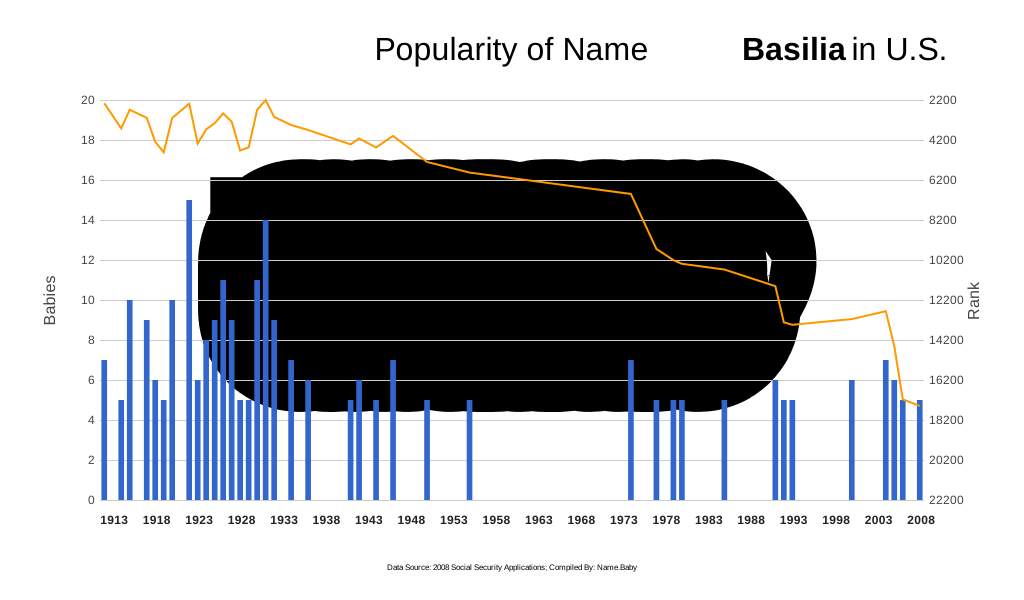
U.S. Popularity Chart
Similar Names to Basilia
Notable People Named Basilia
| Basilia de Clare - |
