Brom
Meaning of Brom
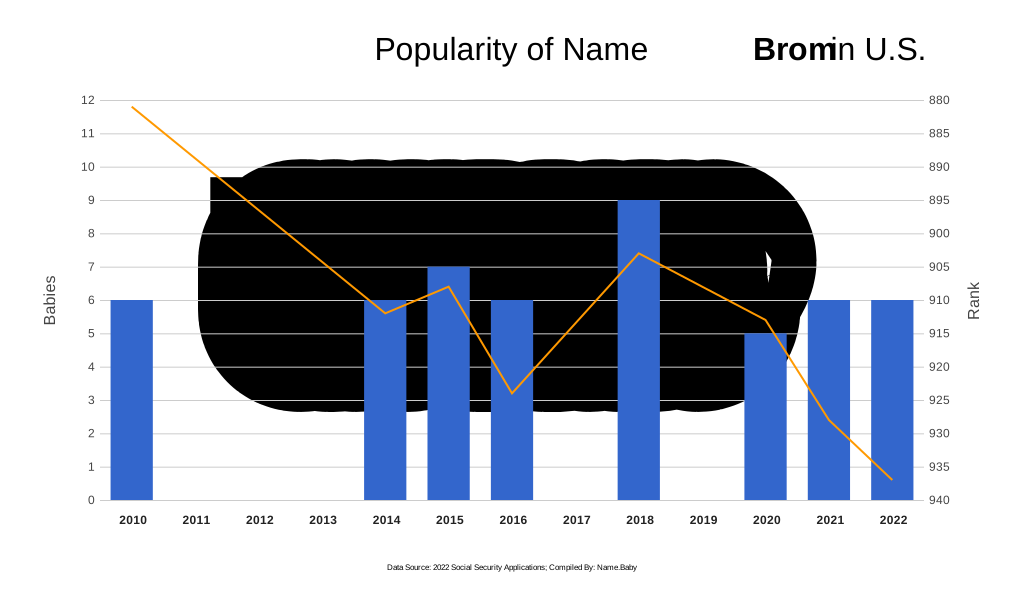
In sunlit reverie, Brom unfurls like a lone broom blossom on a windswept hillside, its two-syllable breath—BRAHM—whispering of Old English roots in the very word for the fragrant shrub that carpets spring fields, and hinting, with a playful wink, at the venerable Hebrew name Abraham, “father of multitudes,” as though a secret nobility were folded into its simple elegance. Though scarcely half a dozen little Broms have graced American birth records in recent seasons—hovering amid the nine-hundred-plus ranks of rarity—this name carries the warmth of a Tuscan afternoon, where golden broom flowers dance in the breeze and every petal seems to promise resilience and quiet strength. It evokes the ancient chapels tucked into sunbaked stone villages, where laughter drifts through arched doorways like incense, and a gentle humor flits at the corners of conversation. In its consonant-cloaked core lies a steadfast heart, an invitation to stand tall as a lone tree against the horizon, yet bend gracefully with the tides of fortune. To speak “Brom” is to name a child whose roots run deep into the earth’s fragrance and whose spirit, like the broom’s bright yellow bloom, endures with timeless charm.
Pronunciation
English
- Pronunced as BRAHM (/brɑm/)
U.S. Popularity Chart
Notable People Named Brom
| Brom Wikstrom - |
