Burke
Meaning of Burke
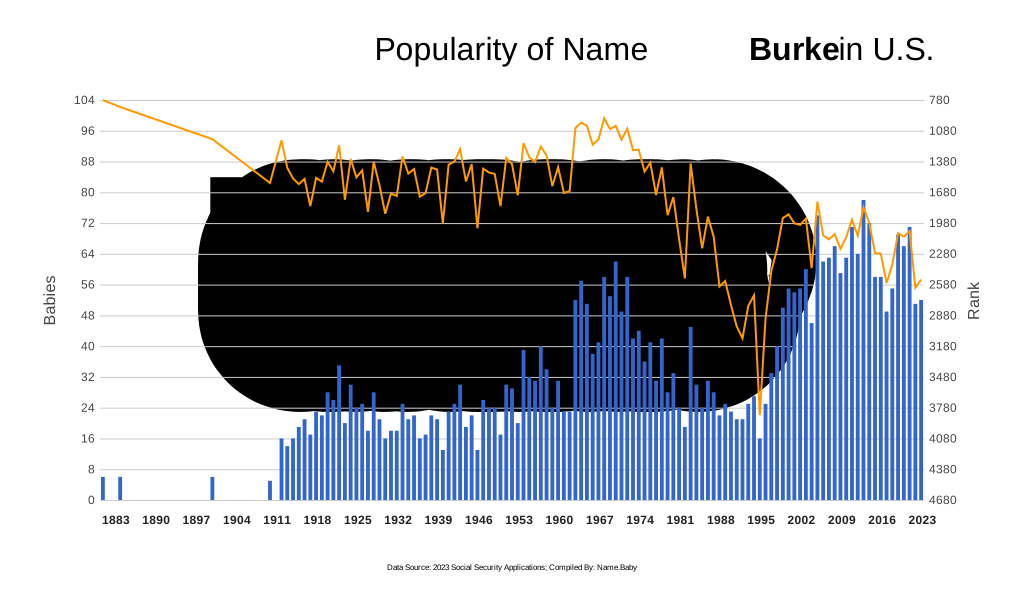
Burke, rooted in the Anglo-Norman surname de Burgh—ultimately from the Germanic burg, “fortified place”—entered Britain with the Normans, embedded itself in Ireland as the Gaelicised de Búrca, and, by the nineteenth century, crossed the Atlantic where its sturdy consonants began serving as a compact given name. The lineage invokes medieval strongholds, the intellectual legacy of statesman-philosopher Edmund Burke, and the pragmatic resilience of American frontier families who carried the name westward. National birth data portray a pattern of measured persistence: first charting in the U.S. top-1000 at the century’s turn, Burke has drifted between the mid-500s and high-800s, with 37 boys receiving the name in 2024—rare enough to feel distinctive, yet documented enough to be readily recognized. Phonetically streamlined—pronounced BERK (/bɜːrk/)—it offers a single-syllable alternative to longer Celtic or Norman choices while preserving a historical aura of fortification, governance, and quietly enduring stature.
Pronunciation
British English
- Pronunced as BERK (/bɜːk/)
American English
- Pronunced as BERK (/bɜrk/)
U.S. Popularity Chart
Notable People Named Burke
| John Burke Shelley was a Welsh musician best known as the lead singer and bassist of the heavy metal band Budgie. |
