Cambridge
Meaning of Cambridge
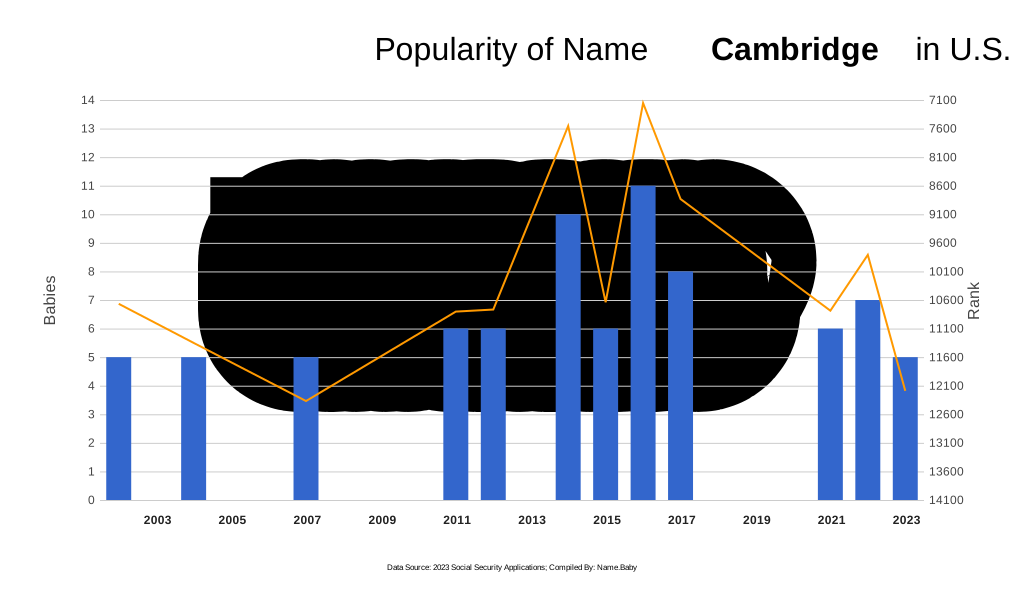
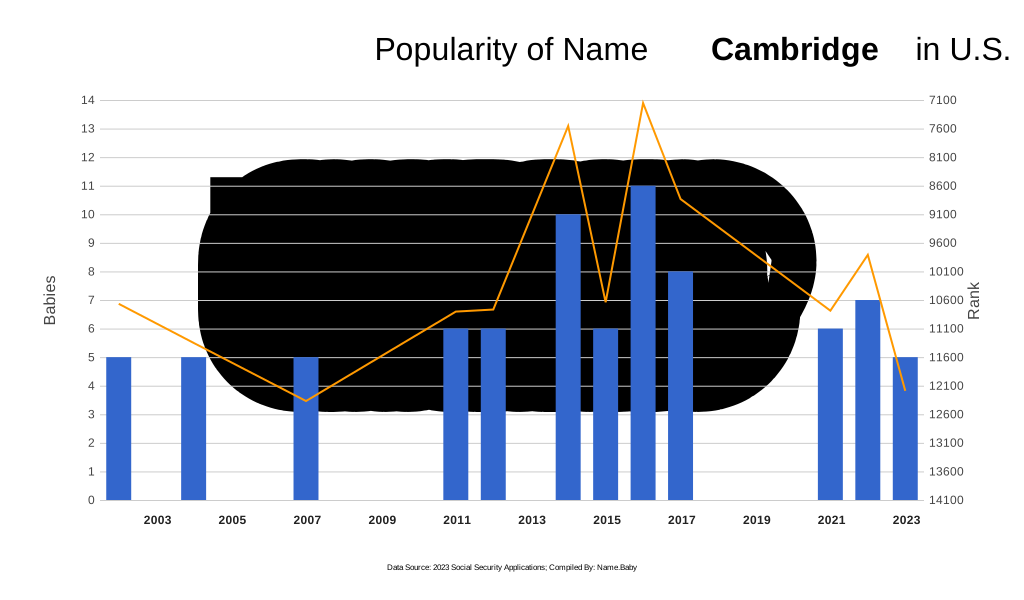
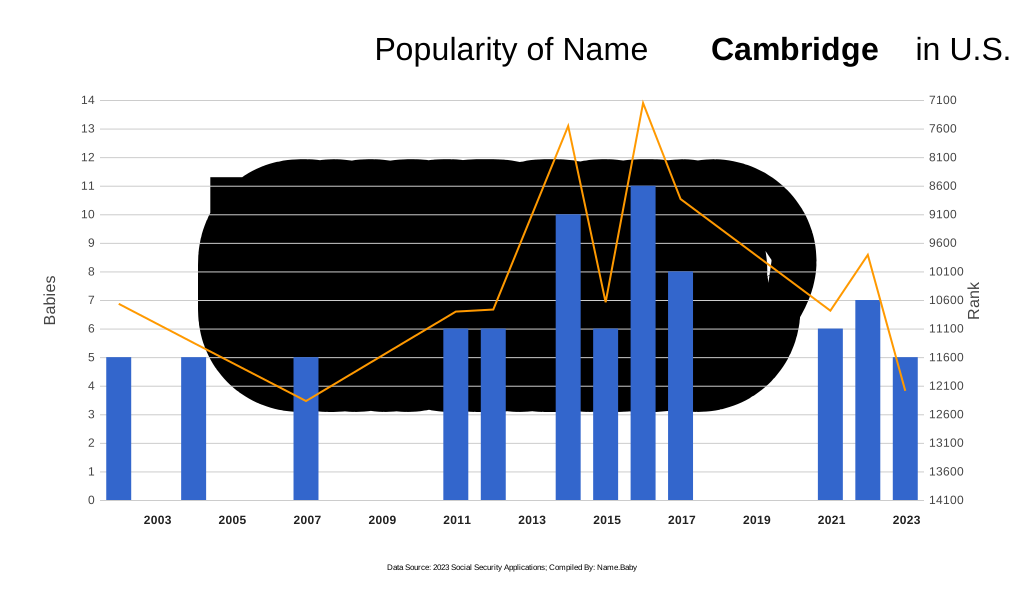
Cambridge, employed as a unisex given name, originates from the eponymous city in eastern England; its toponymic derivation traces to the Old English compound Cantebrigge, signifying “bridge over the River Cam.” Within Anglo-American contexts the designation conveys associations of academic preeminence, historical continuity, and architectural heritage, resonating particularly through the global reputation of the University of Cambridge and the British aristocratic titles linked to the Dukedom of Cambridge. Phonetically rendered as /ˈkeɪm.brɪdʒ/, the name exhibits monosyllabic clarity and dialectal stability across standard English varieties. According to United States Social Security Administration data, it has maintained a sparse yet persistent presence among newborn registrations—recording five to eleven annual occurrences and fluctuating within the 800th to 950th rank bracket since the early 2000s—thereby underscoring its rarity and distinctive character. As a choice it embodies scholarly ambition and cultural gravitas without prescribing gendered connotations, offering a technically precise yet evocative appellation.
Pronunciation
English
- Pronunced as KAYM-brij (/ˈkeɪm.brɪdʒ/)
U.S. Popularity Chart