Canan
Meaning of Canan
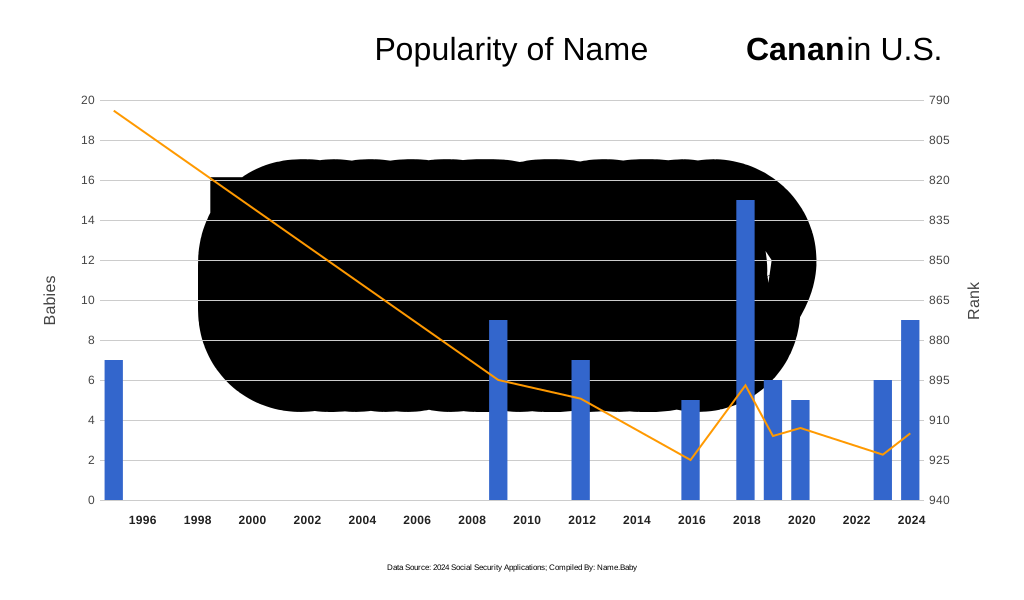
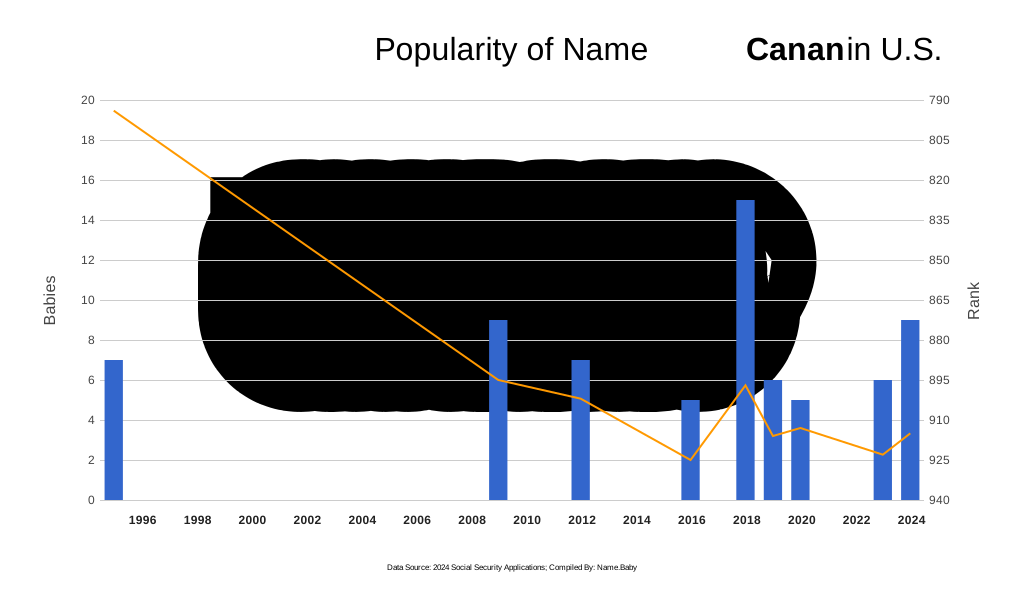
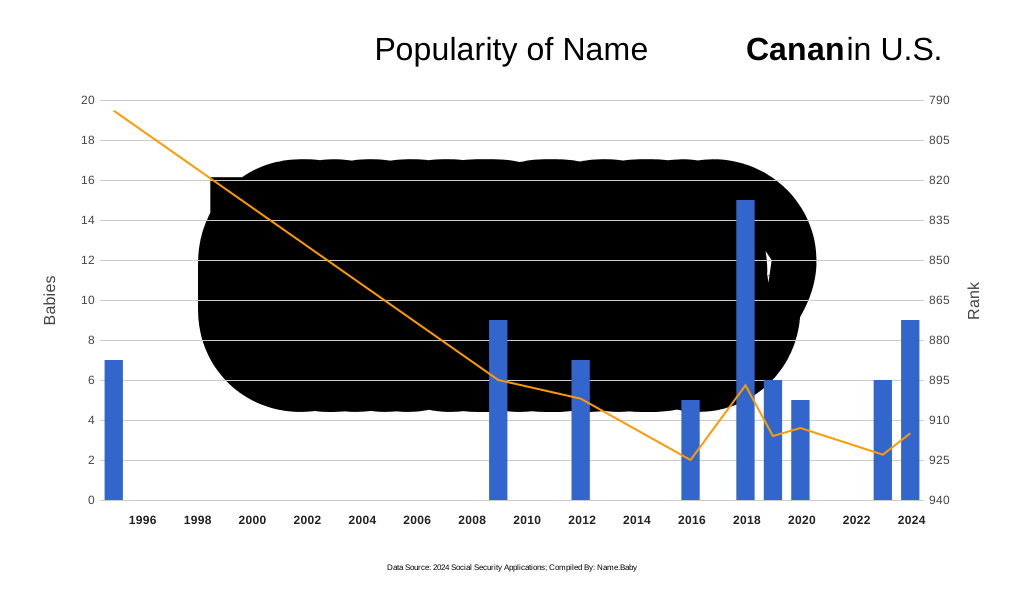
Canan is a masculine given name of Turkish provenance, pronounced /dʒaˈnan/ (jah-NAHN), ultimately deriving from the Persian term جَنان (jânân), which denotes “beloved” or “sweetheart.” Its etymological composition reflects the Persian root jân, meaning “life” or “soul,” combined with the suffix -ân to convey an intensified sense of endearment. In the United States, the Romanized form Canan has sustained a modest yet steady onomastic presence: since 1995 it has been registered for between five and fifteen male newborns annually, placing it consistently within Social Security Administration rankings in the 794–925 interval, most recently appearing nine times at rank 915 in 2024. This pattern of limited but continuous usage underscores the name’s dual character as both linguistically resonant—anchored in a layered Persian‐Turkish heritage—and distinctively rare within the broader Anglo‐American anthroponymic corpus. Accordingly, Canan offers registrants an appellation that marries historical depth, semantic exactitude, and a measure of uniqueness.
Pronunciation
Turkish
- Pronunced as jah-NAHN (/dʒaˈnan/)
U.S. Popularity Chart
Notable People Named Canan
| Canan Dağdeviren - |
| Canan Bayram - |
| Canan Karatay - |
| Canan Kaftancıoğlu - |
| Canan Gullu - |
