Cecil
Meaning of Cecil
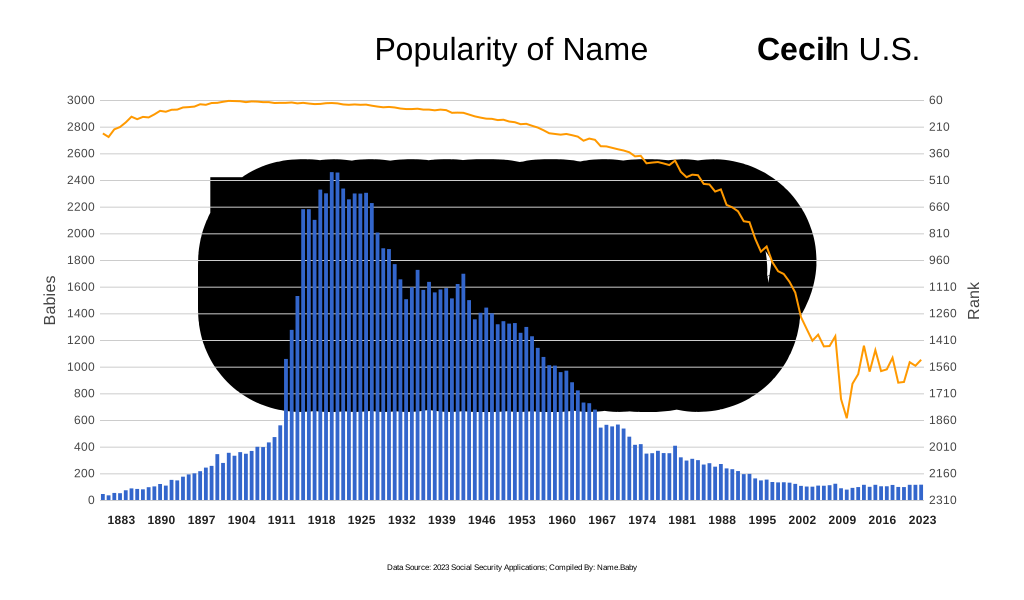
Cecil—pronounced the bright, quick SEE-suhl—steps from the parchment of ancient Rome, carrying the Latin epithet caecus, “blind,” yet he strolls through history like a seer, feeling the contours of destiny with unerring fingertips. In his wake trail purple-togaed senators of the Caecilius clan, the grand sweep of Saint Cecilia’s hymns, and a cavalcade of modern namesakes: silver-screen maestro Cecil B. DeMille, statesman Cecil Rhodes, and jazzmen whose saxophones once painted midnight skies. His popularity, once ablaze in the gilded 1890s, ebbed like a tide and now returns as a quiet tidepool treasure—never common, always recognizable, a vintage coin rediscovered between the couch cushions of time. There is gentle wit in the irony: a name that means “blind” yet grants parents a clear-eyed choice, polished with Old-World grace and just a hint of cinematic spotlight. Picture Cecil as a boy wandering through sun-dappled gardens, humming a tune older than the empire, ready to greet the world with outstretched hands and a smile that seems to know, even without looking, exactly where brilliance lies.
Pronunciation
English
- Pronunced as SEE-suhl (/ˈsiːsəl/)
U.S. Popularity Chart
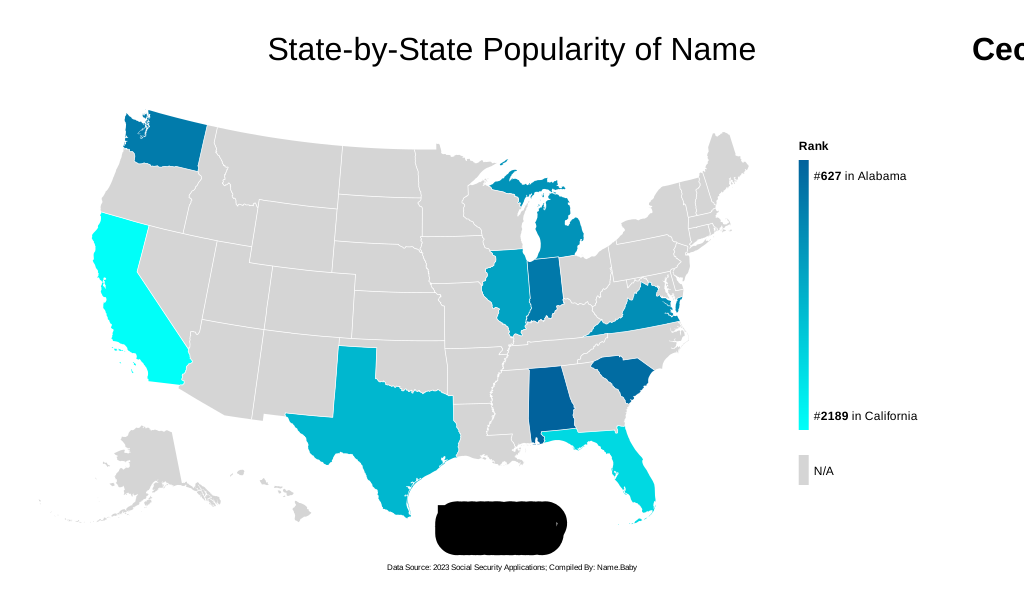
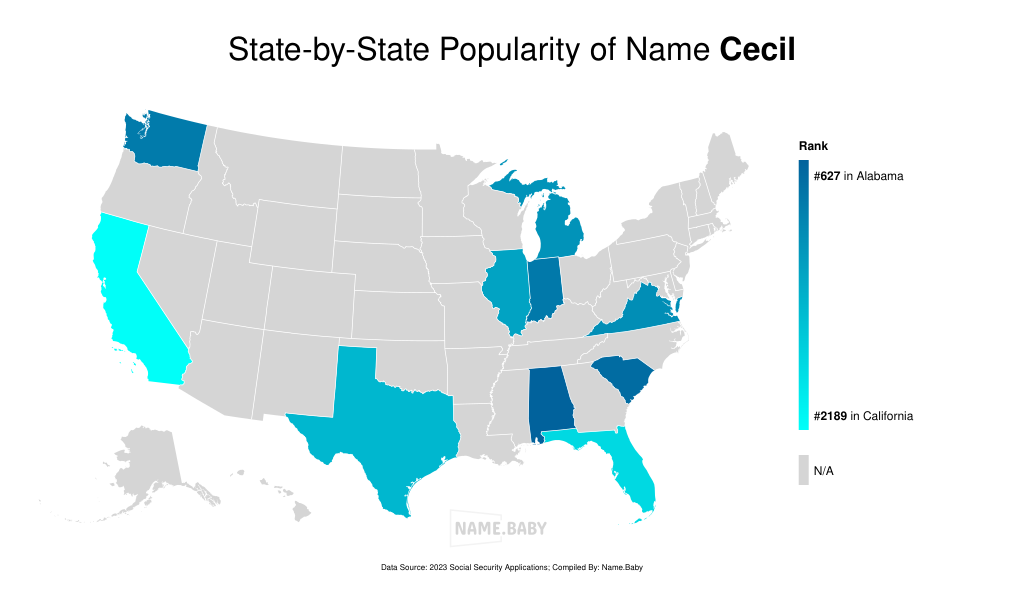
States Popularity Chart
Notable People Named Cecil
| Cecil B. DeMille - |
| Cecil Beaton - |
| Cecil Andrus - |
| Cecil Day-Lewis - |
| Cecil Arthur Lewis - |
| Cecil Healy - |
| Cecil Frances Alexander - |
| Cecil Jacobson - |
| Cecil B. Moore - |
| Cecil Chesterton - |
| Cecil Aronowitz - |
| Cecil Exum - |
| Cecil Harmsworth, 1st Baron Harmsworth - |
| Cecil Foott - |
