Cedra
Meaning of Cedra
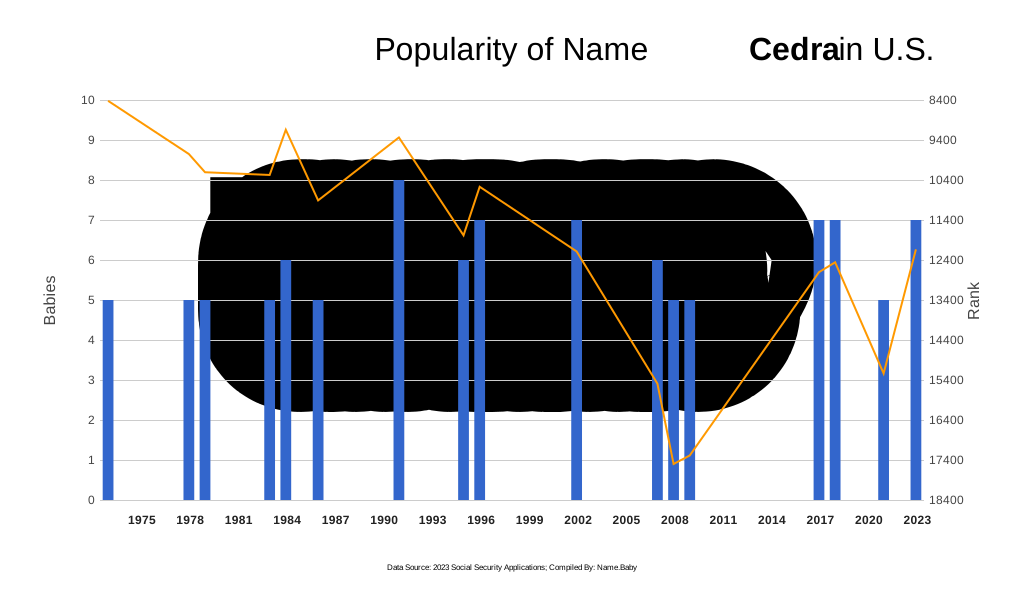
Cedra drifts forth like the pale incense of a temple cedar, her name flowering from the Latin cedrus—an evergreen that roots deep in mountain slopes from Lebanon to Japan’s mist-veiled Kiso Valley—so that every syllable, SEH-drah, carries the cool hush of forest shade and the quiet promise of endurance. She is a feminine re-casting of Cedar itself, but the added vowel softens the wood’s grain, letting moonlight slip between the branches; in Japanese imagination, one might picture her standing beside a torii gate, the cedar pillars steeped in centuries of prayer, where monks speak of kokoro, the heart that remains unshaken through winter storms. To parents she offers the scent of resilience—cedar resists rot, its timber chosen for shrines and chests—yet she keeps a whisper of serenity, as if wind-bells were stirring high above the moss. Though her appearances on American birth rolls flicker like lanterns—rare sparks since the 1970s, never crowding the ranks—each occurrence feels deliberate, a seed tucked into cool earth by those who favor quiet strength over fanfare. Cedra, then, is neither trend nor echo; she is the steady breath of evergreen dusk, a name that invites a child to grow tall, sheltering, and softly fragrant long after the blossoms of spring have passed.
Pronunciation
English
- Pronunced as SEH-drah (/ˈsɛdrə/)
U.S. Popularity Chart