Chesnee
Meaning of Chesnee
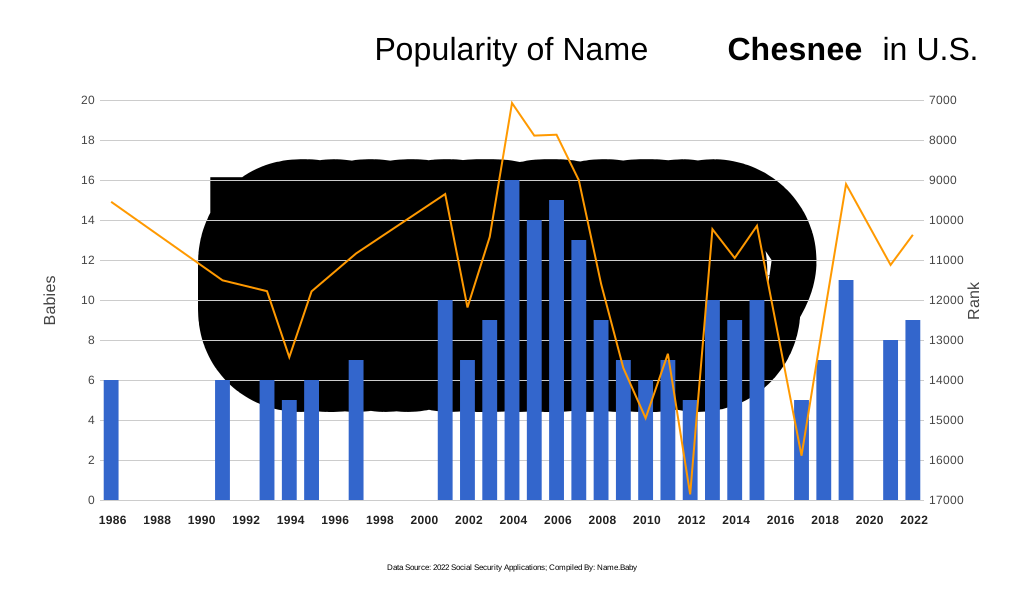
Chesnee, pronounced CHEZ-nee (/tʃɛzni/), stands as a feminine appellation of singular charm and historical resonance, its two syllables rippling like a gentle susurrus through a secluded quercetum. Etymologically descending from the Norman French surname Chesney—derived in turn from Old French chesnai and ultimately from Latin quercetum, “oak grove”—this name evokes the quiet fortitudo of the venerable quercus and imparts to its bearer an enduring sense of dignitas and natural splendor. Although Chesnee’s occurrence in the United States has remained modest—registering nine newborns and a national rank of 935 in 2022, with similar fluctuations across recent decades—its rarity endows it with exclusivity and grace. Woven into the tapestry of contemporary nomenclature, Chesnee invites contemplation of radices profundae, the deep roots that bind personal identity to ancestral soil, while simultaneously heralding the promise of growth, renewal, and the perennial elegance of nature’s verdant legacy.
Pronunciation
English
- Pronunced as CHEZ-nee (/tʃɛzni/)
U.S. Popularity Chart