Crawford
Meaning of Crawford
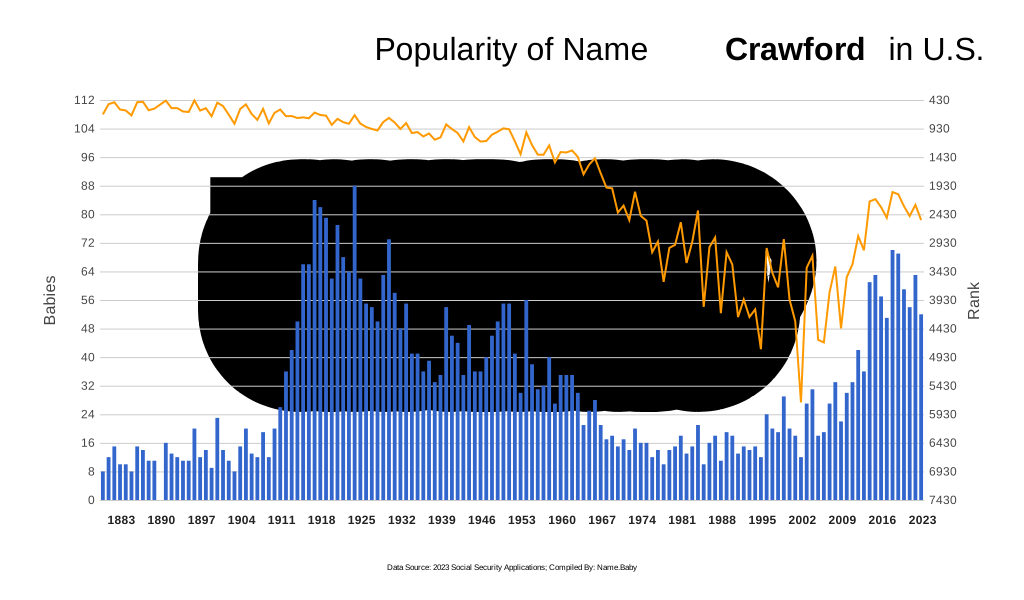
Crawford—voiced KRAH-furd in the old Scots tongue and more casually KRAW-furd in modern English—steps onto the scene like a charcoal brushstroke across a misty shōji screen, its etymology (“ford of the crows”) summoning the hush of dark wings skimming a silvered river while dusk gathers on the banks. Born as a Scottish place-name and carried into surname, clan cry, and finally given name, it still bears the clan’s quiet promise of protection—“I will give you safety through strength”—yet manages a certain minimalist chic, rather like a well-cut hakama that never goes out of style. In Japanese imagination, those crows become Yatagarasu, the three-legged guide that leads lost travelers toward the sun, so the name acquires a hint of mythic GPS, equal parts folklore and dry practicality. Over a century of American records shows Crawford hovering, unobtrusive but unbowed, along the lower edge of the Top 1000—an ink-black feather that drifts away from the spotlight only to return with stubborn regularity, suggesting a quiet confidence that needs no trumpet. Athletes, judges, and the occasional silver-screen rebel have worn it, yet it remains more river crossing than highway: a steady, slightly enigmatic passage for parents who prefer their son’s name to evoke moonlit water, disciplined strength, and the soft rustle of crows rather than the shout of the crowd.
Pronunciation
Scottish Gaelic
- Pronunced as KRAH-furd (/kraʊfərd/)
American English
- Pronunced as KRAW-furd (/krɔːfərd/)
U.S. Popularity Chart
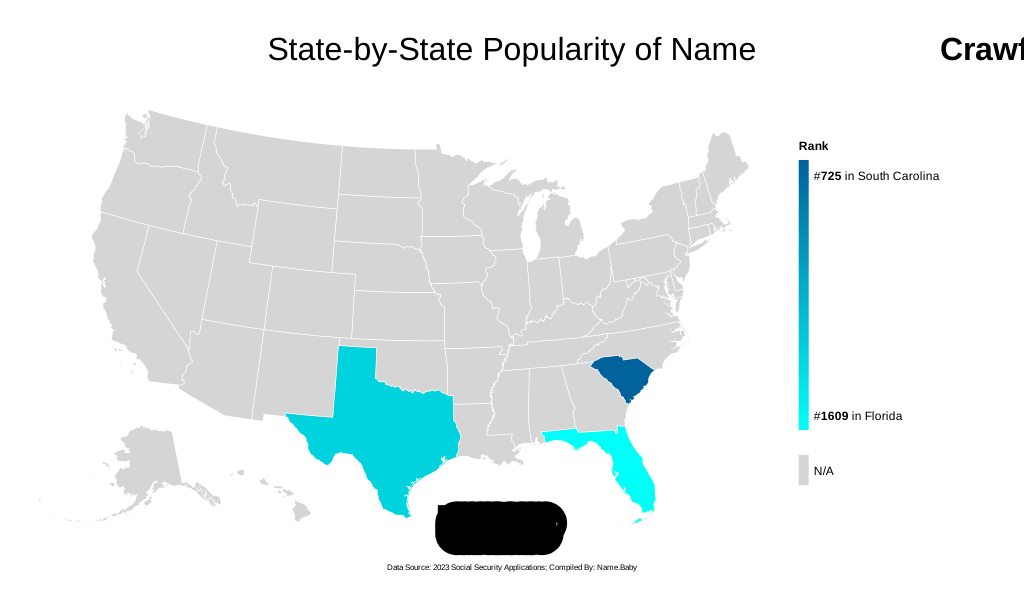
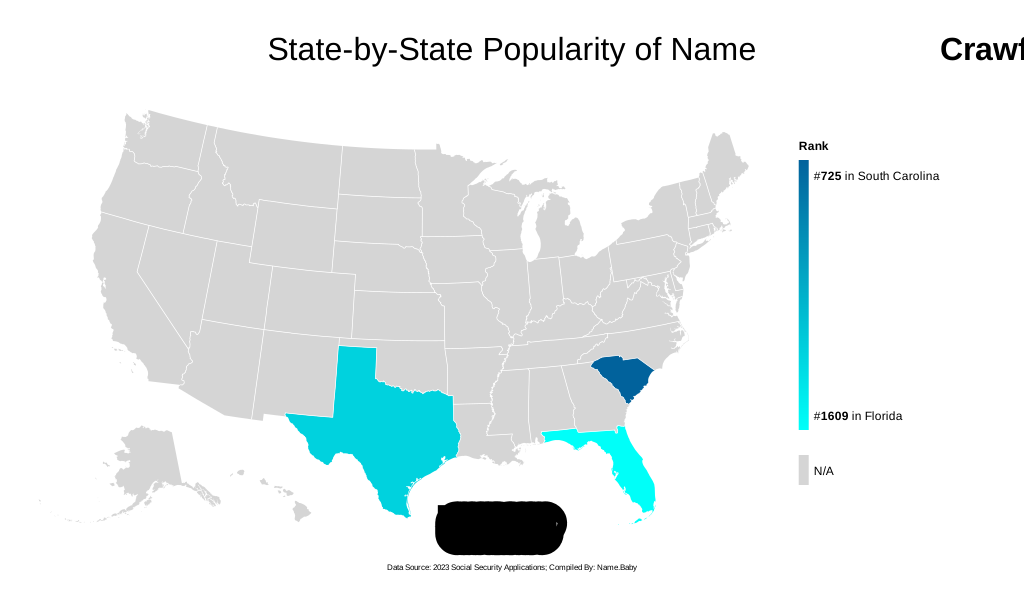
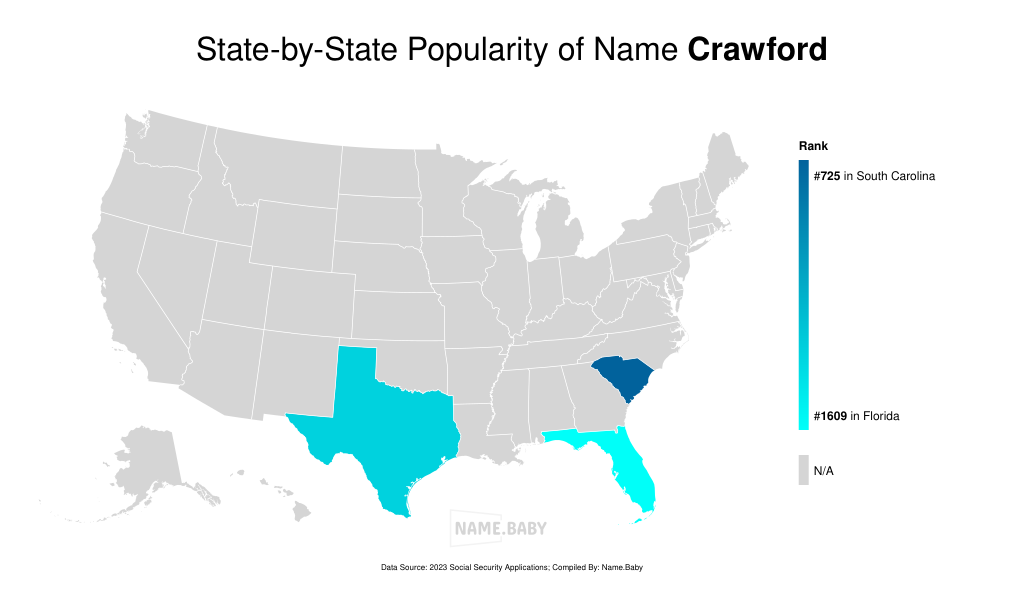
States Popularity Chart
Notable People Named Crawford
| Crawford Williamson Long was an American surgeon and pharmacist who pioneered the use of ether as an anesthetic. |
| Crawford Nalder was an Australian politician who served as Deputy Premier of Western Australia and led the state's Country Party. |
| Crawford Hallock Greenewalt was an American chemical engineer who served as president and chairman of DuPont. |
| Henry Crawford Palmer is a French-American basketball player who won a silver medal with France at the 2000 Olympics. |
