Da
Meaning of Da
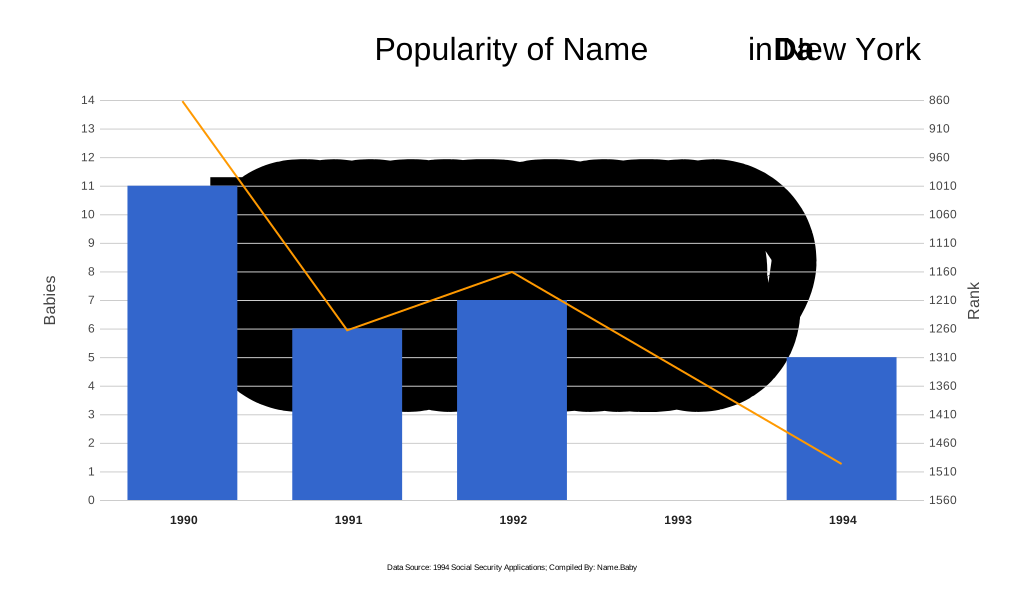
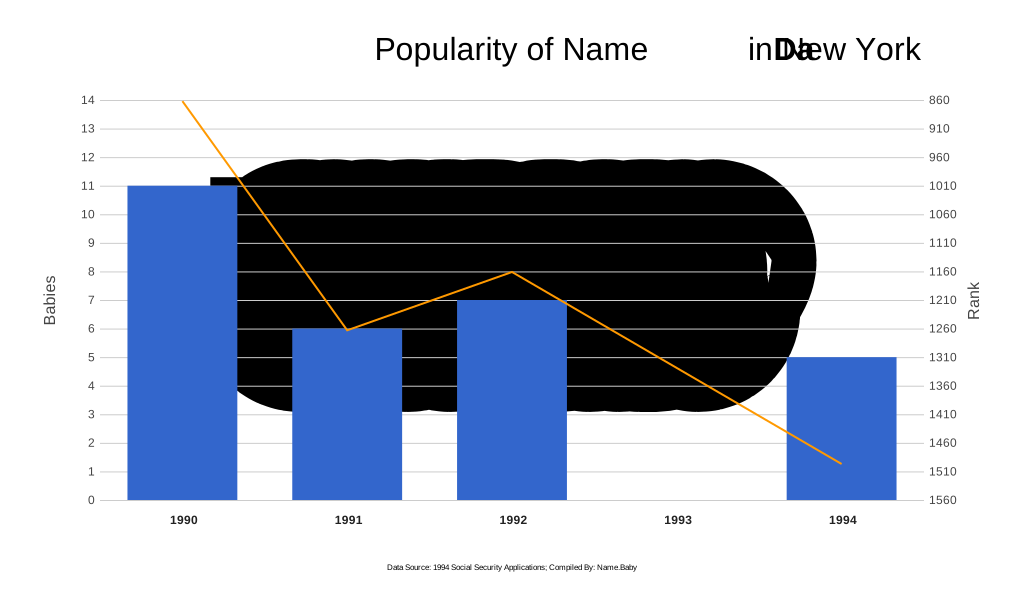
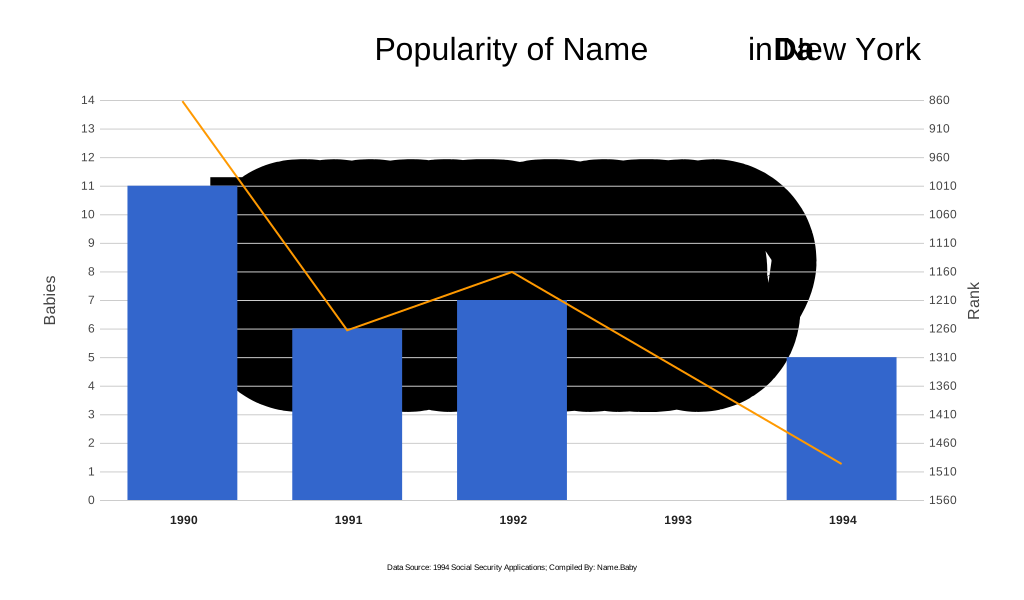
Though seldom chosen—registering only a handful of arrivals in New York during the early 1990s—Da stands out as a monosyllabic moniker whose global echoes belie its minimalist form. Etymologically, it may trace to the Chinese character 大 (Dà), signifying “great” or “grand,” or to the Sanskrit root dá-, “to give,” each strand weaving a tapestry of generosity and stature. Phonetically unencumbered—dah (/dɑː/)—it sails off the tongue like a single bold stroke on canvas, sparing parents the typographical quandaries of lengthy signatures. In an Anglo-American context, its brevity conveys a dry wit—an unspoken nod to a confident selfhood that needs no embellishment. Analytically, the transient upticks in 1990 (11 births, rank 242) and 1992 (7 births, rank 242) suggest a name flirting with niche appeal, while its absence in some years hints at a quietly deliberate rarity. Associations of lightness—“day” in archaic English—or of magnanimity from its Eastern roots, lend Da a dual heritage: at once a herald of dawn and a bearer of benevolence. For parents seeking a name that balances global texture with concise elegance, Da offers an intriguing study in how less can indeed be more.
Pronunciation
English
- Pronunced as dah (/dɑː/)
U.S. Popularity Chart
Similar Names to Da
