Dallana
Meaning of Dallana
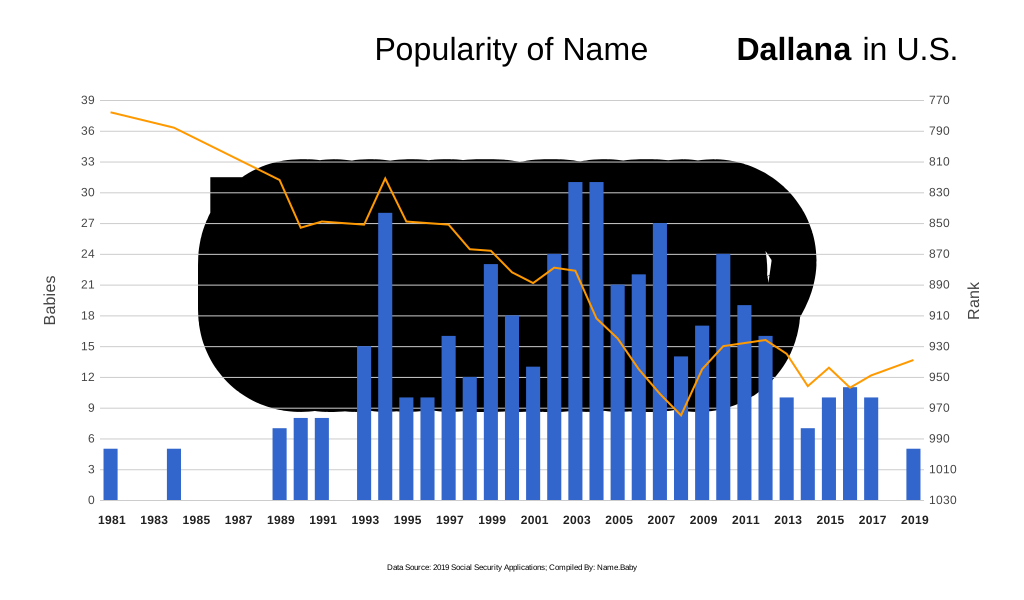
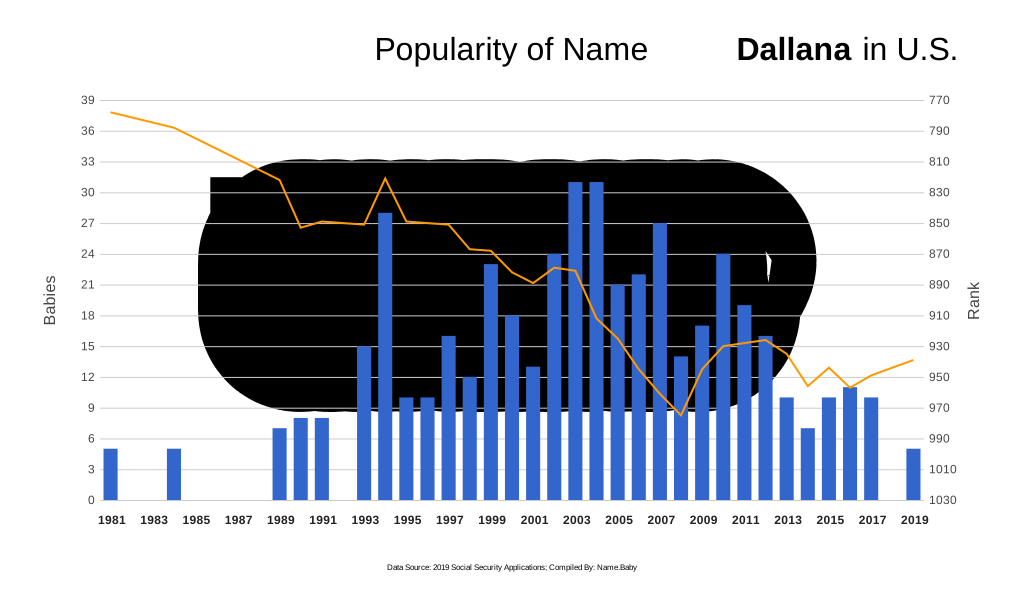
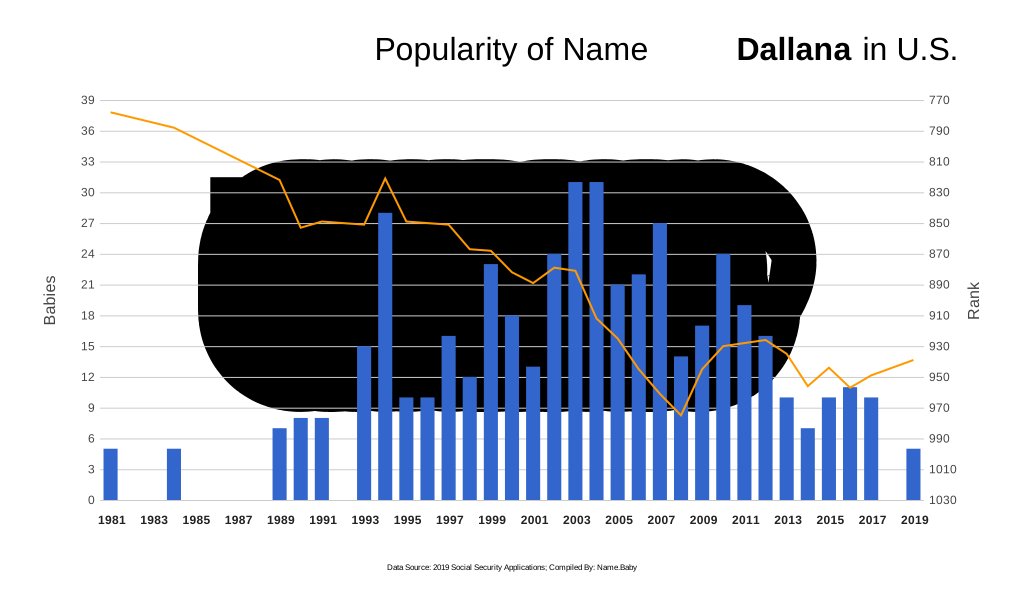
Dallana is a feminine appellation that emerged in late 20th-century Anglo-American onomastics as an engineered fusion of the Gaelic name Alana, meaning “child; noble,” and the Hebrew name Dana, meaning “judge,” thereby signifying “noble arbiter.” Phonologically, the name exhibits an iambic foot with stress on the second syllable—dah-LAH-nuh, pronounced / dɑːˈlɑːnə /—and features a liquid alveolar /l/ cluster that yields a precisely articulated yet understated closure. Its appearance in U.S. Social Security Administration records was first noted in 1981 at rank 778 with five births; by 1984 it held rank 788 with the same number of occurrences; it reached its highest recorded usage in 1994 at rank 821 with twenty-eight births before descending into a stable, low-frequency pattern in the early 21st century. Between 2000 and 2019, annual registrations oscillated between five and thirty-one births, with rankings spanning from 881 in 2003 to 975 in 2008, reflecting its sustained, albeit specialized, adoption. The name’s cool, methodical construction and cross-cultural resonance appeal to parents seeking a distinctive appellation that combines measured authority with cultural hybridity.
Pronunciation
English
- Pronunced as dah-LAH-nuh (/dɑːˈlɑːnə/)
U.S. Popularity Chart