Damary
Meaning of Damary
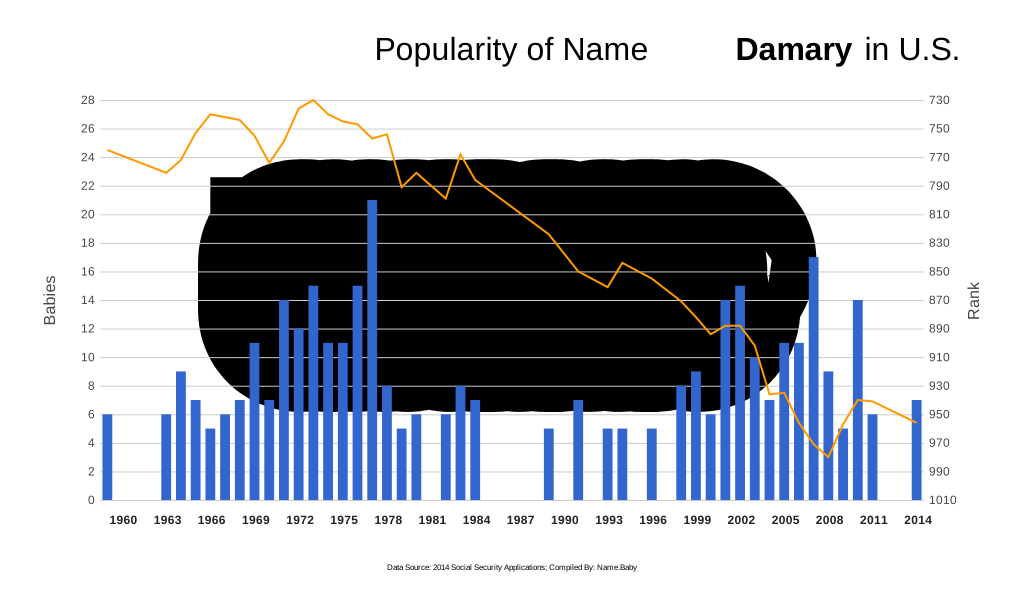
Damary, pronounced in English as duh-MAIR-ee (/dəˈmeəri/ or /dəˈmɛri/), emerges as a feminine name at the intersection of classical and contemporary sensibilities. Its etymology suggests a creative synthesis of the Spanish dama, “lady,” with the Hellenic-rooted Damaris—herself immortalized in early Christian writings—yielding a designation that conveys both dignified poise and gentle resilience. In Latin-influenced cultures, Damary has functioned as a subtle emblem of personal distinction, its melodious cadence unfolding like a soft echo through family narratives. An analytical survey of U.S. Social Security data indicates a sporadic yet enduring presence since the late 1950s, peaking in the mid-1980s within the 700-to-800 rank range before gradually retreating to the lower reaches of the top 1000; this pattern underscores the name’s appeal among parents seeking a blend of historical depth and modern originality rather than a fleeting trend.
Pronunciation
British English
- Pronunced as duh-MAIR-ee (/dəˈmeəri/)
American English
- Pronunced as duh-MAIR-ee (/dəˈmɛri/)
U.S. Popularity Chart