Demya
Meaning of Demya
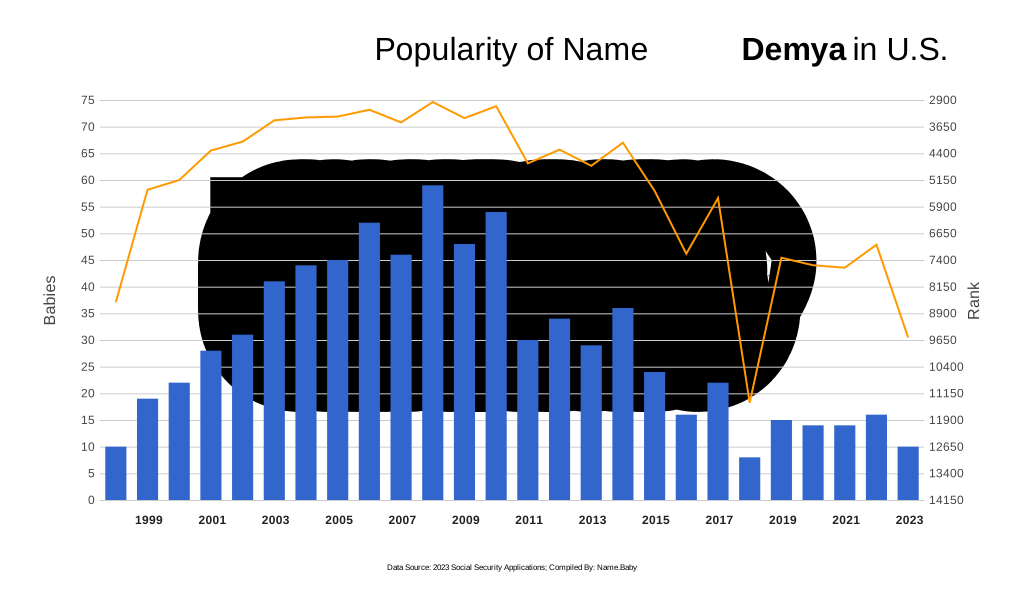
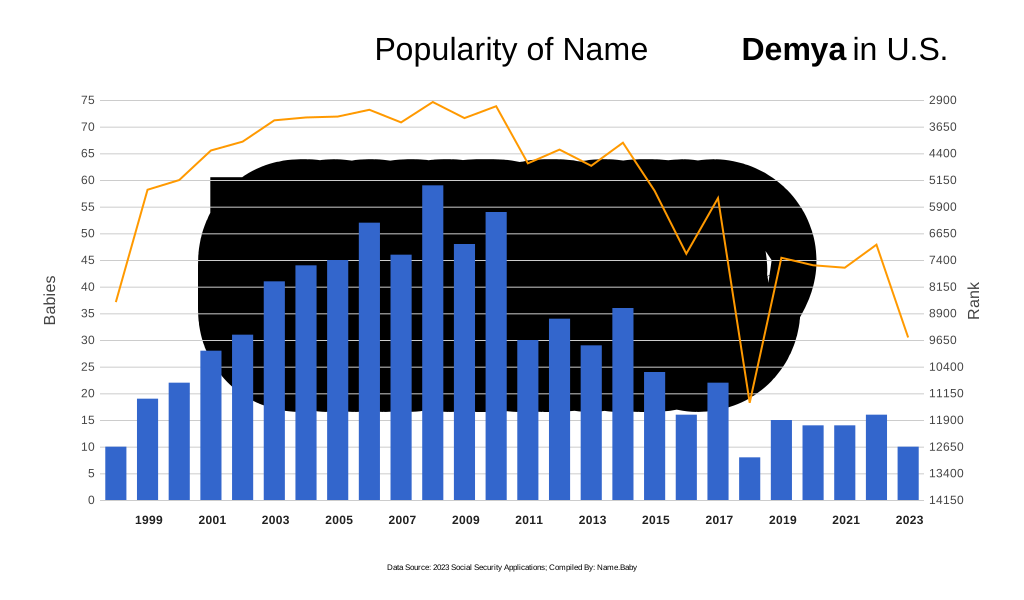
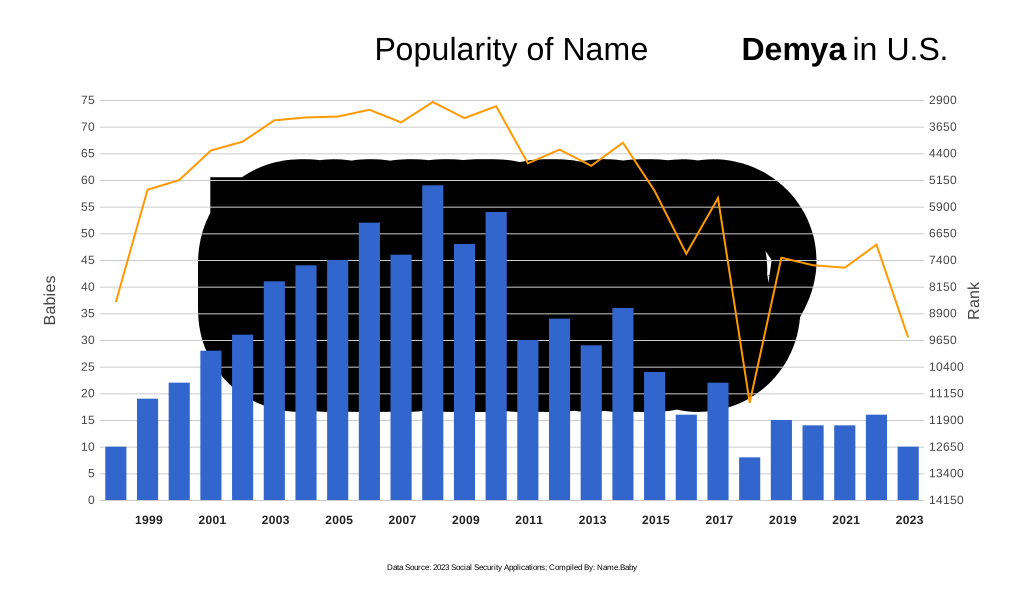
Demya, pronounced deh-MY-uh (/dəˈmaɪə/), presents itself as a distilled echo of the venerable Greek name Demetria—itself the Latinized daughter of Demeter, the ancient earth-mother deity of harvest and fecundity—and thus carries the quiet gravitas of classical myth woven with a modern sensibility. Like a Tuscan dawn breaking over emerald vineyards, the name evokes notions of renewal, abundance and the inexorable cycle of growth, while its rare usage in the United States—hovering between the 869th and 952nd ranks since the late 1990s, with annual occurrences ranging from eight to fifty-nine—attests to its status as a carefully chosen, rather than casually bestowed, appellation. In academic terms, Demya functions as a succinct onomastic innovation, excising the tri-syllabic cadence of its predecessor to yield a more lyrical, two-beat rhythm, and in doing so it confers upon its bearer a sense of poised elegance tempered by an undercurrent of ancient power. One might quip—with the driest of smiles—that bestowing the name Demya upon a daughter grants her half-divinity and half-mystery, a bargain well struck in the pantheon of contemporary feminized classics.
Pronunciation
American English
- Pronunced as deh-MY-uh (/dəˈmaɪə/)
U.S. Popularity Chart