Dezariah
Meaning of Dezariah
Dezariah, pronounced deh-ZAIR-ee-uh (/dɛˈzɛəriə/), emerges as a distinctive feminine given name rooted in the ancient Hebrew anthroponym Azariah, whose etymological core—‘azar,’ meaning “to help,” intertwined with the theophoric element ‘-iah’—conveys “God has helped.” Through the addition of a Latin-tinged prefix “De-,” this name acquires a melodious resonance akin to the sunlit cadences of Romance languages, forging a bridge between Old Testament gravitas and modern linguistic elegance. Morphologically, Dezariah exemplifies the adaptive processes by which diasporic communities reconfigure biblical nomenclature to reflect evolving cultural identities, embedding within its syllables both sacred legacy and contemporary flair. Like a dawn-lit tapestry woven from threads of spiritual succor and poetic rhythm, it evokes imagery of resilience blooming in soft-tinted hues—an emblem of hope, divine favor and enduring grace. In its formal dignity and warm undertones, Dezariah stands as a testament to the dynamic interplay of heritage and innovation in the naming traditions of a globalized age.
Pronunciation
English
- Pronunced as deh-ZAIR-ee-uh (/dɛˈzɛəriə/)
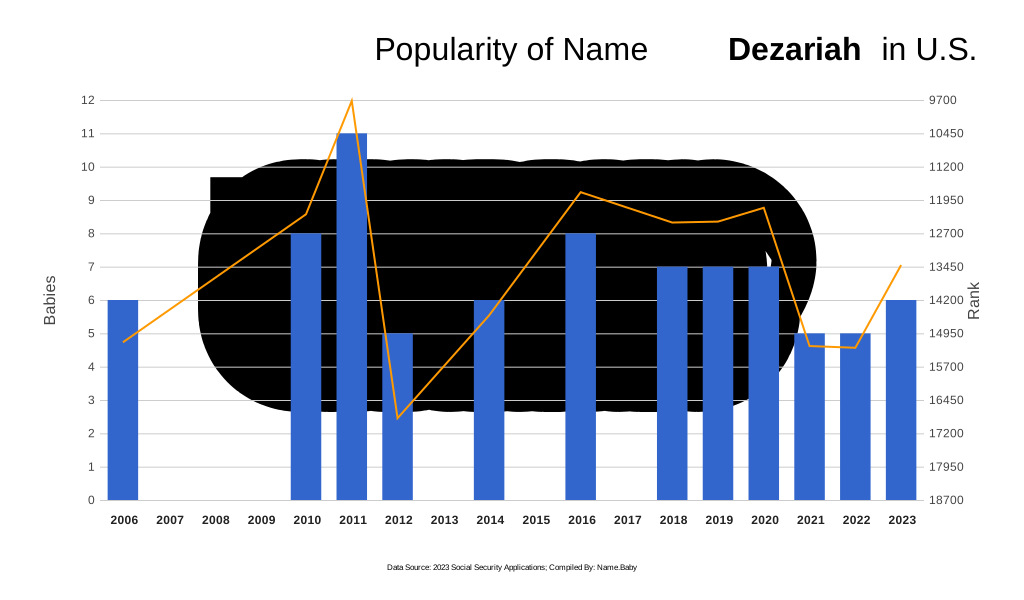
U.S. Popularity Chart