Ebony
Meaning of Ebony
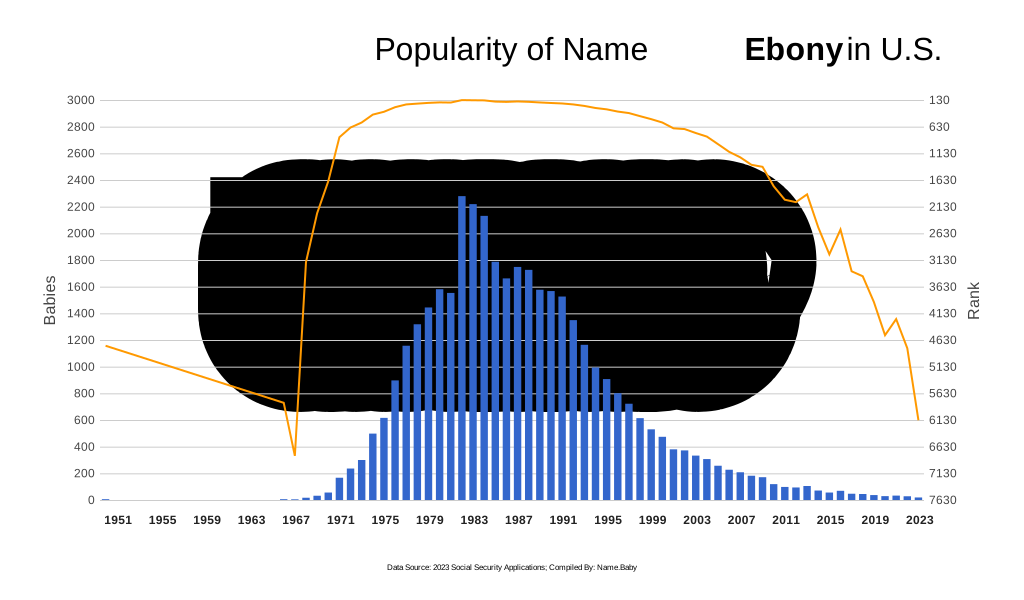
Ebony, commonly bestowed upon female children and pronounced EH-buh-nee (/ˈɛbəni/), traces its etymology to the late Latin ebenus—borrowed in turn from Greek ἔβενος (ébenos)—denoting the dense, lustrous hardwood celebrated for its deep, uniform hue. As a modern given name, it emerged in English-speaking societies during the latter half of the 20th century, entwining notions of strength and elegance much as the wood itself does, and gained particular cultural resonance through the founding of Ebony magazine in 1945, which championed Black creativity and achievement. Popularity statistics reveal a peak in the 1980s, when it hovered within the top 150, followed by a gradual decline and a modest resurgence in the early 2020s—most recently ranking 927th in 2024—suggesting a renewed appreciation for names that offer both sonorous appeal and substantive, historical depth. In analytical perspective, Ebony functions as a linguistic prism: its sleek consonants and rich semantic backdrop refract contemporary parents’ desire to honor visual opulence while acknowledging layered cultural legacies.
Pronunciation
English
- Pronunced as EH-buh-nee (/ˈɛbəni/)
U.S. Popularity Chart
Notable People Named Ebony
| Ebony Marinoff - |
| Ebony Reigns - |
| Ebony Rainford-Brent - |
| Ebony Bones - |
| Ebony Drysdale Daley - |
