Eder
Meaning of Eder
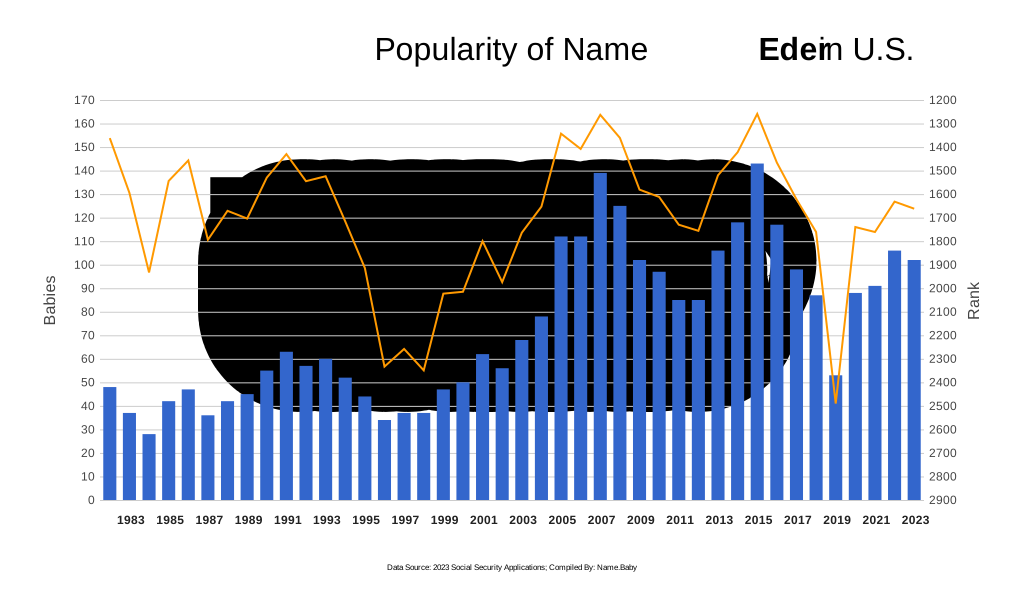
Eder, a succinct two-syllable appellation, threads together distinct linguistic strands: in Basque it denotes “handsome” or “beautiful,” while in Biblical Hebrew it evokes the image of a protective “flock” and even lends its name to the pastoral “Tower of Eder” in Genesis; this dual etymology has allowed the name to migrate seamlessly from the Pyrenees to Spanish-speaking Latin America, where its crisp cadence and aspirational meaning resonate with parents seeking a virtue-laden yet understated choice. In the United States, census data reveal that Eder has hovered in the lower half of the Top 1,000 since the early 1980s—never eclipsing mainstream favorites, yet never vanishing—suggesting a steady, diaspora-driven adoption pattern rather than a fleeting trend. Such statistical resilience, paired with its cross-cultural phonetic ease (EE-der in English, EH-der in Spanish), grants the name an unpretentious versatility: it can sit comfortably beside traditional biblical classics or modern Latino inventions alike. Figuratively speaking, Eder stands like a modest tower on the onomastic landscape—neither skyscraper nor cottage, but a reliable sentinel whose beauty is recognized by those who look beyond the obvious skyline.
Pronunciation
American English
- Pronunced as EE-der (/ˈiːdər/)
Spanish
- Pronunced as EH-der (/eðer/)
U.S. Popularity Chart
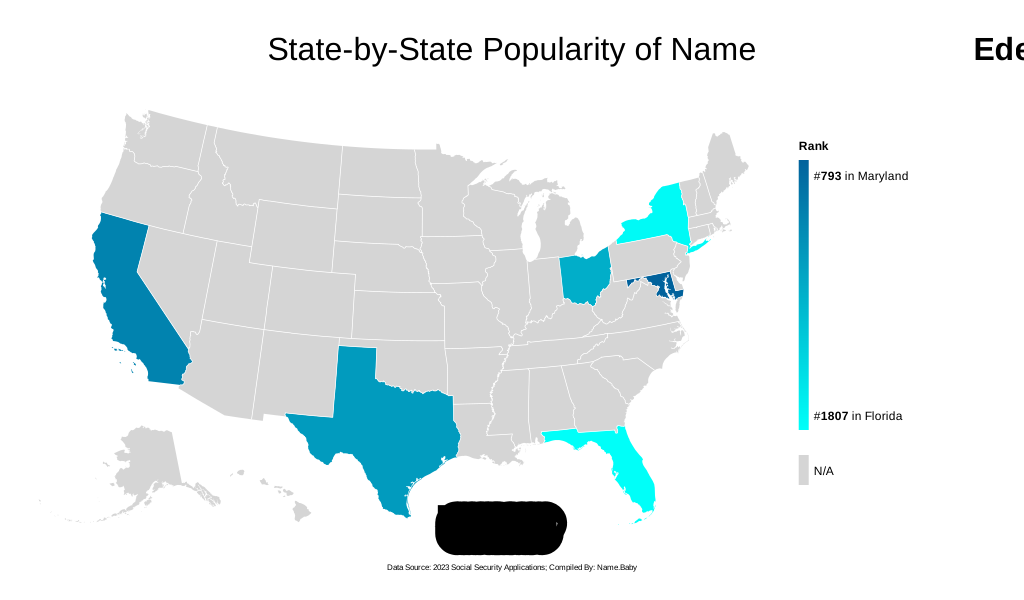
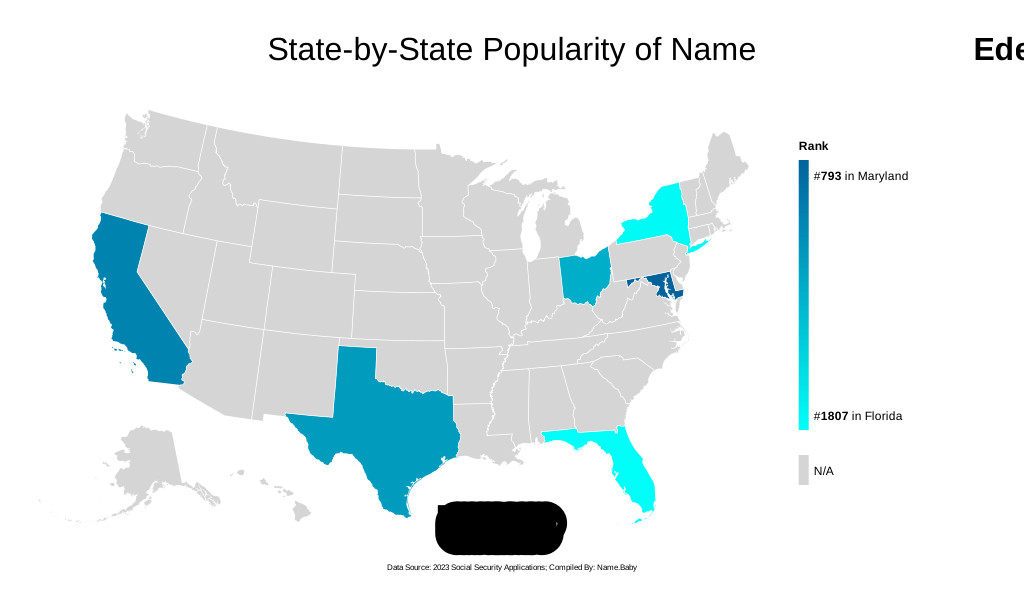
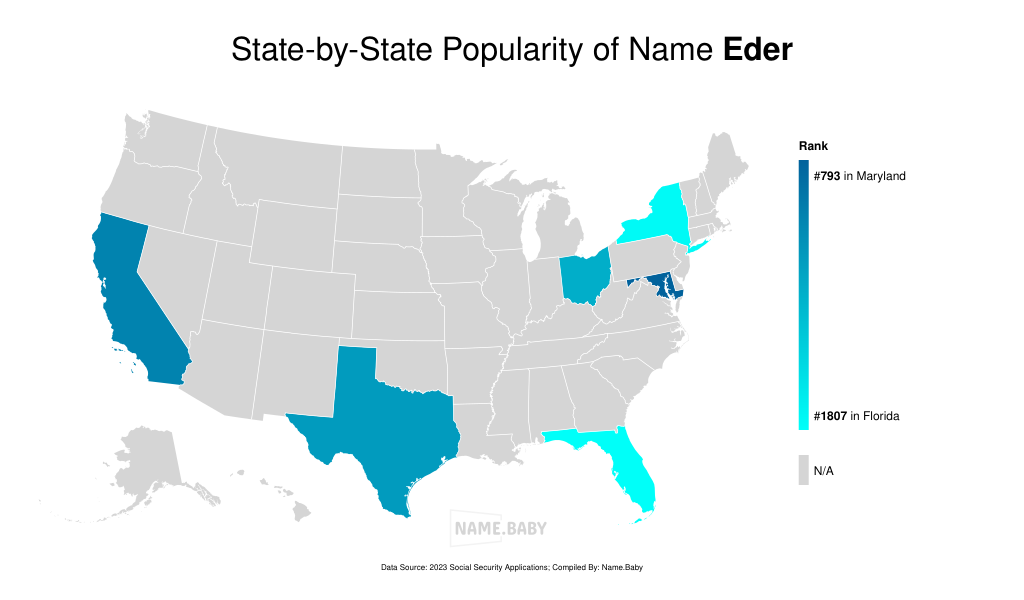
States Popularity Chart
Notable People Named Eder
| Eder - |
| Eder - |
| Éder - |
| Éder - |
| Éder Diego - |
