Eino
Meaning of Eino
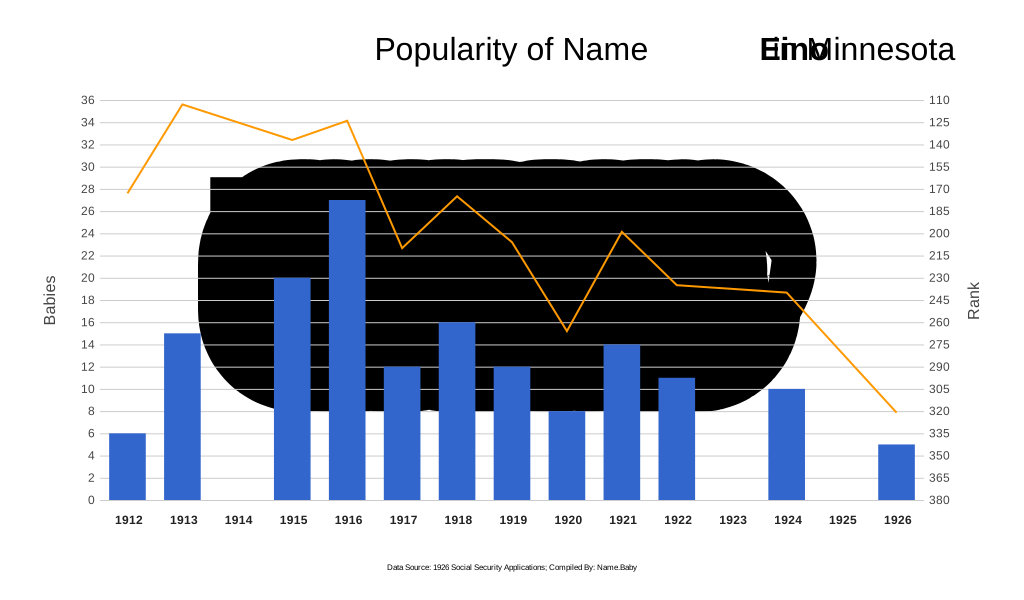
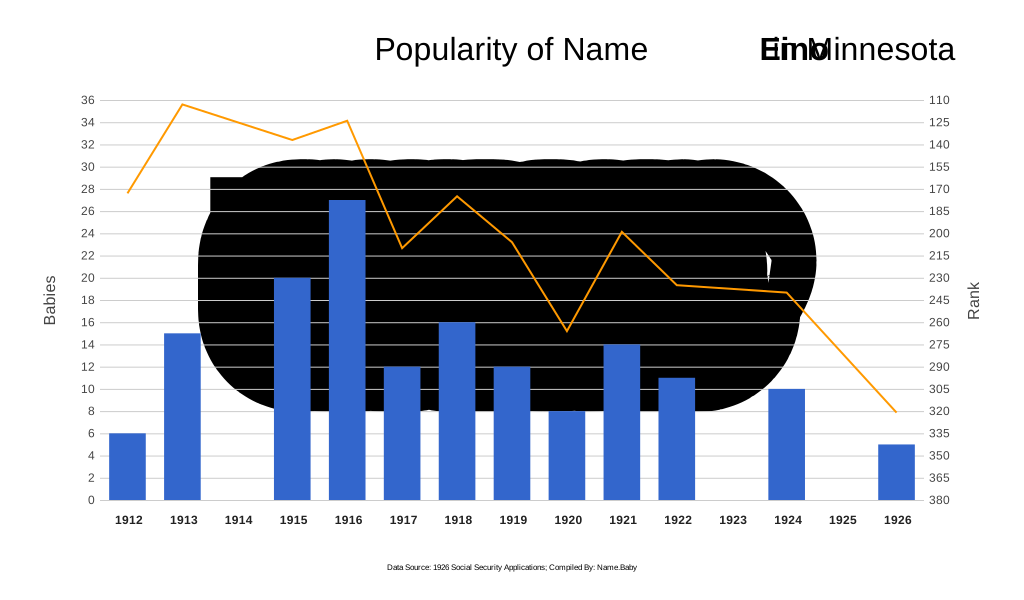
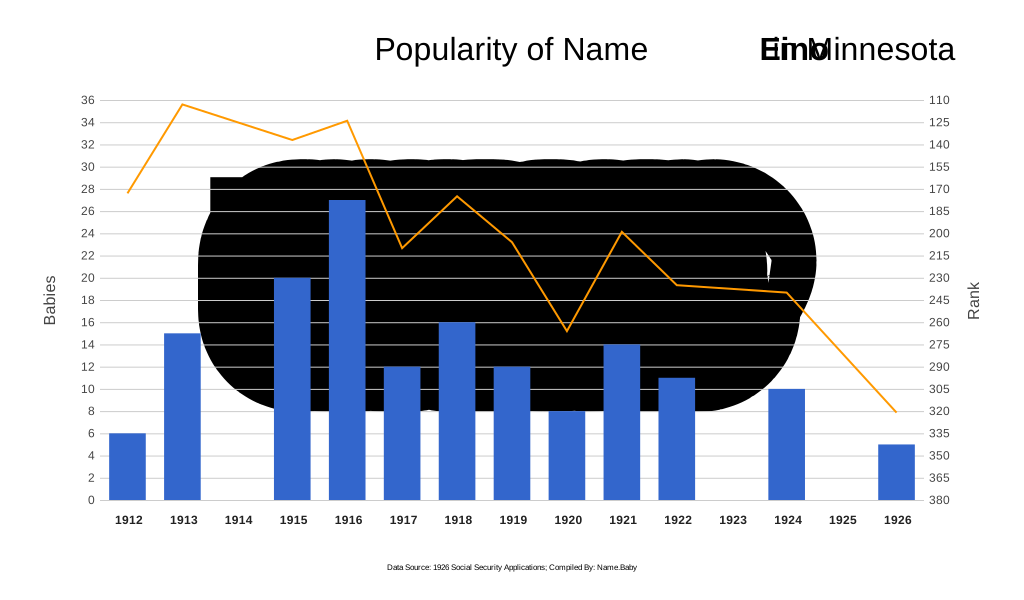
Eino is a Finnish masculine name deriving from the Old Norse Aínar—combining aín “one” and arr “warrior”—and is commonly interpreted as “lone warrior.” Pronounced AY-noh (/ˈeɪnoʊ/), its concise phonetic profile has appealed especially to Finnish-speaking communities abroad. Minnesota birth records from 1912 to 1926 reveal a restrained but steady regional adoption: six registrations (rank 69) in 1912, a peak of twenty-seven (rank 86) in 1916, then a gradual decline to five occurrences (rank 120) by 1926. Despite never breaking the top ten, its consistent mid-range showing points to a quiet cultural allegiance rather than broad national usage. Notable bearers such as the poet Eino Leino lend the name a literary gravitas, reinforcing its association with Finnish heritage and understated individuality.
Pronunciation
Finnish
- Pronunced as AY-noh (/ˈeɪnoʊ/)
U.S. Popularity Chart
Notable People Named Eino
| Eino Leino was a beloved Finnish poet and journalist who blended folk traditions with modern poetry. |
| Eino Tamm is an Estonian lawyer and former parliament member who helped found the Estonian Coalition Party. |
| Eino Arvid Lehtinen was a Finnish soldier, teacher and writer who lived to 106 and was among the last surviving veterans of the Finnish Civil War. |
| Eino Grön - Eino Gron is a Finnish American singer known for his performances of tango, jazz, and spiritual music. |
| Eino Jutikkala was a prolific Finnish historian and University of Helsinki professor, considered one of Finland's most important historians of the 20th century. |
| Eino Aukusti Leino was a Finnish freestyle wrestler who won medals at four Olympics, including gold in 1920. |
| Eino Virtanen was a Finnish footballer who mainly played for HJK and represented Finland in three international matches between 1936 and 1941. |
| Eino Kilpi was a Finnish footballer who twice represented his country and was part of Finland's 1936 Olympic squad. |
