Ekin
Meaning of Ekin
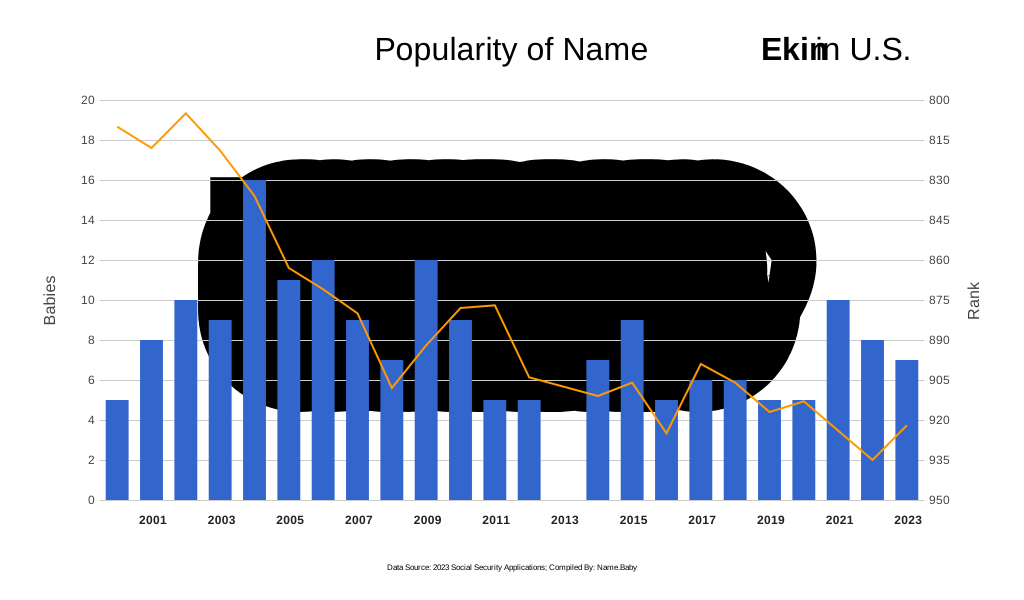
The name Ekin, rooted in the ancient Turkic verb ekmek—“to sow”—literally signifies “harvest” or “crop,” unfurling before the intellect like a sun-drenched tapestry of golden fields poised for reaping. Pronounced EH-kin (/ˈɛ.kin/) with the acute stress anchored on its first syllable, this masculine appellation offers a morphological brevity that belies its thematic profundity, as though encapsulating the entire agrarian cycle within two harmoniously balanced syllables. In scholarly circles, Ekin calls to mind Ceres’s granaries and the fecundity of the Roman pantheon, marrying pastoral imagery with an academic gravitas that underscores the symbiotic relationship between human aspiration and the natural world. Across the United States, where its presence in Social Security data oscillates between five and sixteen newborns annually—yielding ranks from the mid-800s to the low-900s—Ekin endures as a rare yet resilient choice, and, mercifully for parents keen to spare a child the fate of sharing a name with half the class, it sidesteps the perils of overt ubiquity. Those who bear the name often find themselves, fittingly, quiet cultivators of communal goodwill, their understated distinction akin to a lone, sturdy stalk flourishing amid a sea of ephemeral blooms—a modest triumph for any young harvester of promise.
Pronunciation
Turkish
- Pronunced as EH-kin (/ˈɛ.kin/)
U.S. Popularity Chart
Notable People Named Ekin
| Ekin Cheng - |
| Ekin Koç - |
| Ekin Mert Daymaz - |
