Elaria
Meaning of Elaria
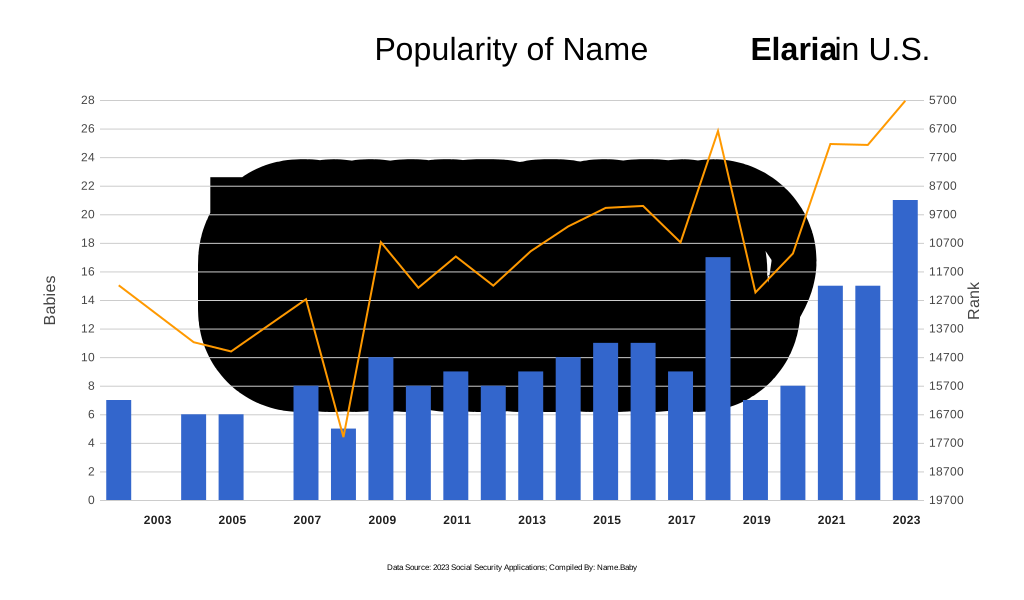
Elaria, a feminine given name of Latin provenance, derives ultimately from the classical Latin hilarius—itself a calque of the Greek hilarós, signifying “cheerful” or “merry”—and emerges as the supple counterpart to the masculine Elario. In its mellifluous cadence, the prefix el- evokes an aspirational luminescence, while the suffix -aria resonates with the notions of “air” and “song,” coalescing into an appellation that embraces the triumphal laurel wreaths of antiquity and the lyrical airs once reverberating through Greco-Roman amphitheaters. This intricate morphological tapestry bears scholarly weight, intertwining the sociolinguistic currents of late-antique nomenclature with the modern penchant for names that unite classical gravitas with poetic lyricism. Across contemporary American birth registers, Elaria has witnessed a gradual ascent—reflecting its cultural resonance—offering to each bearer an aura of timeless grace and an echo of ancient felicity that endures like a sonnet etched in marble.
Pronunciation
English
- Pronunced as el-AHR-ee-uh (/ɛlˈɑriə/)
U.S. Popularity Chart