Eldin
Meaning of Eldin
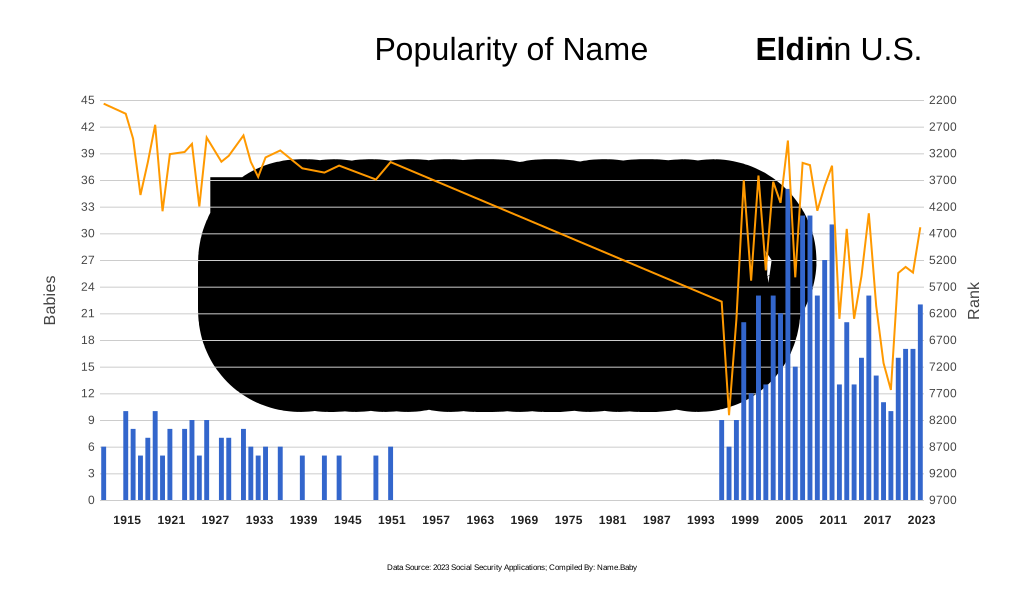
Eldin, pronounced EL-din (/ˈɛl.dɪn/), constitutes a masculine given name whose etymological roots span multiple linguistic traditions. In Old English onomastics it originates as a topographic epithet combining eald “old” and dūn “hill,” denoting an elevated site marked by elder trees; in Gaelic contexts it evokes the notion of illumination or torch-bearing, and in Arabic-derived anthroponymy it appears as a contraction of al-Dīn, a theophoric element meaning “of the faith.” Across these diverse origins, Eldin consistently conveys connotations of longevity, wisdom, and spiritual constancy, attributes that resonate with a formal Anglo-American naming aesthetic. Morphologically concise with a two-syllable structure and phonemes aligned to English phonotactic conventions, the name offers both technical clarity and cultural versatility. Demographically, Eldin retains a modest presence in the United States, with annual occurrences in recent years typically ranging from the low teens to the mid-twenties and a ranking in the vicinity of 900th position in 2024, thus reflecting a balance between uncommon distinction and time-honored heritage.
Pronunciation
English
- Pronunced as EL-din (/ˈɛl.dɪn/)
U.S. Popularity Chart
Notable People Named Eldin
| Eldin Jakupović - |
| Eldin Hadžić - |
| Eldin Huseinbegović - |
| Eldin Džogović - |
| Eldin Adilović - |
