Eliani
Meaning of Eliani
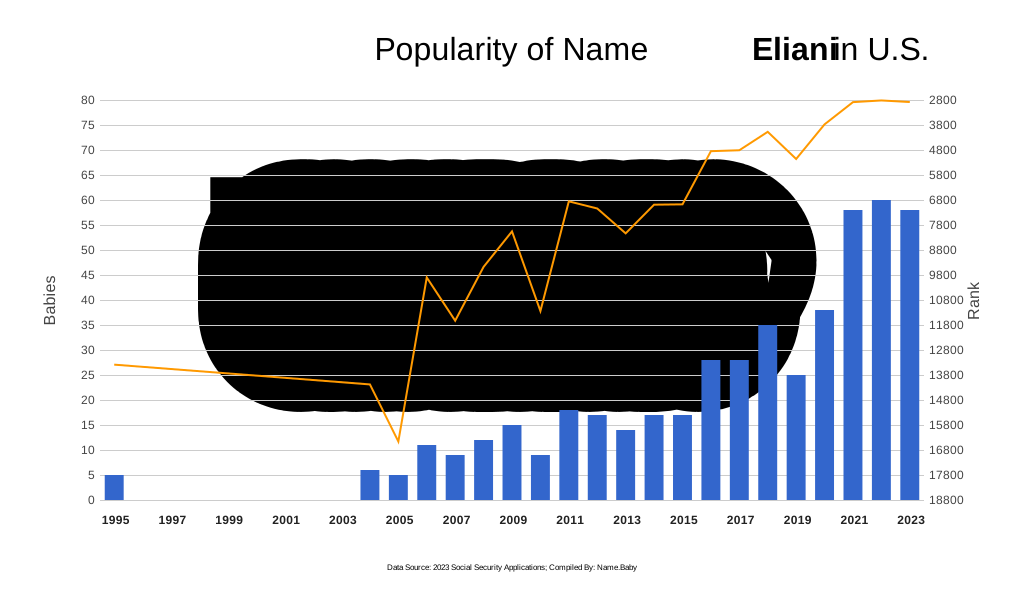
Eliani is generally interpreted as a melodic fusion of the Hebrew root “El,” signifying “God,” and the graceful Latin-derived suffix “-ani,” a construction that places the name in the same semantic constellation as Eliana yet grants it a subtly distinct cadence; in many Spanish-speaking communities—particularly in the Caribbean and the Brazilian Northeast—it is further colored by folk etymology linking it to the words “helio” (sun) and “liana” (vine), thereby evoking the image of light winding through verdant tendrils. Although it remains outside the upper echelons of U.S. popularity, its steady appearance in Social Security records since the mid-1990s, with a gentle uptick to 67 births in 2024, suggests a quiet but persistent appeal among parents who value names that feel both familiar and singular. Phonetically, the Spanish rendition eh-LYAH-nee glides on a liquid palatal “ll,” whereas the American English el-ee-AH-nee lightens the central syllable, each pronunciation offering a slightly different musical contour that mirrors the name’s cross-cultural journey. Because it straddles Semitic theology, Romance linguistics, and contemporary naming fashion, Eliani carries an undercurrent of cosmopolitan spirituality: a vine reaching toward the sun, yet rooted in venerable soil.
Pronunciation
Spanish
- Pronunced as eh-LYAH-nee (/eˈʎani/)
American English
- Pronunced as el-ee-AH-nee (/ˌɛliˈɑni/)
U.S. Popularity Chart
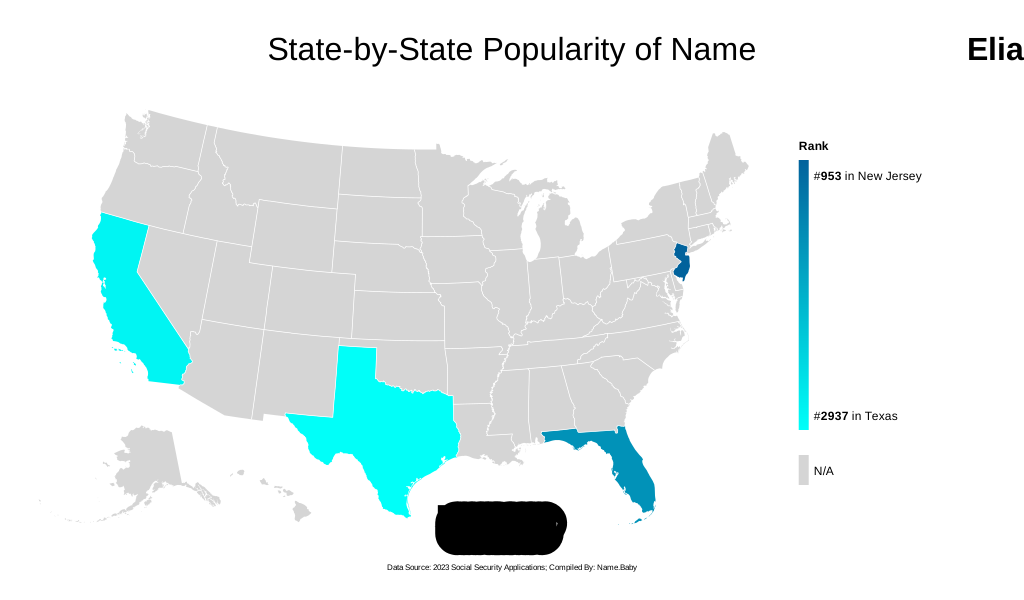
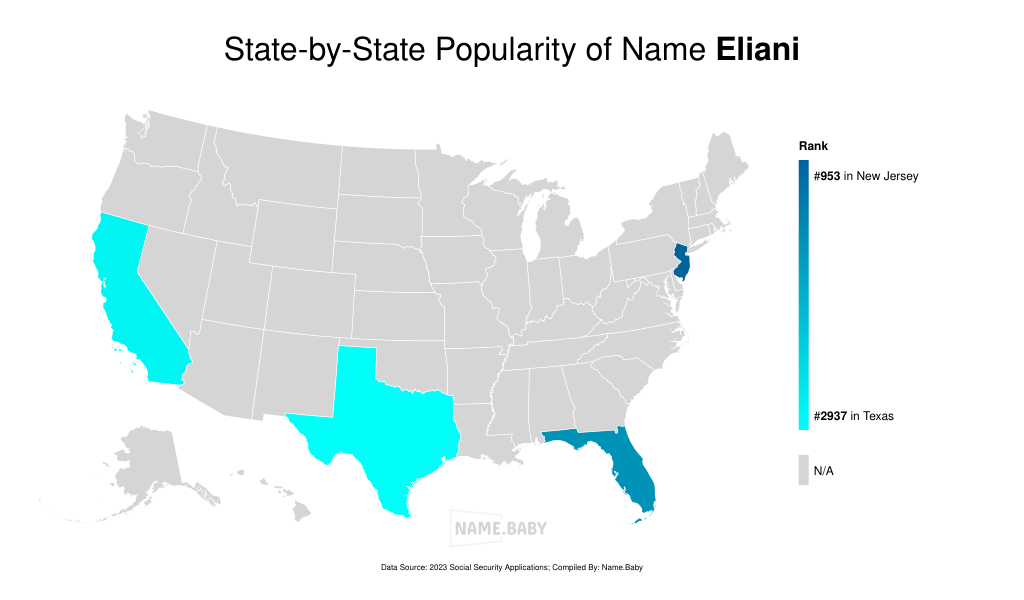
States Popularity Chart
Notable People Named Eliani
| Eliani da Costa - |
