Elison
Meaning of Elison
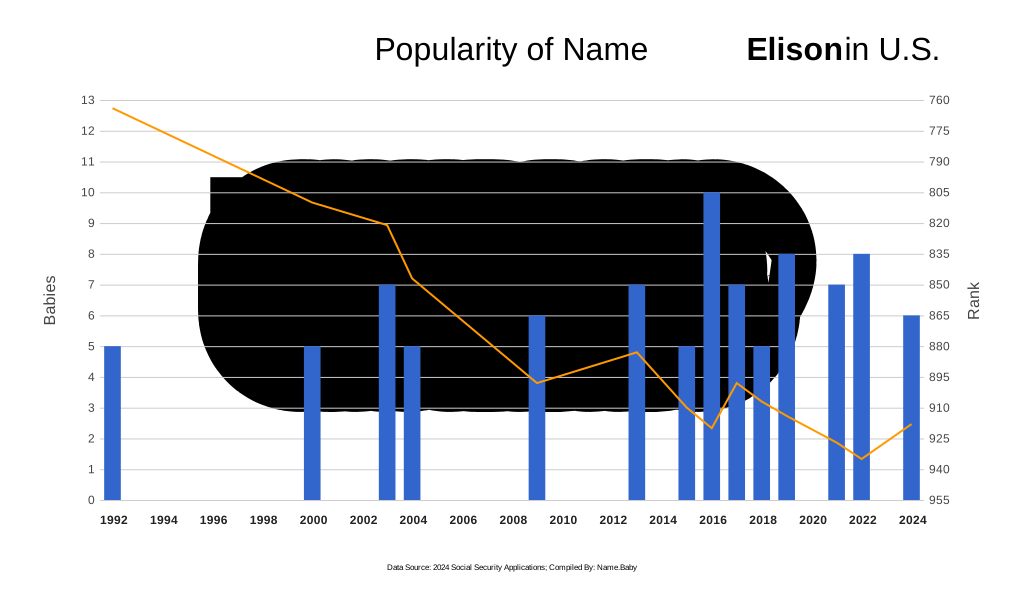
Elison, a masculine appellation of English provenance that ultimately derives from the medieval surname signifying “son of Ellis”—with Ellis itself a vernacular offshoot of the Greek Elias (and thus, by extension, the Hebrew Eliyahu)—serves as a bridge between ancestral homage and individual distinction. Like a solitary laurel leaf borne upon the currents of lineage, it entwines familial loyalty and scholarly aspiration in its three-syllable cadence. Phonetically rendered EL-ih-suhn (/ˈɛl.ə.sən/), its measured inflection evokes both the deliberative tenor of a Roman orator and the intimate warmth of a confidant’s whisper, alluding to associations of stoic dignity and cerebral resolve. Within the United States, Elison’s understated appeal is reflected in its modest census—six bearers in 2024 placing it at rank 918, a historical oscillation between a zenith of rank 764 in 1992 and a trough near 935 in 2022—suggesting not a meteoric rise but rather a steady favor among parents who prize authenticity over ubiquity. It scarcely sweeps across nursery rosters like a flamboyant social butterfly, yet therein resides its discreet allure: a name that, akin to a well-worn Latin manuscript, invites close reading and rewards those drawn to its timeless resonance.
Pronunciation
English
- Pronunced as EL-ih-suhn (/ˈɛl.ə.sən/)
U.S. Popularity Chart
Notable People Named Elison
| Elison Makolli - |
