Ema
Meaning of Ema
Ema drifts in like a warm Mediterranean breeze—softly pronounced EE-muh in English or EH-mah beneath Spanish tiles and Italian campaniles—and carries with her a story as old as the dawn chorale of Europe: she springs from the Germanic root ermen, “whole, universal,” yet, in shedding a spare consonant, she feels freshly unbuttoned, as if ready for a seaside fiesta. She is the little sister of Emma, yes, but also a heroine in her own right, adorning Latin American novelas, Slovenian lullabies, and even the tiny wooden ema plaques on which Japanese dreamers write their wishes—proof that the name itself is a wish set free. In the United States, Ema has shimmered for more than a century around the 700–800 ranks, a steady flicker rather than a blinding marquee light, suggesting a child who will stand out without showing off. Parents delight in the built-in economy—one “m,” half the paperwork!—while poets savor the symmetry of two vowels embracing a single consonant, like seashells kissing a grain of sand. Invoke Ema and one summons images of universal wholeness: a peach-gold sunset spilling over a terracotta roof, a laughter-tilted moon, a heart that knows how to belong everywhere.
Pronunciation
English
- Pronunced as EE-muh (/ˈi.mə/)
Spanish,Italian
- Pronunced as EH-mah (/e̞.ma̠/)
U.S. Popularity Chart
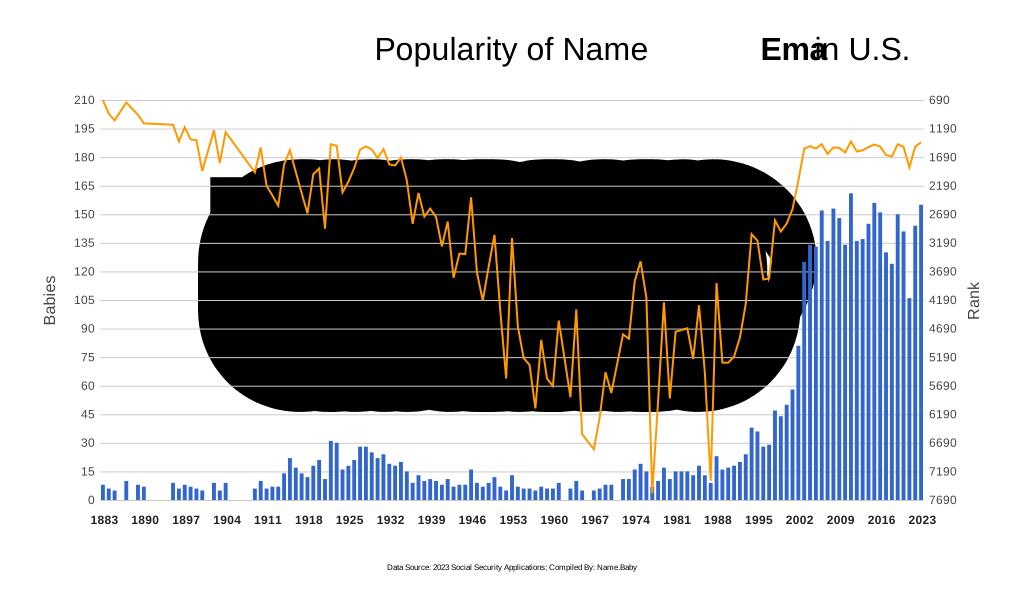
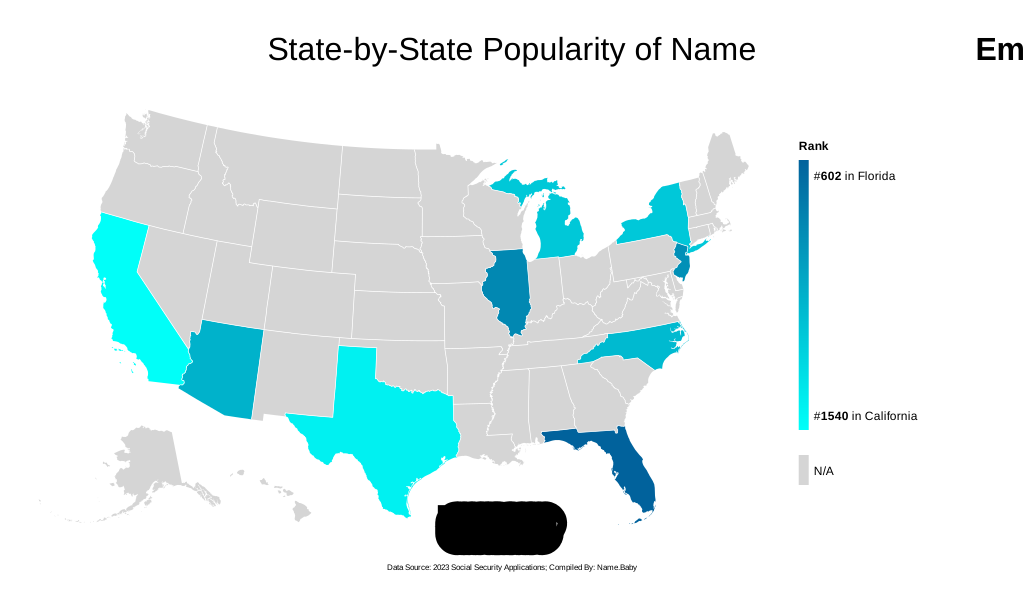
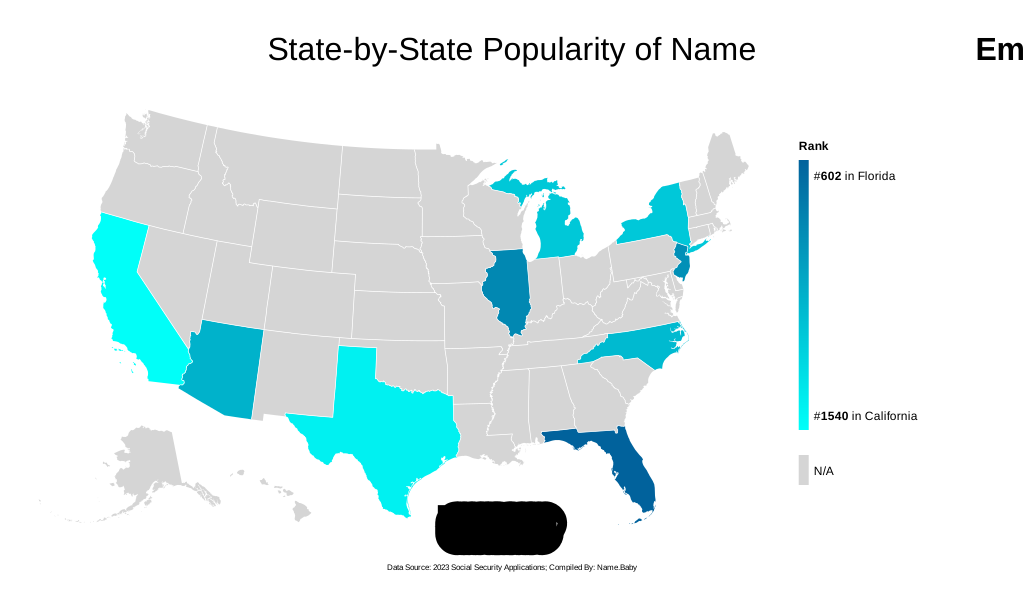
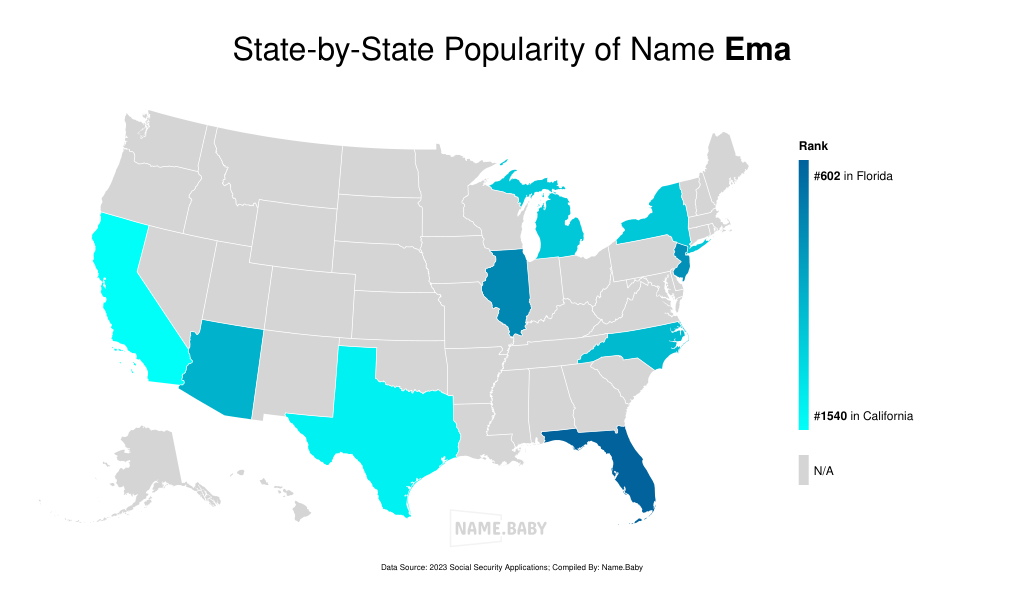
States Popularity Chart
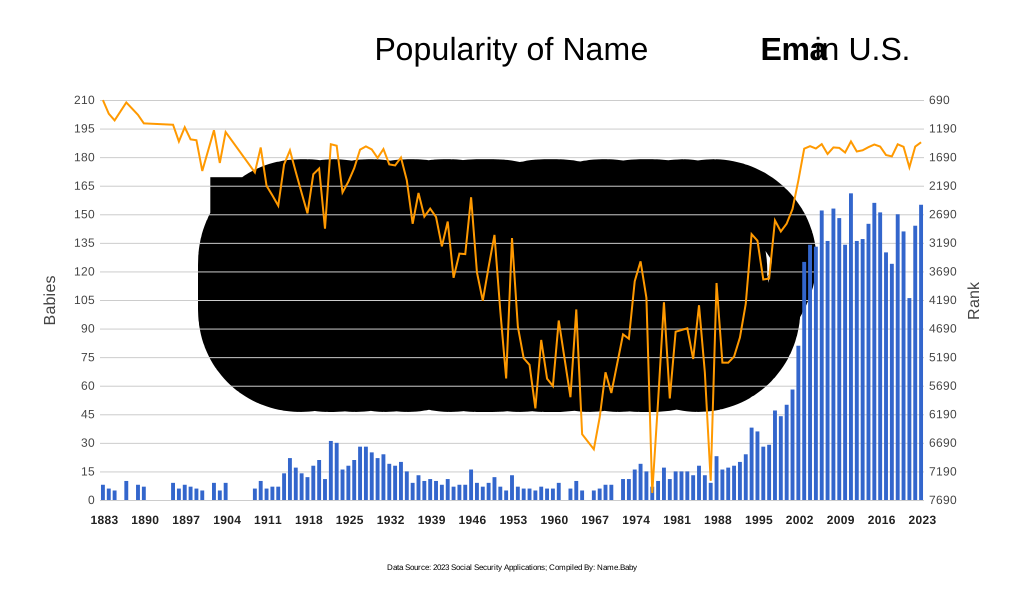
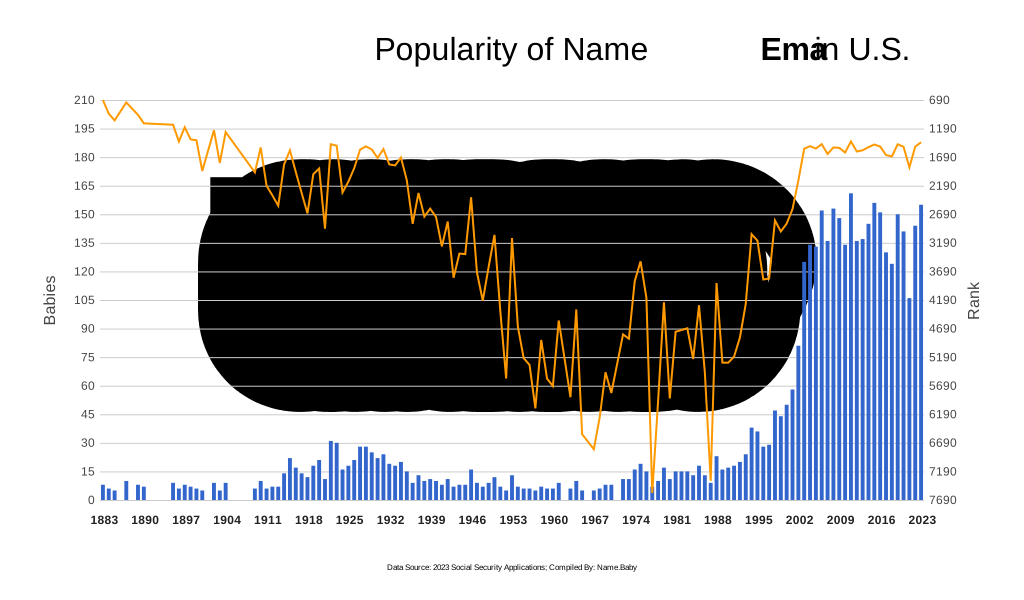
Notable People Named Ema
| Ema Saikō - |
| Ema Masi - |
| Ema Spencer - |
| Ema Twumasi - |
| Ema Derossi-Bjelajac - |
| Ema Wolf - |
