Emarie
Meaning of Emarie
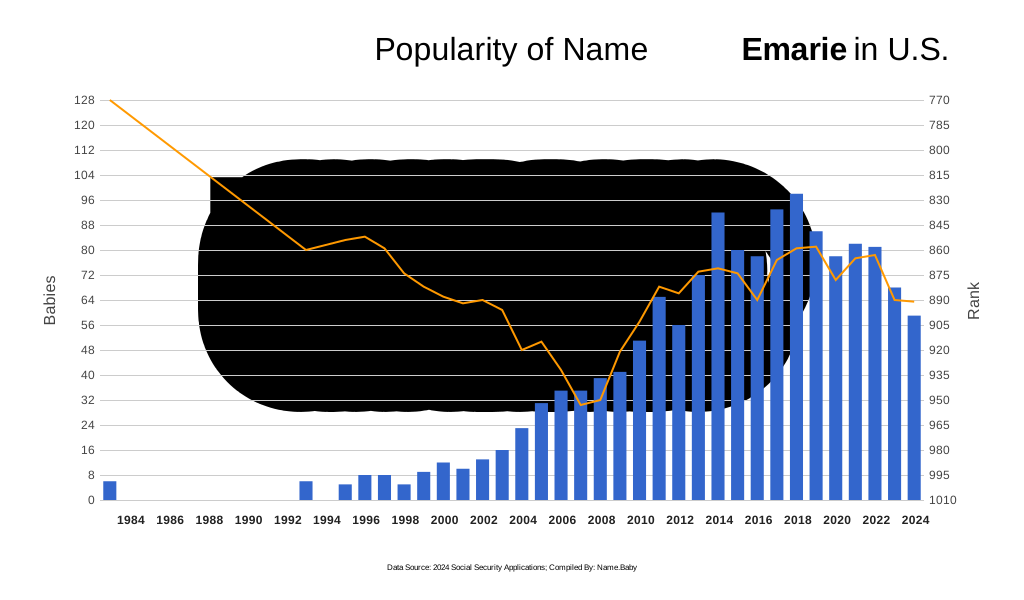
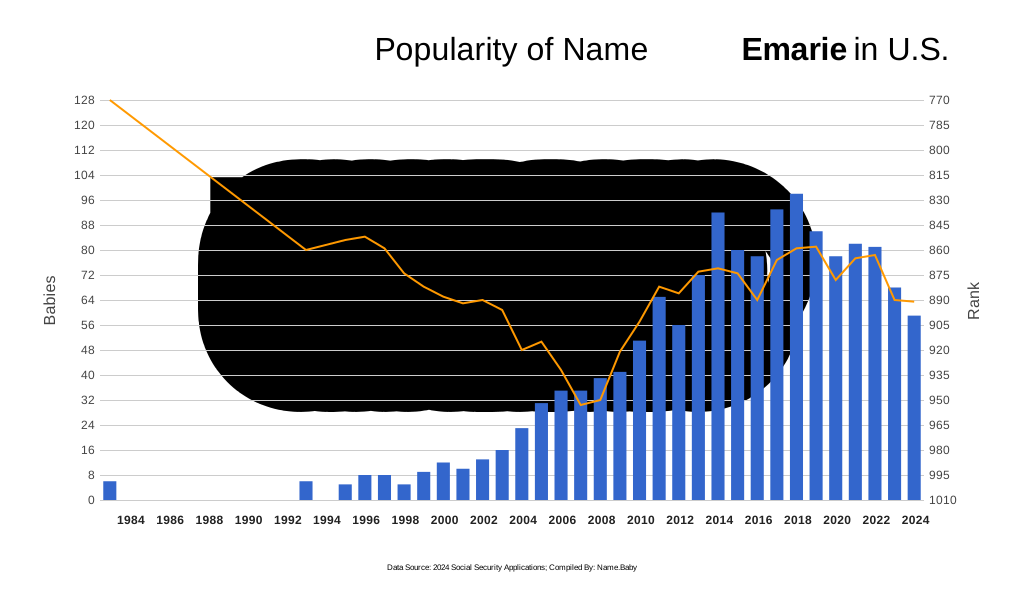
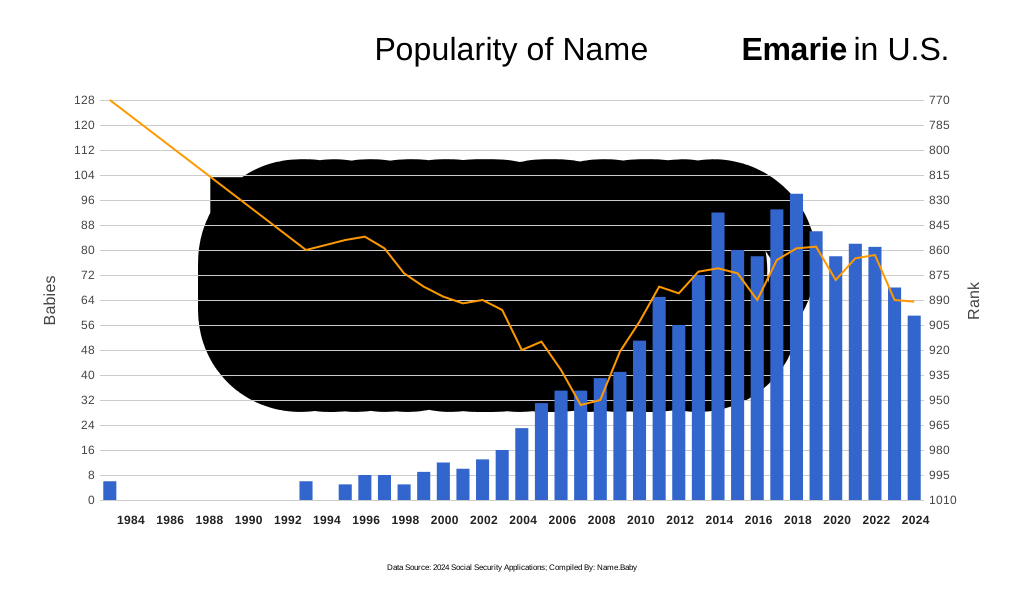
Emarie, pronounced eh-MAR-ee (/ɛˈmɑri/), is best understood as a modern Anglo-American synthesis that welds the Old German “Emma” (“whole, universal”) to the French “Marie,” a form of the Hebrew Miryam (“beloved” or “wished-for child”), thereby creating a compound etymology that conveys completeness tempered by devotion. First registering in U.S. Social Security data in 1983 at rank 770, the name has since maintained a measured presence—oscillating primarily between ranks 850 and 950, and standing at 891 in 2024—evidence of consistent yet modest adoption that situates it outside mainstream volatility while avoiding true obscurity. Phonetically, its trochaic contour and medial stress align it with contemporaries such as Emery and Amari, granting auditory familiarity even as its distinctive orthography preserves individuality. The dual heritage endows Emarie with semantic breadth—universal scope from Emma coupled with the nurturing resonance of Marie—making it attractive to parents who value classical roots but prefer a name sufficiently rare to remain personal. In aggregate, the name exemplifies a technically hybrid, statistically uncommon, and culturally coherent option within the current Anglo-American naming landscape.
Pronunciation
English
- Pronunced as eh-MAR-ee (/ɛˈmɑri/)
U.S. Popularity Chart