Erma
Meaning of Erma
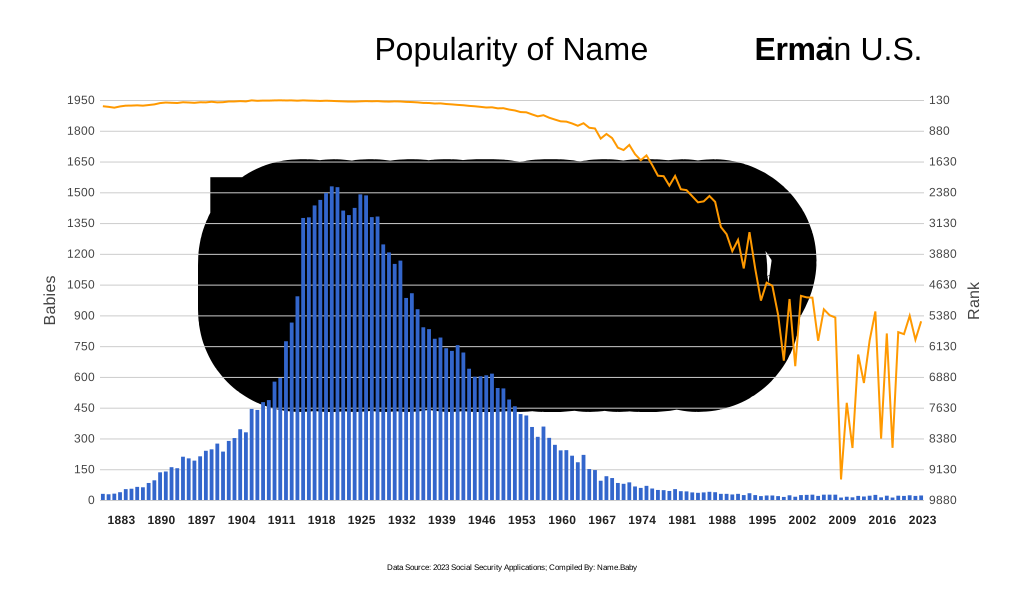
Erma, pronounced UR-muh (/ˈɜrmə/), derives from the Old High German element ermen, meaning “whole” or “universal,” a semantic root that resonates with the Latin universitas and conjures the image of a name inscribed like an epigraph upon travertine. While often regarded as a diminutive of Irma or Ermina in Germanic onomastic traditions, its concise, trochaic bisyllabic form imparts a phonological symmetry prized in both philological and literary analyses. Statistically, Erma reached its zenith in the United States between the late nineteenth and early twentieth centuries—frequently ranking within the top two hundred—before gradually receding to 936th place in 2024, borne by just fourteen newborn girls. This trajectory of rise and decline positions Erma as a rediscovery candidate for parents seeking a name that balances scholarly gravitas with understated individuality. In cultural imaginaries, it carries connotations of integritas and universalis, suggesting a persona at once grounded in integrity and open to the wider world—a quietly classical appellation whose latent vigor endures beneath its reserved façade.
Pronunciation
English
- Pronunced as UR-muh (/ˈɜrmə/)
U.S. Popularity Chart
Notable People Named Erma
| Erma Bombeck - |
| Erma Franklin - |
| Erma Keyes - |
