Estel
Meaning of Estel
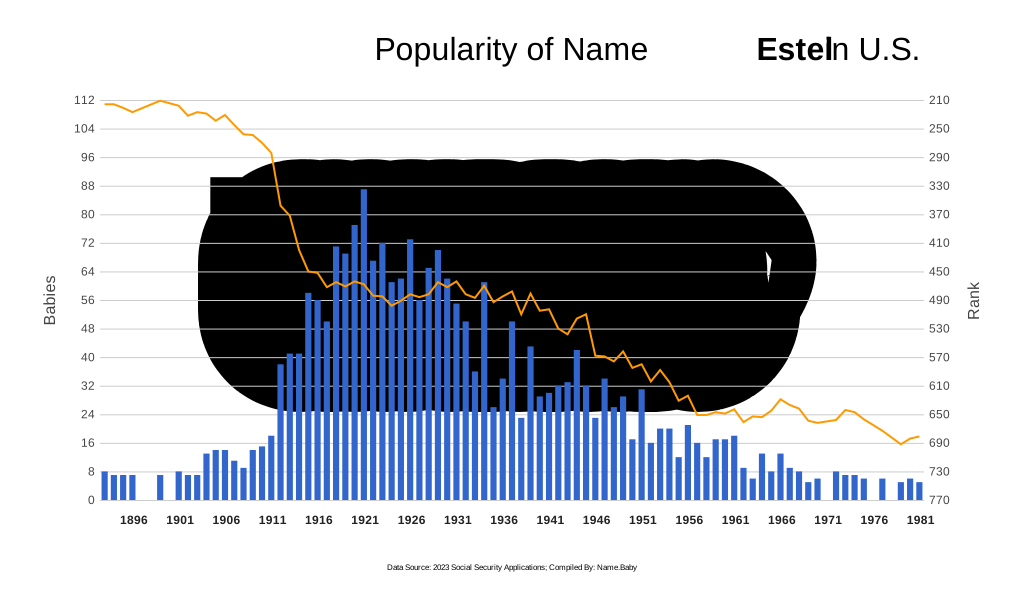
Estel, pronounced ES-tel (/ɛsˈtɛl/), traces its lineage to the luminous Latin stella—“star”—filtered through the gentle currents of Occitan speech, where it also came to signify “hope,” thus weaving celestial radiance and aspirational promise into a single, unisex appellation. In scholarly circles one might observe how this concise name, like a solitary comet cutting through night’s velvet, conveys complexity without verbosity, its two syllables bearing the quiet gravity of both tradition and modernity. Though statistics chart its modest ascent and gradual wane across the twentieth century in the United States, Estel has never surrendered its intrinsic luminosity, nor its capacity to evoke an eternal spark in the heart of the beholder. With an almost imperceptible smile hidden in its symmetry, it stands as a testament to the enduring power of linguistic heritage, offering each bearer a firm anchor in history’s unfolding constellation.
Pronunciation
- Pronunced as ES-tel (/ɛsˈtɛl/)
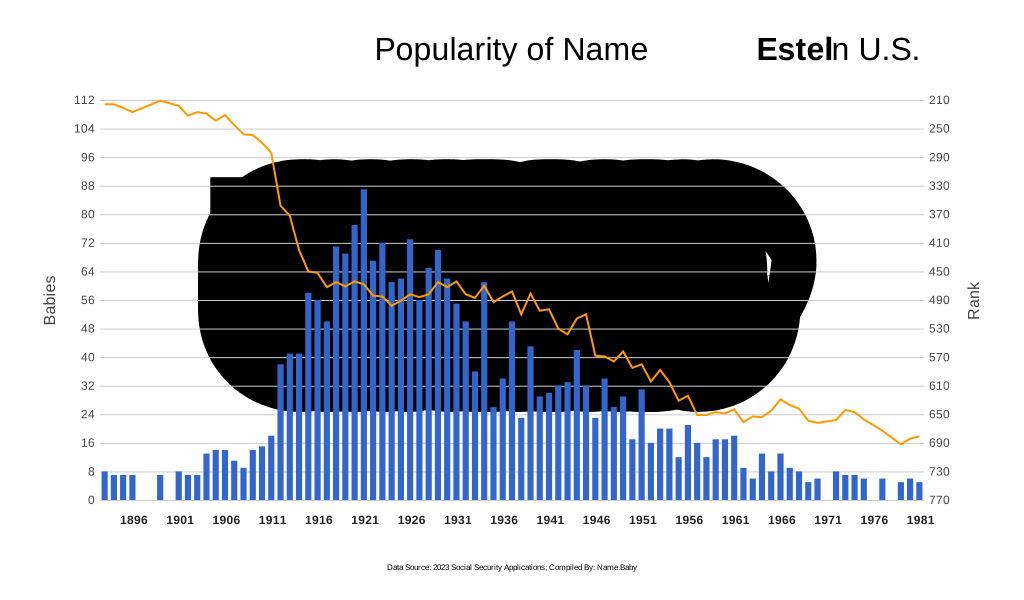
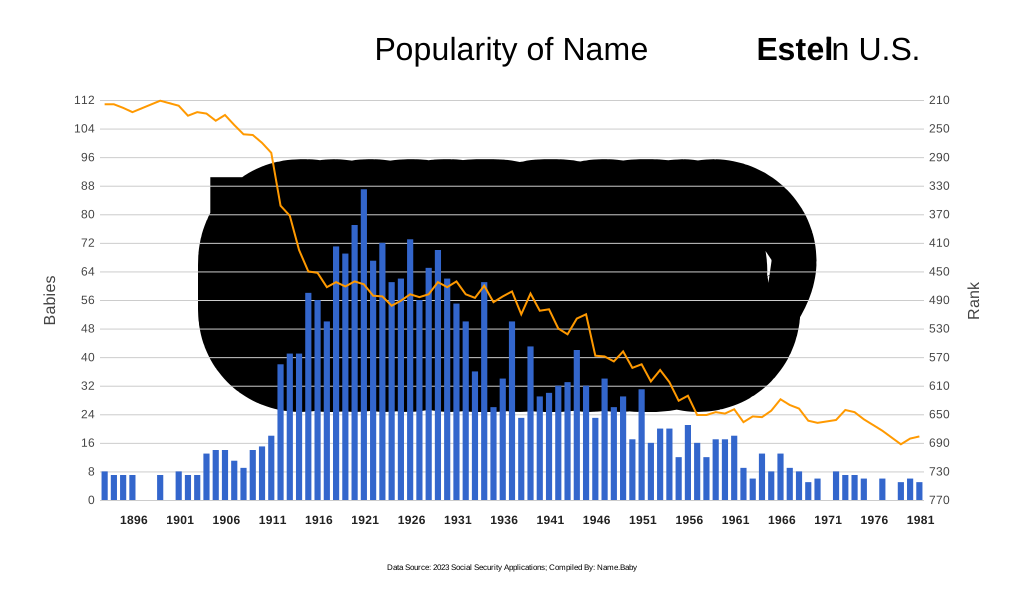
U.S. Popularity Chart
Notable People Named Estel
| Estel Crabtree - |
