Felicita
Meaning of Felicita
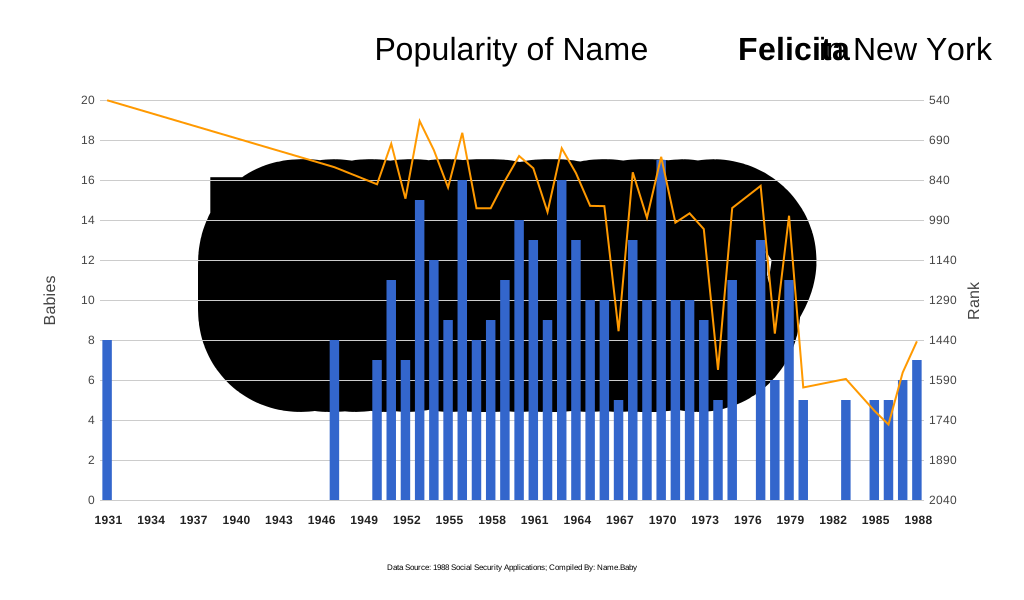
Felicita traces its lineage to the Latin “Felicitas,” a personification of happiness and good fortune in ancient Rome, and the name migrated intact into Italian before radiating through Spanish- and Portuguese-speaking cultures. Typically rendered feh-lee-CHEE-tah in Italian and feh-lee-SEE-tah across Iberian and Latin American Spanish as well as Portuguese, it carries a clear, lilting cadence that feels at home in Mediterranean conversation and Caribbean celebrations alike. Historical records show the name gaining modest traction among New York’s Hispanic and Italian communities after World War II, peaking in 1956 with 16 newborns and surfacing steadily until the late 1980s. Literary references to Saint Felicitas, an early Christian martyr, and the jubilant Spanish exclamation “¡Felicidades!” further anchor the name to themes of resilience and joy. Today, Felicita offers parents a culturally rich option that signals optimism without sacrificing classic, cross-linguistic appeal.
Pronunciation
Italian
- Pronunced as feh-lee-CHEE-tah (/feˈlit͡ʃita/)
Spanish
- Pronunced as feh-lee-SEE-tah (/feˈlisita/)
Portuguese
- Pronunced as feh-lee-SEE-tah (/fɨˈlisitɐ/)
Latin American Spanish
- Pronunced as feh-lee-TSEE-tah (/feˈlist͡ʃa/)
U.S. Popularity Chart
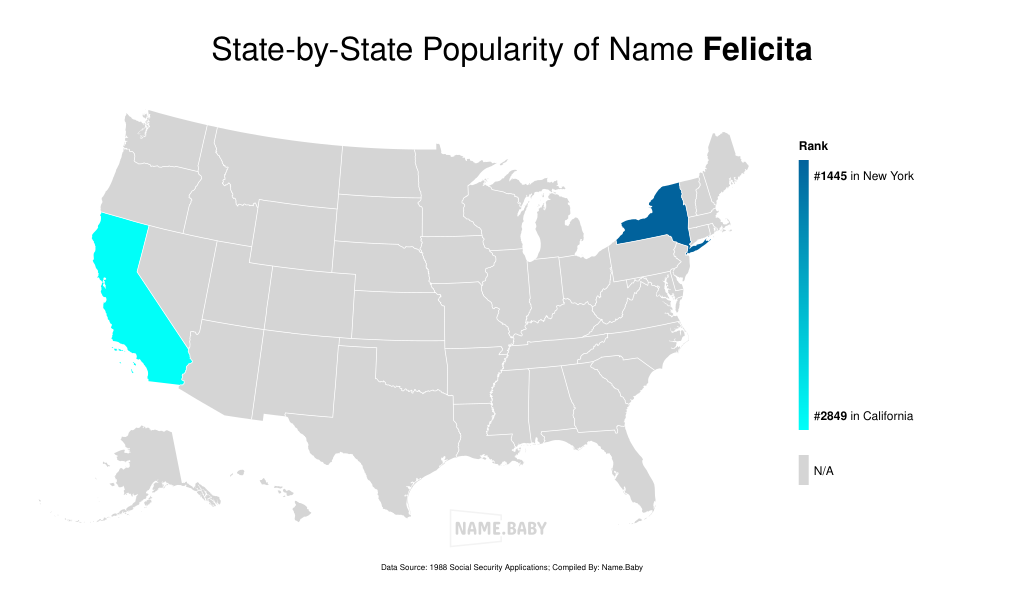
States Popularity Chart

Notable People Named Felicita
| Felicita - |
