Gen
Meaning of Gen
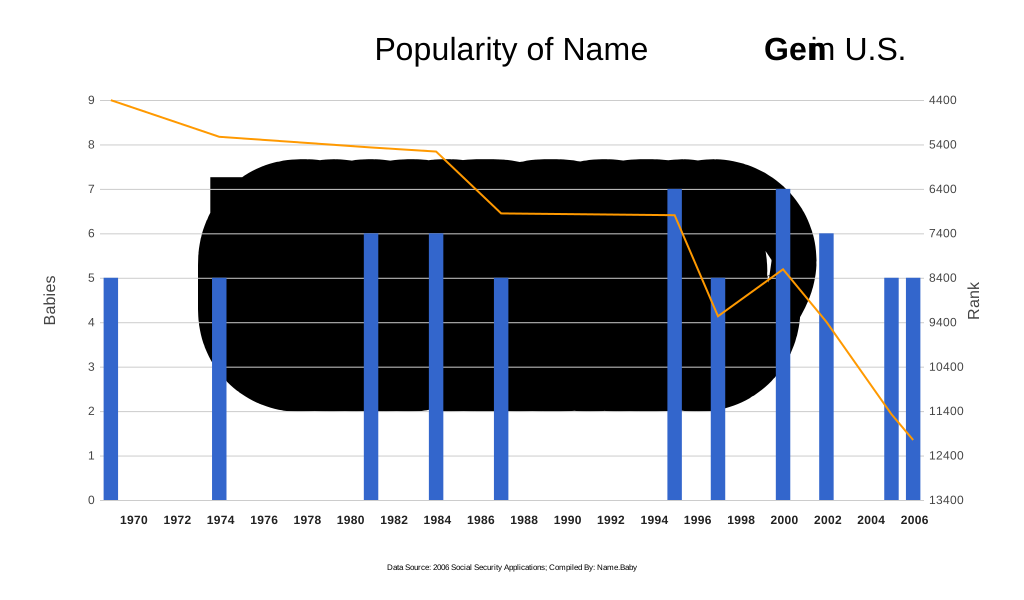
Gen glides through language like a single brush-stroke of sumi ink—pared back, deliberate, and quietly resonant—yet, beneath that spare surface, the name shelters a small constellation of Japanese kanji: 源 for “source,” 元 for “origin,” 玄 for “mystery,” or 弦 for the “bowstring” that sets an arrow singing toward the horizon, each reading equally open to girls and boys. Western ears catch it as the soft “jen,” a syllable so swift it seems to disappear even as it is spoken, which doubtless explains why the U.S. charts have only registered Gen in the low triple digits of obscurity, a status some parents will find refreshingly uncluttered by playground duplicates. In folklore-lit minds, Gen may summon the wise Genji moving through moonlit screens, while pop-culture enthusiasts might think of scriptwriter Gen Urobuchi, whose stories balance elegance with a blade’s edge. Thus, whether chosen for its sense of beginnings, its whisper of the unseen, or its sly economy—no silent letters, no umlauts, no annual spelling-bee debates—Gen stands ready to be the quiet spark at the center of a child’s unfolding narrative.
Pronunciation
English
- Pronunced as jen (/dʒən/)
U.S. Popularity Chart
Notable People Named Gen
| Gen Shoji - |
| Gen Hoshino - |
| Gen Fukunaga - |
| Gen Fricker - |
| Gen Paul - |
| Gen Nakatani - |
