Georges
Meaning of Georges
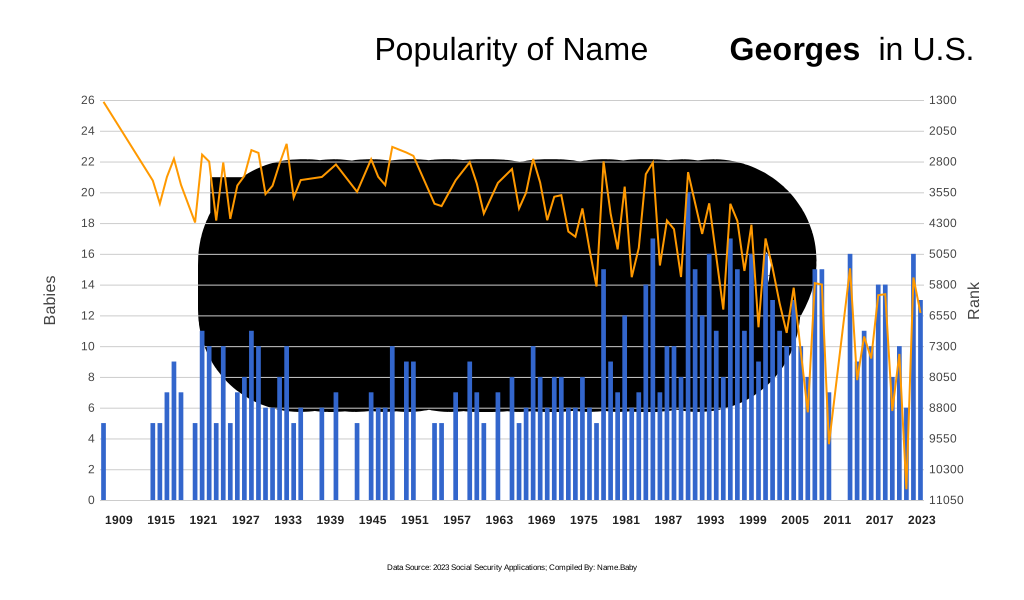
Georges, pronounced /ʒɔʁʒ/ in French, traces its lineage to the Greek Georgios—literally “earth-worker,” from gê (“earth”) and ergon (“work”)—and passed into the Romance world through the Latin Georgius. This Gallic adaptation carries an almost pastoral resonance, conjuring the valiant figure of Saint George as well as the cultivated salons of 19th-century France. Its phonetic balance—two syllables framed by voiced fricatives—imbues the name with a deliberate, measured cadence, while its classical roots evoke agrarian strength interwoven with aristocratic refinement. In the United States, Georges has consistently inhabited the periphery of popular usage—peaking at rank 251 in 1907 before settling around the 900th position in recent years (ranked 913th with eleven births in 2024)—a trajectory that underscores its discreet elegance rather than mass appeal. Associated with cultural titans such as composer Georges Bizet and writer George Sand, the name endures as a marker of cultivated heritage.
Pronunciation
French
- Pronunced as zhawrzh (/ʒɔʁʒ/)
U.S. Popularity Chart
Notable People Named Georges
| Georges Clemenceau - |
| Georges St-Pierre - |
| Georges Bizet - |
| Georges Méliès - |
| Georges Brassens - |
| Georges Braque - |
| Georges Pompidou - |
| Georges Guynemer - |
| Georges Lecointe - |
| Georges Perec - |
| Georges Limbour - |
| Georges Poulet - |
| Georges Charpak - |
