Gilda
Meaning of Gilda
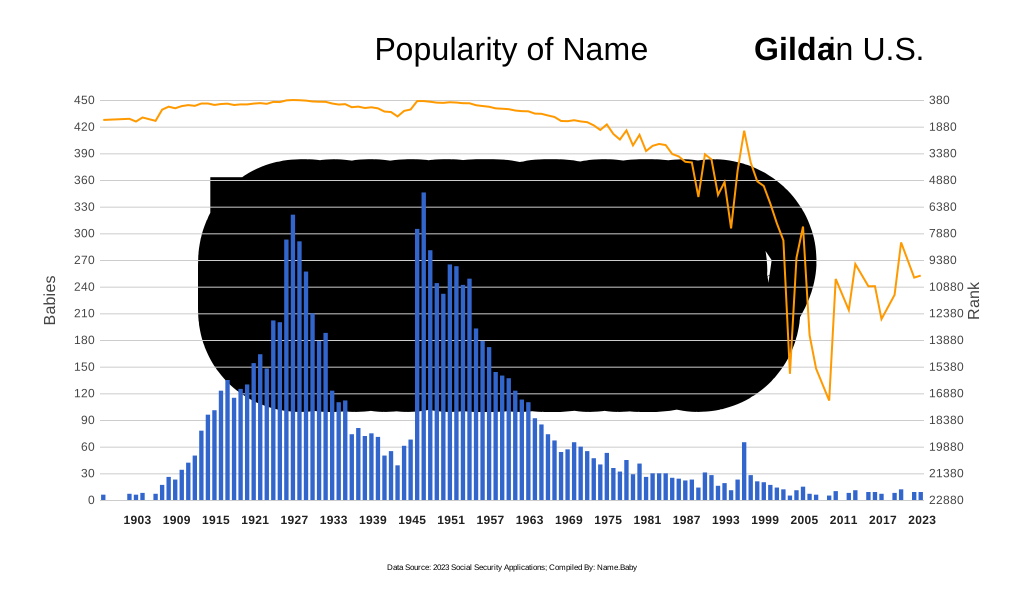
Gilda, pronounced /ˈdʒɪl.də/, is an Italian feminine name of Germanic provenance, its etymological roots traced to the Old High German gilda, meaning “tribute” or “sacrifice,” which, after adoption into Late Latin ceremonial lexicons, acquired an aura of solemn grandeur. With its crisp, two-syllable cadence—akin to the measured toll of a Mediterranean chapel bell—it evokes a harmonious blend of austere nobility and sun-warmed intimacy, imbuing its bearer with a quietly luminous presence. The name’s cultural resonance swelled in the mid-twentieth century when Rita Hayworth immortalized Gilda as a film-noir femme fatale, gifting it a paradoxical duality of seductive mystery and resilient autonomy. Though uncommon in modern registries—the United States records place it near the 940th rank—the resulting scarcity enhances its appeal for parents who seek a designation that marries scholarly gravitas, Latin-tinged flair, and dramatic flourish; one might wryly observe that, in choosing Gilda, they favor discretion over ubiquity, a tempting proposition for the discerning few.
Pronunciation
Italian
- Pronunced as JIL-duh (/ˈdʒɪl.də/)
U.S. Popularity Chart
Notable People Named Gilda
| Gilda Susan Radner was an American actress and comedian known for her memorable characters on Saturday Night Live. |
| Gilda Gray was a Polish-American dancer and actress who made the shimmy dance popular in the 1920s. |
| Gilda Lyons is an American composer, vocalist, and visual artist known for blending diverse musical styles and innovative vocal techniques. |
| Gilda Kirkpatrick is an Iranian born New Zealand author, creative director and television personality known for The Real Housewives of Auckland. |
| Gilda Cobb-Hunter is a South Carolina Democratic legislator and the first African American woman elected to the State House from Orangeburg County. |
