Hayven
Meaning of Hayven
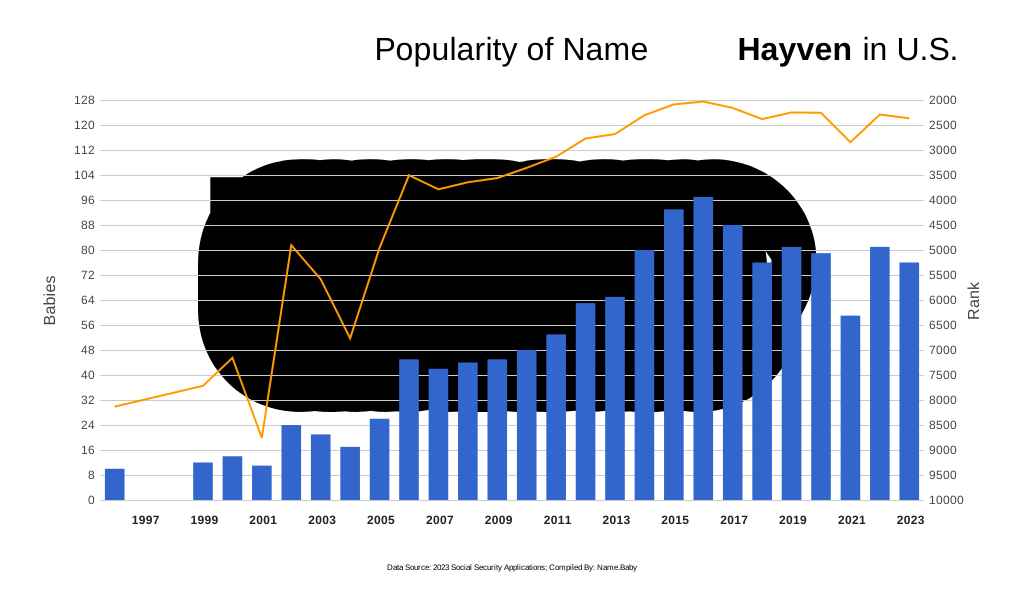
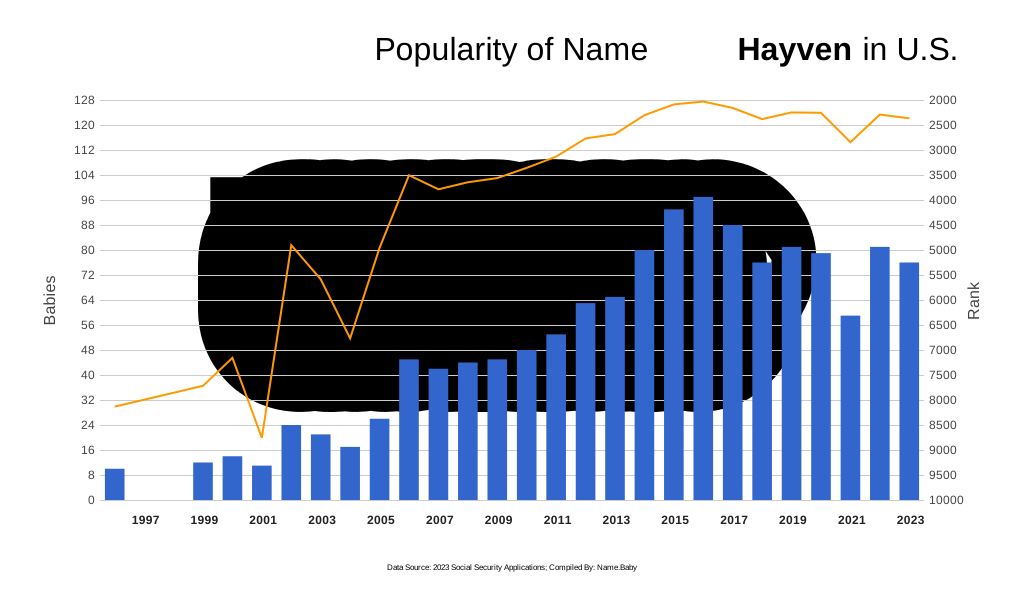
Hayven, pronounced HAY-vuhn, represents a contemporary elaboration of the English word-name “Haven,” itself rooted in Middle English haven and ultimately Old Norse höfn, “harbor” or “refuge,” connoting safety and calm; the substitution of y both distinguishes the form and invites a faint echo of “heaven,” amplifying the aura of sanctuary. In the lexicon of Latin speakers one would analogize the concept to portus or refugium—spaces conceived in antiquity as loci tutissimi, the safest of places—so the appellation carries a cross-cultural semantics of protection. United States vital statistics confirm Hayven’s modern yet steady presence: since first registering in 1996 it has hovered just inside the national top-1,000, fluctuating gently between the 850th and 950th positions and recording a recent high of 97 infant bearers in 2016, a pattern that suggests consistent niche appeal rather than trend-driven volatility. Parents drawn to the name often cite its symbolic promise—“a harbor for the heart,” as one might phrase it—as well as its phonetic clarity and gender-specific softness. Thus, Hayven occupies a distinctive semantic berth: contemporary but etymologically anchored, understated yet resonant, a linguistic shelter in which a child may grow.
Pronunciation
American English
- Pronunced as HAY-vuhn (/heɪveən/)
U.S. Popularity Chart
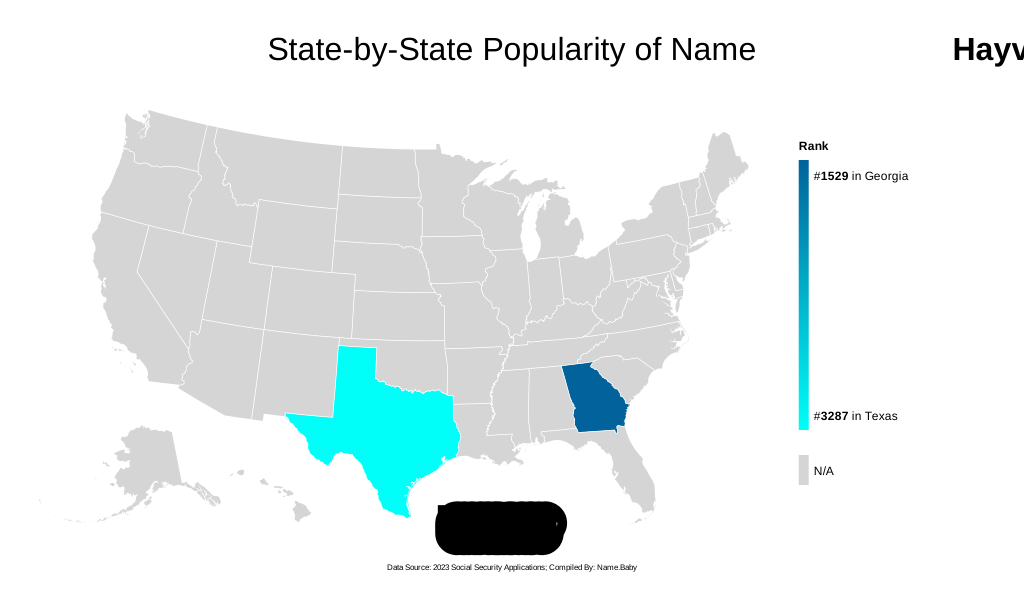
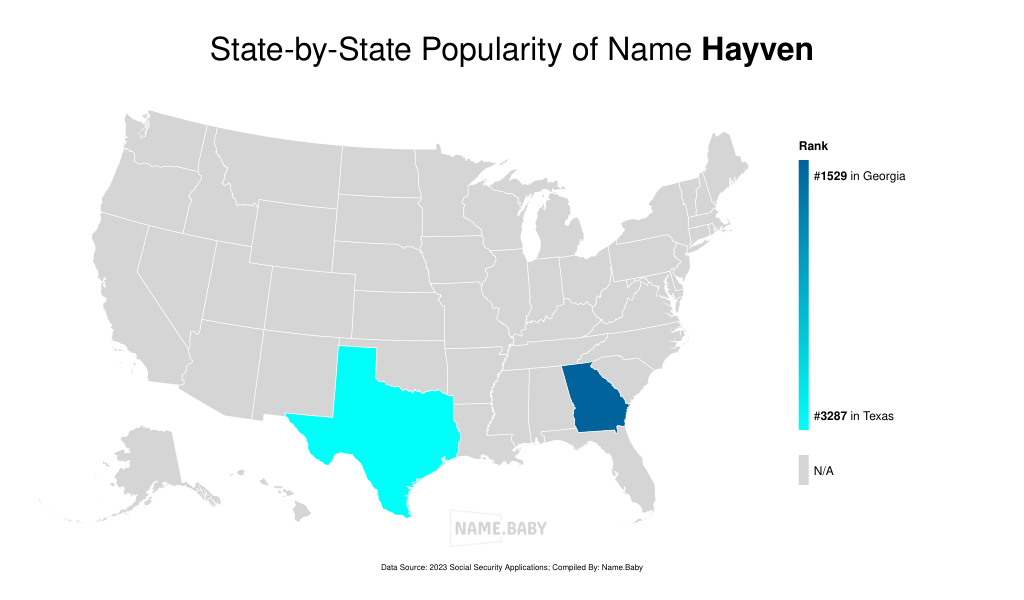
States Popularity Chart