Hazen
Meaning of Hazen
Hazen, pronounced HAY-zuhn, blends Anglo-Saxon earthiness with a hint of Hebrew liturgical grace: most etymologists trace it to the Old English “hæsel,” the hazel tree long linked to wisdom, while a parallel line connects it to the Hebrew chazan, the cantor who guides communal prayer, both roots suggesting quiet authority. In U.S. records the name has never surged into the mainstream—its rank has hovered between 500 and 900 for more than a century, with 95 newborns in 2024—but that very consistency gives it a rare, boutique appeal. Historical bearers such as Civil War general William B. Hazen and Detroit reformer-mayor Hazen Pingree add an aura of sturdy public service, and Spanish-speaking families sometimes enjoy its phonetic brush with “hace,” the verb for “to do,” lending the name a subtle call to action. Compact, sonorous and poco común, Hazen carries an understated confidence that travels easily from the boardroom to the béisbol field.
Pronunciation
English
- Pronunced as HAY-zuhn (/heɪzən/)
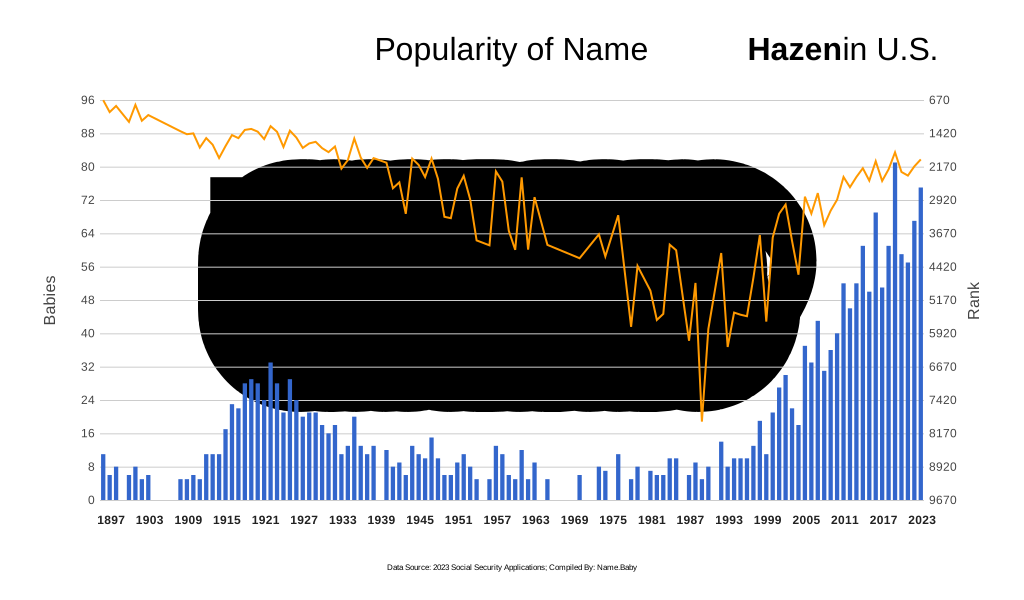
U.S. Popularity Chart
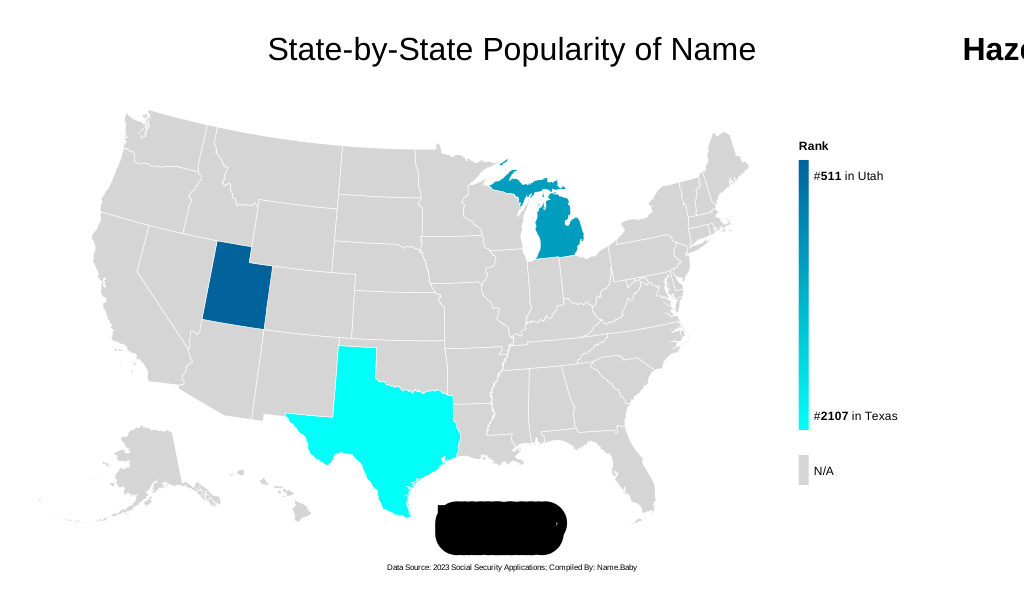
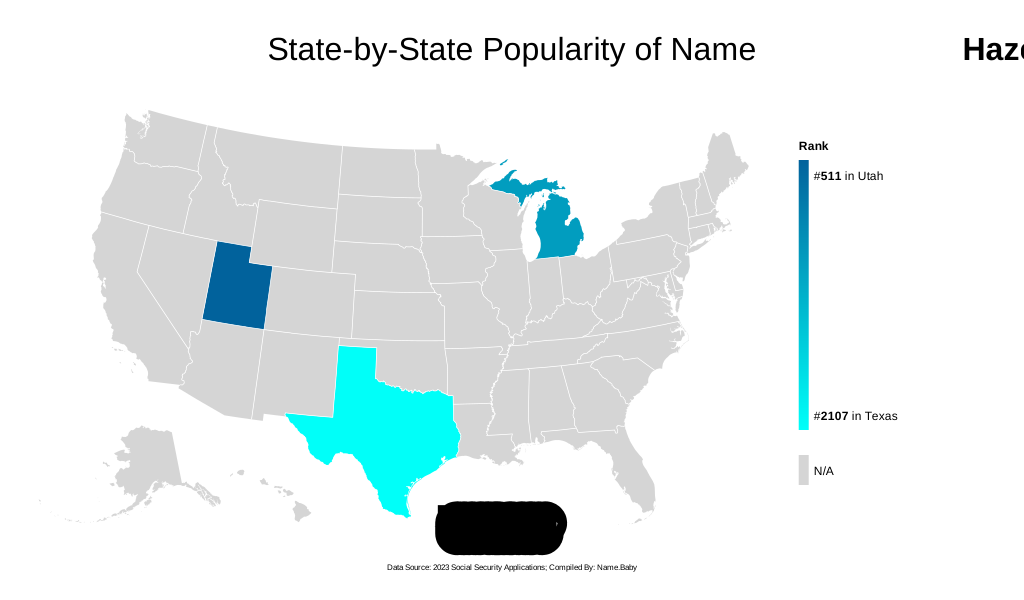
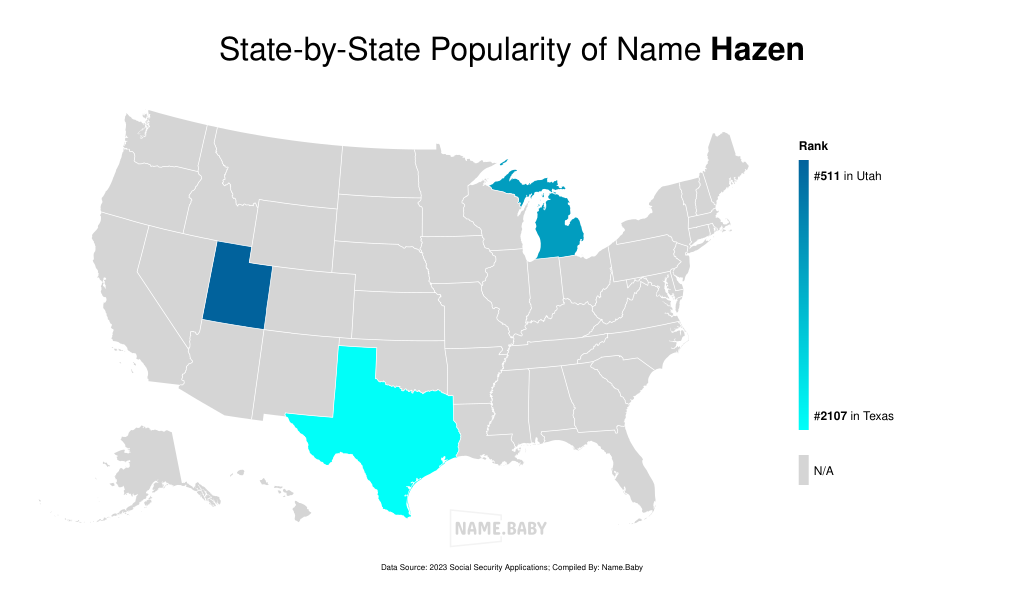
States Popularity Chart
Notable People Named Hazen
| Hazen Stuart Pingree was an American businessman and Republican politician who served as mayor of Detroit and governor of Michigan. |
| Hazen Adelbert Brattain was an American rancher, banker, and Republican state legislator in Oregon. |
| Hazen Graff Werner was a Methodist bishop elected in 1948. |
