Hyden
Meaning of Hyden
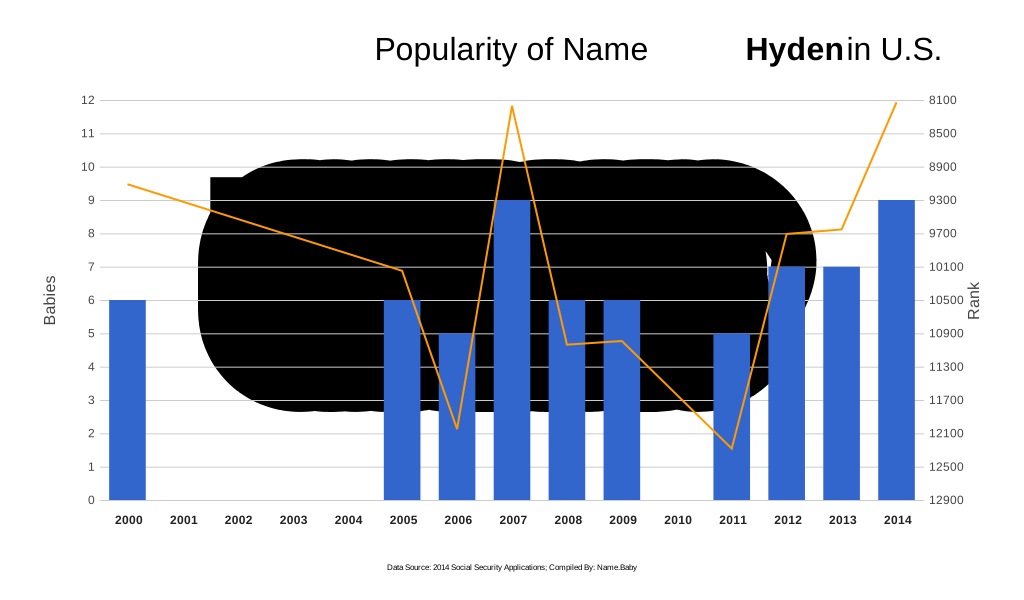
Hyden emerges as an orthographic adaptation of the more widely encountered Hayden, itself stemming from the Old English elements hēg (“hay”) and dūn (“hill”), or alternatively from a medieval toponymic surname denoting residence upon a hay-laden elevation. Predominantly employed in an Anglo-American masculine context, its phonemic structure—articulated /ˈhaɪdən/—conforms to a bisyllabic CV.CVC framework that ensures both clarity of pronunciation and a neutral prosodic quality. Analysis of United States Social Security data between 2000 and 2014 indicates a stable yet modest frequency, with annual occurrences ranging from five to nine newborns and corresponding national ranks fluctuating between 809 and 909, reflecting its status as a distinctive but scarcely ubiquitous choice. From a morphological perspective, the variant spelling underscores a technical precision aligned with contemporary naming trends that favor phonetic transparency while maintaining historical resonance. As such, Hyden occupies a unique position within the spectrum of Anglo-American male given names, balancing etymological depth with a restrained contemporary aesthetic.
Pronunciation
English
- Pronunced as HY-dun (/ˈhaɪdən/)
U.S. Popularity Chart