Izumi
Meaning of Izumi
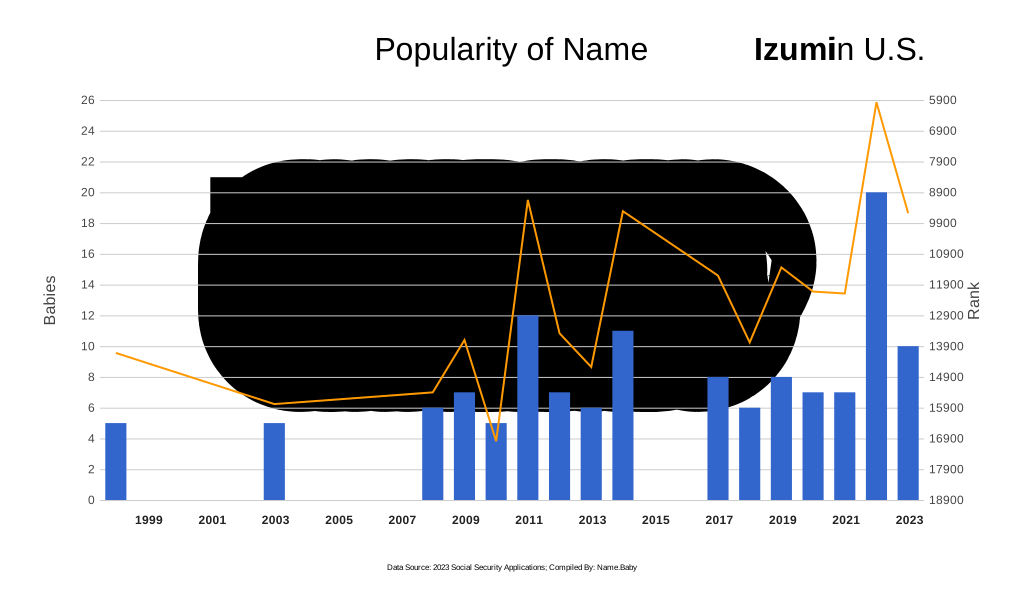
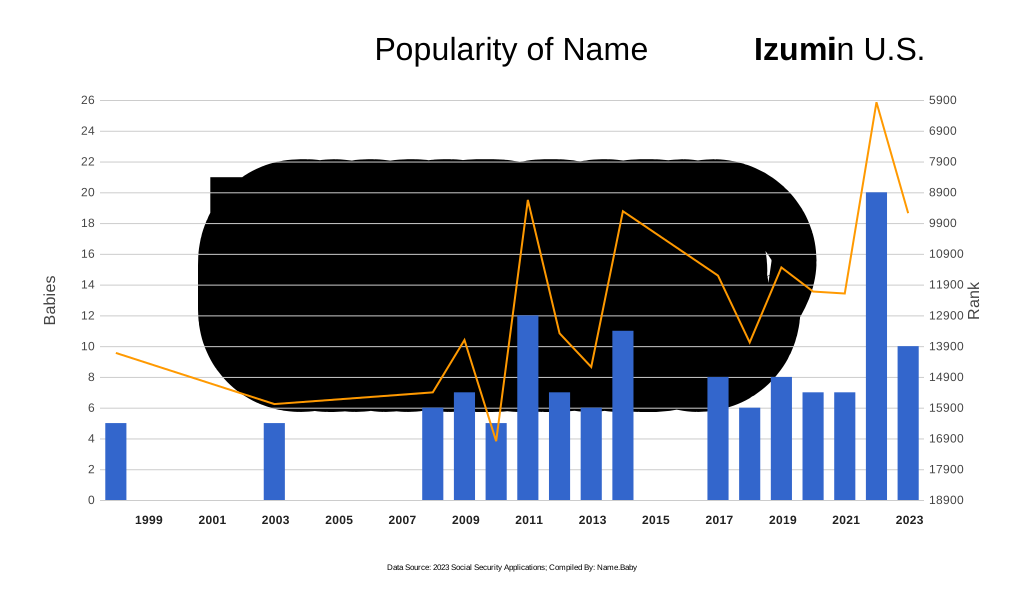
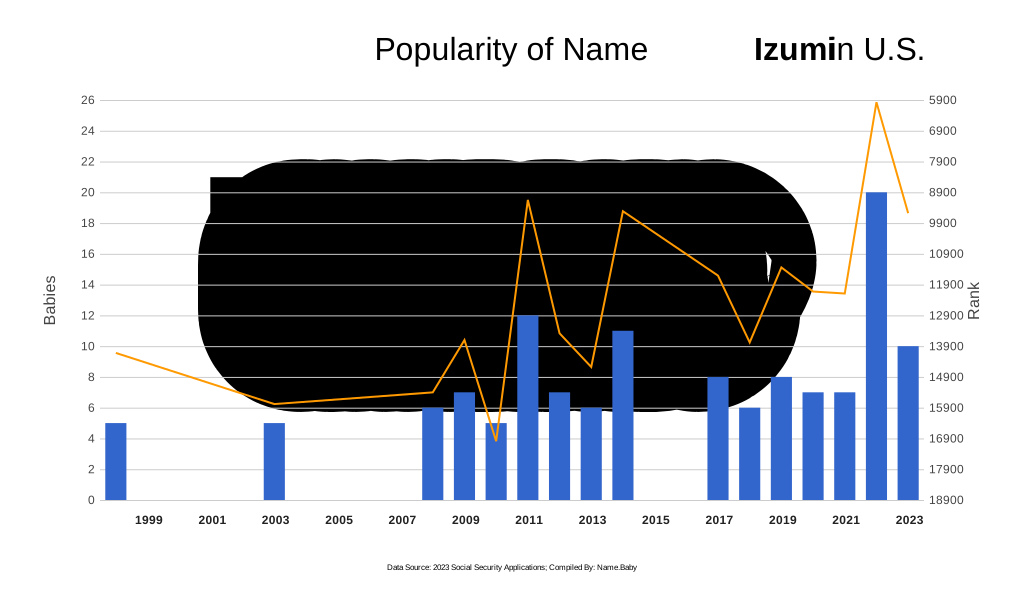
Izumi, a feminine appellation deriving from the Japanese morphemes translating as “spring” or “fountain” (泉), stands as a testament to the human impulse to capture the essence of fluid vitality within the confines of an anthroponym. In the realm of linguistic anthropology and naming theory, it exemplifies the concept of fons et origo—evoking perpetual renewal, crystalline clarity and the promise of nascendi vis. Despite its modest penetration of the American onomastic landscape—17 recorded usages in 2024, securing only the 933rd rank—Izumi endures as a nomen ignotum whose sporadic appearances resemble a clandestine aquifer bubbling beneath the surface of conventional taste. This restrained adoption, mildly paradoxical for a name that literally signifies aqueous abundance, provides its bearers with an identity shaped by both Japanese subtlety and Latin gravitas, as though they carry within them a perennis reservoir of promise and poise. Warm yet understated, Izumi offers the quiet elation of first light dancing on a hidden spring, and the dryly humorous reminder that a name meaning “flow” need not rush to popularity.
Pronunciation
Japanese
- Pronunced as ee-ZOO-mee (/iˌzuːmi/)
U.S. Popularity Chart
Notable People Named Izumi
| Izumi Sakai - |
| Izumi Shikibu - |
| Izumi Kato - |
| Izumi Maki - |
| Izumi Matsumoto - |
| Izumi Tsubaki - |
| Izumi Yukimura - |
| Izumi Muto - |
| Izumi Kazuto - |
| Izumi Mori - |
| Izumi Fujii - |
| Izumi Eto - |
| Izumi Kato - |
| Izumi Iimura - |
